The Complete Guide to Sweetener and Sugar Types (2026)
Sweeteners fall into six practical families — refined cane and beet sugars, specialty and raw sugars, liquid sugars, corn-derived sweeteners, natural syrups and nectars, and low- or zero-calorie sweeteners (sugar alcohols and high-intensity sweeteners). The right one depends on three things: the sweetness level you need, how it behaves under heat and moisture, and your label and cost requirements. This guide breaks down 40+ sweetener types by family, tells you exactly what each is best for, and shows how they compare on sweetness relative to table sugar.
Whether you are a food manufacturer formulating a new product, a bakery scaling a recipe, or a home baker deciding between demerara and turbinado, this is the reference to bookmark.
How to choose the right sweetener
Before the type-by-type breakdown, use these four questions to narrow your options fast:
- How sweet does it need to be? Sweeteners are measured against sucrose (table sugar), which is the baseline at 1.0x. High-intensity sweeteners like sucralose are 600x sweeter, so you use a tiny fraction. Some, like dextrose, are less sweet than sugar.
- How will it behave in the process? Some sugars caramelize and brown (granulated, brown), some resist heat and stay crunchy (turbinado, demerara, sanding sugar), and some dissolve instantly for cold applications (liquid sugar, superfine).
- What does the label need to say? Non-GMO, Kosher, organic, and “no artificial sweeteners” claims all steer you toward specific products.
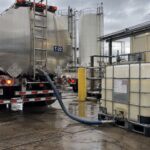
- What form fits your operation? Bulk buyers choose between 50 lb bags, super sacks, 3,100 lb totes, and tanker trucks depending on volume and whether the sweetener is dry or liquid.
Sweetener comparison at a glance
| Sweetener | Family | Relative sweetness (sucrose = 1.0) | Calories | Best known for |
|---|---|---|---|---|
| Granulated sugar | Refined | 1.0x | Yes | All-purpose baking, caramelization |
| Powdered (confectioners’) sugar | Refined | 1.0x | Yes | Icings, frostings, quick-dissolve |
| Brown sugar | Refined + molasses | ~1.0x | Yes | Moisture, caramel/toffee notes |
| Turbinado / demerara | Raw cane | ~1.0x | Yes | Crunchy topping, heat-stable |
| Coconut sugar | Natural | ~0.75x | Yes | Better-for-you baking, caramel flavor |
| High-fructose corn syrup | Corn | ~1.0–1.4x | Yes | Beverages, low-cost sweetening |
| Dextrose | Corn | ~0.7x | Yes | Cooling mouthfeel, fermentation |
| Crystalline fructose | Corn/cane | ~1.2–1.7x | Yes | Beverages, low-calorie formulas |
| Honey | Natural syrup | ~1.0–1.5x | Yes | Flavor, natural positioning |
| Agave syrup | Natural syrup | ~1.4–1.6x | Yes | Low-glycemic marketing, beverages |
| Maple syrup | Natural syrup | ~1.0x | Yes | Flavor-forward baking, toppings |
| Erythritol | Sugar alcohol | ~0.7x | Near-zero | Keto/sugar-free baking |
| Xylitol | Sugar alcohol | ~1.0x | ~40% fewer | Gum, cooling sweetness |
| Sorbitol / Maltitol | Sugar alcohol | ~0.6–0.9x | Reduced | Sugar-free candy, humectant |
| Stevia | High-intensity (natural) | ~200–300x | Zero | Clean-label reduction |
| Monk fruit | High-intensity (natural) | ~150–250x | Zero | Clean-label, aftertaste-free blends |
| Sucralose | High-intensity (artificial) | ~600x | Zero | Heat-stable tabletop and processed foods |
| Aspartame | High-intensity (artificial) | ~200x | Near-zero | Diet beverages |
| Acesulfame-K | High-intensity (artificial) | ~200x | Zero | Blends, beverages, sauces |
Relative sweetness values are approximate and vary by formulation and concentration.
Family 1: Refined cane and beet sugars
These are the workhorses derived from sugarcane or sugar beets, refined to varying degrees of purity.
Granulated sugar
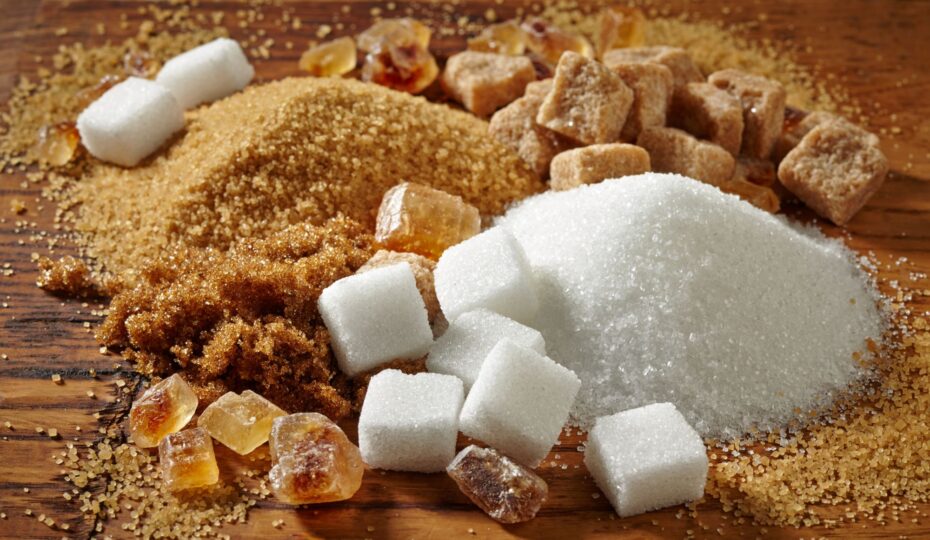
Also called white sugar or table sugar, granulated sugar is the most in-demand sweetener in the food industry. It has fine, uniform crystals derived from processed cane or beet sugar and is the default for baking, cooking, and general sweetening because it caramelizes cleanly and dissolves reliably. Available Non-GMO and Kosher-certified, it ships in 50 lb bags and super sacks for operations that can’t afford to run out.
Extra fine / superfine white sugar
Known as castor sugar or baker’s sugar, extra fine white sugar is granulated sugar crystallized into a finer grain. Because the smaller crystals dissolve faster, it’s ideal for delicate desserts, meringues, cold beverages, and any application where you don’t want undissolved grit at the bottom of the glass.
Powdered (confectioners’) sugar
Confectioners’ powdered sugar is granulated white sugar milled into a fine powder, typically graded 6x, 10x, or 12x by fineness. A small amount of cornstarch (usually 3–5%) is added to prevent caking. Its quick-dissolving, fluffy texture makes it the standard for icings, frostings, glazes, fillings, and dusting. Finer grades create smooth, grit-free finishes on fondants and pan-coated confections.
Brown sugar (light, medium, dark)
Brown sugar is granulated white sugar combined with a film of molasses, prized for rich caramel, toffee, and butterscotch notes and for the moisture it adds to baked goods. The more molasses, the darker and more intense the flavor: light brown suits cookies and caramel, while dark brown (roughly twice the molasses) pairs with cinnamon, ginger, and cloves in gingerbread and chocolate cakes.
Organic sugar
Organic sugar comes from crops grown without synthetic herbicides, pesticides, or fertilizers or genetically modified seeds, and the USDA regulates it under the National Organic Program labeling standards. It’s the go-to for clean-label, organic, and health-positioned products, available in both granulated and liquid forms.
Kosher sugar
Kosher sugar is cane or beet sugar produced and certified to Kosher standards — functionally identical to standard granulated sugar but carrying the certification manufacturers need for Kosher product lines.
Family 2: Specialty and raw sugars
Less-refined cane sugars that retain natural molasses, plus decorative and large-crystal specialty grades.
Turbinado sugar
Turbinado sugar is a semi-refined raw cane sugar with large, light-brown crystals and a subtle molasses aroma. Because the crystals resist melting under heat, turbinado is a favorite for sprinkling over hot cereals, muffins, and baked goods where you want a crunchy, sparkling finish.
Demerara sugar
Demerara sugar is large-grain light-brown cane sugar with a crunchy texture and caramel flavor. It’s excellent for topping cakes and muffins and for stirring into coffee or tea, where the big crystals dissolve slowly and add texture.
Muscovado sugar
Muscovado sugar is a rich, dark, unrefined cane sugar with high natural molasses content. It delivers a deep, complex molasses flavor ideal for brownies, fruit cakes, and even savory dishes like glazes and marinades.
Evaporated cane juice
Made by stripping molasses from processed granulated sugar, evaporated cane juice is less processed than white or brown sugar and often positioned as a more natural, minimally processed option — a strong fit for Kosher and clean-label products.
Raw cane sugar
Raw cane sugar is derived from cane with a small percentage of molasses remaining. This category includes demerara, turbinado, and evaporated cane juice, and it’s a common choice for products that brands market as less refined.
Coconut sugar
Derived from the sap of the coconut palm, coconut sugar has a caramel-like flavor and is popular in better-for-you baking, granola, sauces, and organic product lines thanks to rising demand for natural alternatives.
Sanding, coarse, and specialty colored sugar
Large, sparkling crystals that don’t dissolve under heat, making them purpose-built for decoration. Specialty color sugar is frequently dyed to add shimmer to cookies, confections, and candy applications, while specialty sugar sizes offer coarse, medium, and fine crystal grades.
Family 3: Liquid sugars and syrups (cane and beet)
Liquid sweeteners deliver sucrose in dissolved form, eliminating the need to dissolve dry sugar in high-throughput operations. Read on to learn more.
Liquid sucrose (cane or beet)
Liquid sucrose is granulated cane or beet sugar dissolved in water, supplied in totes and tanker trucks. Standard liquid sucrose (≤100 ICUMSA) is clear and neutral — ideal for beverages, sauces, and dairy. Higher-color liquid sucrose (300+ ICUMSA) carries amber tones and deeper flavor for syrups, BBQ sauces, and bakery glazes. See our full bulk liquid sugar range for more options.
Organic liquid sugar
Organic liquid sugar is made from organically grown sugarcane, processed without chemicals — the liquid counterpart for organic and clean-label formulations.
Invert and specialty liquid blends
Suppliers can engineer custom-blended liquid sugars to mimic the functionality of high-fructose corn syrup while deriving them from cane or beet sources — useful for manufacturers avoiding corn-based sweeteners.
Fondant
Fondant is a thick paste of sugar and water used to sculpt, roll, or pour smooth, colorful finishes onto cakes and confections. Bulk fondant is a staple for decorative bakery and retail applications.
Family 4: Corn-derived sweeteners
Sweeteners made by breaking down cornstarch into glucose and, in some cases, converting glucose to fructose.
High-fructose corn syrup (HFCS)
High-fructose corn syrup is made from cornstarch with a portion of the glucose converted to fructose, offering enhanced stability and functionality at a lower cost than sucrose. It’s widely used in commercial beverages and packaged foods, and is also available in a liquid high-fructose corn syrup form.
Liquid corn syrup
Liquid corn syrup is made from the naturally occurring sugars in corn, used to add volume, soften texture, prevent crystallization, and enhance flavor in confections and baked goods.
Dextrose
Dextrose is a nutritive sweetener derived from corn with roughly 70% the sweetness of sugar. Its light sweetness and cooling mouthfeel suit a wide range of foods and beverages, and it’s also a key fermentation aid in baking and brewing. A liquid dextrose blend is available for high-throughput operations.
Crystalline fructose
Crystalline fructose is a highly sweet, fast-dissolving crystalline sugar (up to ~1.7x sweeter than sucrose) made from corn or cane. Because a little goes a long way, it’s popular in beverages and low-calorie formulations.
Corn syrup solids and glucose syrup solids
Corn syrup solids and glucose syrup solids are dried, powdered forms of corn/glucose syrup with excellent solubility — ideal for powdered drink mixes, confections, jams, jellies, syrups, and dairy products.
Maltodextrin
Maltodextrin is a water-soluble white powder made from corn (or wheat, potato, or rice) starch. It works as a thickener, bulking agent, mild sweetener, and preservative, and appears in everything from salad dressings and sauces to powdered drinks and packaged baked goods.
Liquid dextrose and HFCS blends
Custom liquid sweeteners such as 70/30 sugar/HFCS blends and liquid dextrose blends let manufacturers dial in exact sweetness, cost, and functionality profiles.
Family 5: Natural syrups and nectars
Sweeteners derived directly from plants, honey, or sap, often chosen for flavor and natural positioning.
Honey
Honey is a thick, golden liquid produced by bees from flower nectar, ranging from ~1.0–1.5x the sweetness of sugar depending on source. Beyond sweetness, honey adds distinctive flavor and supports natural product claims.
Maple syrup
Maple syrup is a sweet syrup from the sap of sugar maple trees, valued for its unmistakable flavor in flavor-forward baking, toppings, and premium products.
Agave syrup
Agave syrup is a syrupy sweetener from the agave plant, composed mostly of fructose and roughly 1.4–1.6x sweeter than sugar. Brands frequently market it for its lower glycemic response and use it in beverages and better-for-you products.
Molasses
Molasses is the concentrated, clarified extract of sugarcane (and sugar beet) and the end product of sugar refining. It brings bold, bittersweet depth to table syrups, gingerbread, yeast breads, baked beans, sauces, and marinades. Available light and dark, including organic.
Brown rice syrup, tapioca syrup, and malt
Alternative syrups such as brown rice syrup and tapioca syrup are derived from brown rice, cassava (tapioca), and malted barley. These serve manufacturers seeking specific flavor profiles, non-corn sourcing, or particular functional properties in bars, cereals, breads, and brewing.
Family 6: Low-calorie and zero-calorie sweeteners
The fastest-growing category, split into sugar alcohols (polyols) and high-intensity sweeteners. This is where a full-line supplier separates itself from a sugar-only distributor. The FDA reviews and regulates all high-intensity sweeteners sold in the U.S.
Sugar alcohols (polyols)
Sugar alcohols provide sweetness with fewer calories and a reduced glycemic impact. They’re common in sugar-free candy, gum, and baked goods.
- Erythritol — Near-zero calories, about 70% as sweet as sugar, with excellent tolerance and a clean taste. The backbone of most keto and sugar-free baking blends.
- Xylitol — About as sweet as sugar with roughly 40% fewer calories and a signature cooling effect, making it a staple in gum and mints.
- Maltitol — Roughly 75–90% the sweetness of sugar with a sugar-like texture, widely used in sugar-free chocolate and candy.
- Sorbitol — About 60% as sweet as sugar, doubling as a humectant that retains moisture in candies, baked goods, and pharmaceuticals.
- Mannitol — A low-calorie polyol used as a sugar substitute and anti-caking/dusting agent.
High-intensity sweeteners (natural)
- Stevia — A plant-derived, zero-calorie sweetener 200–300x sweeter than sugar. Available in organic, extract, and aftertaste-free grades for clean-label sugar reduction.
- Monk fruit — A natural, zero-calorie sweetener 150–250x sweeter than sugar, often blended with erythritol for a sugar-like profile without the artificial label.
High-intensity sweeteners (artificial)
- Sucralose — Zero-calorie, ~600x sweeter than sugar, and heat-stable, so it holds up in baking and processed foods. Available in powdered and liquid forms.
- Aspartame — ~200x sweeter than sugar, near-zero calories, best known in diet beverages.
- Acesulfame potassium (Ace-K) — Zero-calorie, ~200x sweeter than sugar, frequently blended with other sweeteners in beverages, candies, gum, and sauces.
Bulk sweetener formats and packaging
For manufacturers and wholesalers, format matters as much as type. Common bulk options include:
| Format | Typical use |
|---|---|
| 50 lb / 25 kg bags | Standard dry sweeteners for bakeries and mid-volume production |
| Super sacks | High-volume dry sugar for continuous operations |
| 3,100 lb totes | Liquid sucrose, syrups, and liquid blends |
| Tanker trucks | Highest-volume liquid deliveries |
| 720 kg / 1,000 kg totes | Dextrose, crystalline fructose, and specialty ingredients |
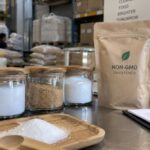
Most sweeteners are available Non-GMO and Kosher-certified, with organic options across the sugar and syrup ranges. Orders typically start at 25 kg / 50 lbs and scale to tens of millions of pounds. For finished-product labeling, note that syrups, honey, and refined sugars all count toward the FDA’s added sugars declaration on the Nutrition Facts panel.
Frequently asked questions
What is the difference between turbinado and demerara sugar?
Both are large-crystal raw cane sugars that resist melting under heat.
Turbinado is a semi-refined sugar that bakers often use as a crunchy topping on baked goods and cereals, while demerara has larger, crunchier grains with a pronounced caramel flavor that coffee and tea drinkers favor. In practice they’re often interchangeable as decorative, heat-stable finishing sugars.
Which sweetener is best for sugar-free or keto products?
Erythritol and monk fruit (often blended together) are the most popular for keto and sugar-free baking because they’re near-zero calorie and behave much like sugar. Sucralose and stevia also see wide use, with sucralose offering the advantage of heat stability in baked applications.
How much sweeter are high-intensity sweeteners than sugar?
Considerably. Sucralose is about 600x sweeter than sugar, while stevia, monk fruit, aspartame, and acesulfame-K range from roughly 150–300x. Because you use such small quantities, manufacturers typically blend them with a bulking agent to match the volume and texture of sugar.
What is the best all-purpose sugar for baking?
Granulated white sugar is the most versatile choice — it caramelizes, dissolves reliably, and works across nearly every recipe. For delicate desserts and meringues, superfine (baker’s) sugar dissolves faster, and for moisture and caramel notes, bakers prefer brown sugar.
Are Non-GMO and Kosher sweeteners available in bulk?
Yes. Most sugars and sweeteners are available Non-GMO and Kosher-certified, with organic options across the granulated, liquid, and syrup ranges. These certifications are important for manufacturers who need matching claims on their finished product labels.
What is the difference between HFCS and liquid sucrose?
Manufacturers make high-fructose corn syrup from cornstarch, converting some glucose to fructose, which offers low cost and strong stability in beverages and packaged foods. Liquid sucrose is simply cane or beet sugar dissolved in water, providing a neutral, sugar-based sweetness. Custom liquid blends can replicate HFCS functionality using cane or beet sources for manufacturers avoiding corn.
Why source your sweeteners from US Sweeteners
Since 1987, US Sweeteners has been a trusted source of quality sweeteners and enhancing agents, streamlining orders and fast-tracking bulk deliveries to distributors, wholesalers, bakeries, breweries, wineries, and food manufacturers across all 50 states.
- The widest array of sweeteners under one roof — from granulated cane sugar to monk fruit, sugar alcohols, and specialty syrups, we’re a genuine one-stop source rather than a single-product supplier.
- Bulk at any scale — orders from tens of kilograms to tens of millions of pounds, in bags, super sacks, totes, and tankers.
- Certifications that matter — Non-GMO and Kosher-certified products, with organic options across the range.
- Fast, expedited fulfillment — consistently stocked inventory and nationwide warehousing for uncommon fast delivery times.
- Tailored packaging and private labeling — popular brands or your own label, packaged to your preference.

Thomas is a product expert at US Sweeteners, a trusted bulk sugar and sweetener distributor serving food and beverage manufacturers across the USA. He writes about sweetener sourcing, ingredient trends, and supply chain insights for the food industry.