Bulk Sweeteners for Beverage Manufacturers: Sucrose, HFCS, and the Formulation Trade-Offs
Beverage manufacturers choose between sucrose, HFCS, and alternative sweeteners based on formulation behavior, sweetness profile, production efficiency, cost, and label positioning. The right sweetener system affects mouthfeel, Brix consistency, processing speed, shelf stability, carbonation balance, and consumer perception during large-scale beverage production.
For food and beverage manufacturers, sweetener selection is no longer just a flavor decision. Beverage formulators now balance calorie reduction, sweetness onset, ingredient standardization, co-packer requirements, tanker logistics, and consumer demand for natural ingredients or sugar-free sweeteners.
US Sweeteners helps beverage manufacturers source bulk sweeteners, liquid sugar, high fructose corn syrup, and alternative sweeteners with nationwide distribution and scalable ingredient fulfillment support.
Why Sweetener Choice Matters in Beverage Manufacturing
Sweetener selection directly affects beverage formulation stability, sensory profile, production efficiency, and long-term product consistency. A sweetener that performs well in a small R&D batch may behave very differently in inline blending systems, thermal processing environments, or high-speed filling lines.
In beverage manufacturing, formulators evaluate more than sweetness intensity. They also assess:
- sweetness onset timing
- acid interaction
- mouthfeel optimization
- flavor carry
- carbonation perception
- viscosity
- thermal stability
- shelf-life behavior
For example, a beverage with high acidity may amplify bitterness from stevia blends over time. Meanwhile, a syrup with inconsistent solids content can create Brix management problems during high-volume batching.
These formulation trade-offs become even more important when manufacturers scale from pilot production to regional or national distribution.
Sucrose in Beverage Formulation
Sucrose remains one of the most widely used bulk sweeteners for beverage manufacturers because it creates a clean sweetness curve, fuller mouthfeel, and familiar flavor profile across many beverage categories.
Premium RTD tea brands, craft soda manufacturers, and juice beverage companies often prefer cane sugar positioning because sucrose delivers a faster sweetness onset and smoother flavor carry in acidic beverages. It also helps support a rounder mouthfeel in beverages where texture and body influence perceived quality.
Liquid sucrose performs especially well in:
- premium teas
- lemonade beverages
- flavored sparkling drinks
- cocktail mixers
- juice blends
However, sucrose creates several production trade-offs. Dry sugar requires dissolving systems and additional batching steps, while liquid sugar needs temperature-controlled storage and tanker coordination. Sucrose also increases added sugar declarations and calorie content, which can limit formulation flexibility for reduced-sugar beverages.
Formulators may also encounter crystallization risk in concentrated syrup systems if storage temperatures fluctuate or solids levels become unstable during processing.
How HFCS Behaves in Large-Scale Beverage Production
HFCS 55 remains common in carbonated soft drinks because it supports efficient liquid handling, stable Brix levels, and consistent sweetness delivery during high-speed production. Beverage manufacturers often prefer HFCS in continuous batching systems because it pumps consistently and reduces dissolving steps compared to dry sucrose.
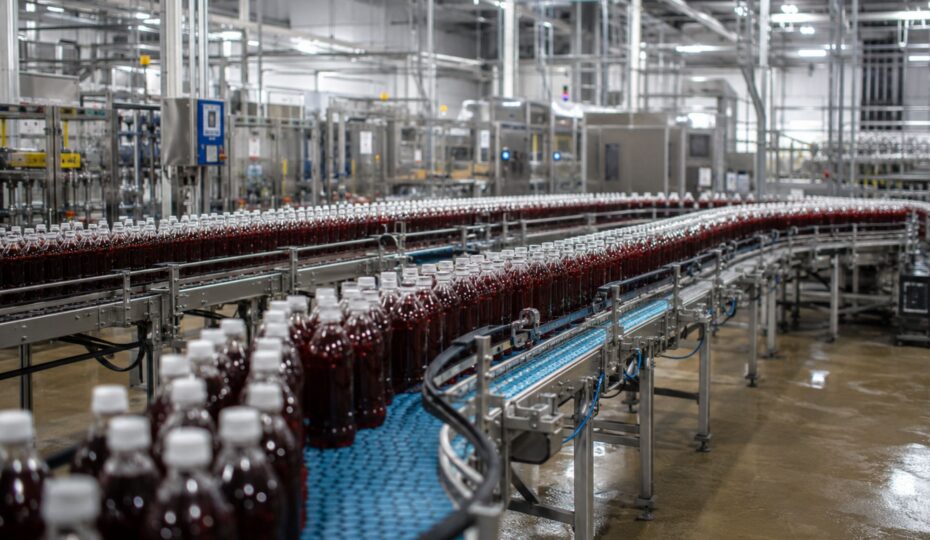
From a manufacturing standpoint, HFCS performs efficiently in inline blending systems and large-volume filling environments. Beverage facilities using tanker-fed liquid systems can meter HFCS accurately during production while maintaining stable viscosity and sweetness consistency across batches.
HFCS also offers advantages involving:
- pumpability
- ingredient standardization
- reduced labor handling
- efficient tanker unloading
- lower dissolving requirements
Still, HFCS creates formulation and branding trade-offs. Some beverage brands avoid it because of consumer perception or label positioning concerns. Premium beverages focused on natural positioning may prefer cane sugar or alternative sweeteners despite higher ingredient costs.
HFCS may also affect flavor perception differently in acidic beverages. In some tea or juice systems, formulators report that HFCS produces a slightly sharper sweetness curve compared to sucrose, particularly during extended shelf-life testing.
How Sweeteners Behave in Real Beverage Systems
Sweeteners behave differently depending on beverage acidity, carbonation level, thermal processing conditions, and ingredient interactions. Beverage formulators rarely evaluate sweeteners in isolation because production behavior matters just as much as sweetness intensity.
The table below reflects common formulation decisions beverage manufacturers make during commercial production:
| Beverage Type | Common Sweetener Choice | Why It Is Used |
| Carbonated soft drinks | HFCS 55 | Pumpability, sweetness consistency, efficient liquid batching |
| Premium RTD tea | Liquid sucrose | Cleaner sweetness curve and smoother acid balance |
| Zero-sugar energy drinks | Sucralose + Ace-K | Strong sweetness with very low use rates |
| Functional wellness beverages | Stevia + erythritol | Natural positioning with calorie reduction |
| Protein beverages | Sucralose + allulose | Better flavor masking and mouthfeel support |
| Juice beverages | Sucrose or HFCS blends | Balancing sweetness intensity and cost |
Acid balance plays a major role here. Some sweeteners lose sweetness perception under acidic conditions, while others produce stronger aftertaste during shelf-life aging. Carbonation can also sharpen perceived sweetness or bitterness, depending on the sweetener blend.
Thermal processing creates another challenge. Pasteurization and hot-fill systems may affect flavor stability differently across sweetener systems, especially in beverages using natural sweeteners or sugar alcohols.
This is why beverage manufacturers usually evaluate sweeteners through pilot testing, accelerated shelf-life studies, and sensory analysis before finalizing a commercial formula.
Why Beverage Formulators Rarely Use One Sweetener Alone
Most beverage formulators use blended sweetener systems because no single sweetener perfectly replicates the sweetness profile, mouthfeel, and flavor behavior of sugar. Blending allows manufacturers to balance sweetness onset, calorie reduction, flavor masking, and production cost more effectively.
For example, stevia may help reduce sugar content, but it can produce lingering bitterness at higher concentrations. Erythritol may soften that bitterness while adding body back into the beverage. Sucralose may strengthen upfront sweetness, while Ace-K can improve sweetness persistence in energy drinks.
Manufacturers blend sweeteners to manage:
- sweetness layering
- mouthfeel replacement
- acid balance
- flavor carry
- cost optimization
- calorie reduction
- sensory profile consistency
This becomes especially important in zero-sugar beverages. Removing traditional sugars often reduces body and changes how flavors move across the palate. Formulators may compensate with erythritol, allulose, starches, or texture systems to improve mouthfeel optimization.
Blending also affects economics. A beverage company may reduce ingredient costs by combining high-intensity sweeteners with small amounts of sucrose instead of relying entirely on one premium sweetener system.
Alternative Sweeteners and Formulation Trade-Offs
Alternative sweeteners help manufacturers reduce sugar and calories, but they also introduce technical formulation challenges involving aftertaste, sweetness timing, thermal stability, and sensory consistency.
According to a study, sugar substitutes include artificial sweeteners, sugar alcohols, and novel sweeteners such as stevia and monk fruit. The same source explains that sugar alcohols can affect texture and sweetness while potentially causing gastrointestinal discomfort at higher intake levels.
For beverage formulators, these trade-offs become operational issues during product development. Stevia blends may require flavor masking because bitterness often becomes more noticeable in acidic beverages over time. Monk fruit extract can provide natural positioning, but some formulators report delayed sweetness onset in lightly flavored beverages.
Sugar alcohols such as erythritol and xylitol can improve mouthfeel in reduced-sugar drinks, although they may create cooling effects that clash with certain flavor systems.
Thermal stability matters as well. Some alternative sweeteners behave differently during pasteurization, extended shelf storage, or hot-fill processing. Beverage manufacturers developing shelf-stable products often conduct accelerated aging tests to monitor sweetness drift, flavor separation, and aftertaste changes over time.
Liquid vs. Dry Sweeteners in Production Systems
Liquid sweeteners generally improve production efficiency in high-volume beverage plants because they support inline blending, continuous batching, and automated ingredient handling. Dry sweeteners provide flexibility, but they usually require more labor, dissolving time, and storage management.
Liquid systems help manufacturers maintain:
- faster batching speeds
- stable viscosity
- accurate metering
- consistent Brix control
- reduced dust handling
Facilities using tanker-fed systems can unload liquid sweeteners directly into storage tanks, which reduces manual handling and improves production throughput.
Dry sweeteners still work well for:
- powdered beverage mixes
- co-packing facilities
- specialty beverage runs
- smaller production volumes
However, dry ingredients may create production inefficiencies involving clumping, inconsistent dissolution, and longer mixing cycles.
The choice often depends on production scale. Beverage startups may begin with bagged ingredients, then transition to totes or tanker systems as manufacturing volume increases.
Brix Management, Viscosity, and Shelf Stability
Brix consistency is one of the most important quality measurements in beverage manufacturing because it directly affects sweetness perception, formulation accuracy, and product consistency across production batches.
According to research, Brix measurement plays a major role in beverage quality assessment and sugar-content consistency during production.
In real production environments, inconsistent solids levels can create:
- flavor imbalance
- carbonation inconsistency
- filling inaccuracies
- sweetness drift
- shelf-life instability
Viscosity also affects how ingredients move through pumps, pipelines, and batching systems. Syrups that become too thick under colder warehouse conditions may slow unloading or disrupt inline blending systems.
Shelf stability introduces additional trade-offs. Some natural sweeteners lose flavor intensity over time, while others interact differently with acids, preservatives, or dairy proteins during extended storage. Manufacturers producing beverages for national distribution often prioritize ingredient standardization because small formulation shifts become more noticeable at scale.
What Beverage Manufacturers Should Look for in a Sweetener Supplier
A strong bulk sweetener supplier should support formulation consistency, ingredient availability, logistics coordination, and production scalability. Beverage manufacturers need more than ingredient pricing alone. They need supply stability and operational reliability.
Procurement teams should evaluate suppliers based on:
- recurring inventory availability
- tanker logistics support
- documentation and COAs
- packaging flexibility
- formulation expertise
- lead-time consistency
- nationwide distribution capability
Operational support matters because ingredient disruptions can shut down production quickly. A delayed tanker, inconsistent syrup solids level, or packaging mismatch may create expensive downtime in high-volume facilities.
US Sweeteners helps food and beverage manufacturers source bulk sweeteners, liquid sugar, HFCS, and alternative sweeteners with scalable fulfillment and nationwide distribution support designed for commercial production environments.
Conclusion
The biggest beverage formulation decisions rarely come down to sweetness alone. Manufacturers must balance taste, calories, label positioning, production efficiency, shelf stability, ingredient handling, and long-term supply reliability. Sucrose may improve flavor perception and mouthfeel in premium beverages. HFCS may simplify high-speed liquid batching and support cost efficiency. Alternative sweeteners may help reduce sugar but introduce flavor masking and formulation stability challenges.
US Sweeteners helps beverage manufacturers source bulk sweeteners that align with formulation goals, production requirements, and supply chain demands. Whether you need liquid sucrose, HFCS, or alternative sweeteners, our team can help identify the right solution for your beverage application. Contact US Sweeteners today to discuss your bulk sweetener sourcing needs.
FAQs
Why do beverage formulators blend sweeteners instead of using one ingredient?
Most formulators blend sweeteners because different ingredients solve different formulation problems. One sweetener may provide upfront sweetness, while another improves mouthfeel or reduces bitterness. Blending also helps manufacturers optimize cost, calorie reduction, and sensory consistency across large production runs.
Why does HFCS work well in carbonated soft drinks?
HFCS 55 works efficiently in carbonated beverage systems because it pumps consistently, blends easily in liquid batching environments, and maintains stable sweetness during high-speed production. Many manufacturers also find that HFCS performs reliably in tanker-fed systems where ingredient standardization matters.
Why do some beverage brands still use sucrose instead of alternative sweeteners?
Many premium beverage brands still use sucrose because it creates a cleaner sweetness curve and fuller mouthfeel, especially in tea, juice, and flavored sparkling beverages. Some brands also prefer cane sugar positioning because consumers associate it with more familiar ingredients.
What formulation problems can alternative sweeteners create?
Alternative sweeteners may create bitterness, delayed sweetness onset, cooling effects, or flavor carry issues depending on the beverage system. Formulators often use masking flavors, erythritol, or blended sweetener systems to improve sensory balance and mouthfeel.
How does Brix consistency affect beverage production?
Brix consistency affects sweetness accuracy, carbonation balance, flavor stability, and filling precision during beverage manufacturing. Inconsistent solids levels can create noticeable product variation between production batches, especially in high-volume commercial facilities.
What should beverage manufacturers look for in a bulk sweetener supplier?
Manufacturers should look for suppliers with reliable inventory, scalable packaging options, nationwide logistics support, technical documentation, and experience supporting beverage production systems. Ingredient consistency and delivery reliability are often just as important as pricing in large-scale manufacturing.

Thomas is a product expert at US Sweeteners, a trusted bulk sugar and sweetener distributor serving food and beverage manufacturers across the USA. He writes about sweetener sourcing, ingredient trends, and supply chain insights for the food industry.