A reliable bulk sweetener supplier in the USA should provide commercial-scale sweeteners, correct product specifications, quality documentation, suitable packaging, dependable inventory, and freight support that fits production schedules. For manufacturers evaluating US Sweeteners, the key factors are product fit, order format, lead time, documentation, logistics, and total delivered cost.
This guide is for food and beverage manufacturers, bakeries, breweries, confectionery companies, distributors, and other commercial buyers comparing sweetener suppliers. If you already know the ingredient and quantity you need, US Sweeteners can provide product-specific availability and pricing based on your packaging and delivery requirements.
What Is a Bulk Sweetener Supplier?
A bulk sweetener supplier provides commercial quantities of sugars, syrups, sugar alternatives, and related ingredients to manufacturers and distributors. Depending on the product, a supplier may also coordinate packaging, documentation, freight, recurring orders, and other procurement needs that help keep commercial production moving.
The right supplier should match the ingredient to the actual operation. A bakery buying dry sucrose has different storage and handling needs from a beverage plant receiving liquid sweetener by tote or tanker.
That makes supplier evaluation more than a product search. Buyers need to consider specifications, order size, receiving equipment, documentation, freight, and how consistently the supplier can support future production.
What Bulk Sweeteners Does US Sweeteners Supply?
US Sweeteners lists traditional sugars, liquid sweeteners, corn-derived ingredients, sugar alcohols, and other specialty sweeteners for commercial applications. Buyers should choose among these products based on formulation needs, sweetness, solubility, texture, processing conditions, labeling requirements, and production volume.
Traditional and Dry Sweeteners
Bulk granulated sugar is available for commercial food applications and can support bakery, confectionery, dairy, sauce, and other manufacturing uses. Its product page also describes bag, tote, and large-volume formats.
For applications that need a finer particle size, bulk confectioners sugar is offered in 6X, 10X, and 12X grades. US Sweeteners also lists bulk dextrose for baking, beverage, fermentation, and nutritional applications.
Liquid Sweeteners and Syrups
Bulk liquid sucrose gives manufacturers a pre-dissolved sucrose option for beverage, dairy, brewing, and other high-volume processes. Its product page lists drums, IBC totes, and bulk tanker formats.
For formulations where corn syrup provides the required sweetness, moisture retention, or texture, US Sweeteners also offers bulk liquid corn syrup. Other liquid products include bulk honey and bulk molasses.
Alternative and Functional Sweeteners
Alternative sweeteners may fit reduced-sugar or specialty product lines. US Sweeteners lists bulk monk fruit sweetener and bulk erythritol in commercial formats.
The FDA explains that it has received GRAS notices for certain high-purity steviol glycosides and monk fruit extracts. It also identifies erythritol, sorbitol, xylitol, mannitol, and maltitol as sugar alcohols used as sugar substitutes.
Manufacturers that need body, a carrier, or low sweetness can also evaluate bulk maltodextrin for dry mixes, beverages, sauces, snacks, and supplements.
How Do You Choose a Bulk Sweetener Supplier in the USA?
Choose a supplier that can meet the required specifications while supporting appropriate order sizes, quality documentation, realistic delivery timing, and dependable freight. Procurement teams should evaluate the complete sourcing process rather than selecting a supplier only because its initial ingredient price appears lower.
Before approving a wholesale sweetener company, check these points:
- Confirm the ingredient, grade, and specification.
- Verify the available package sizes and order requirements.
- Ask which quality and certification documents come with the product.
- Confirm current stock before scheduling production.
- Review dispatch and delivery expectations.
- Check freight and unloading requirements.
- Ask about recurring-order or contract options where relevant.
- Compare total delivered cost rather than price per pound alone.
Some US Sweeteners product pages provide additional proof points. Its dextrose page, for example, lists recurring delivery schedules, nationwide shipping, COAs, traceability records, and non-GMO documentation as available options.
What Information Is Needed for a Bulk Sweetener Quote?
A supplier can quote more accurately when the buyer provides the product, quantity, packaging, destination, and timing requirements at the beginning. Those details affect inventory selection, freight, order format, and whether the requested ingredient can meet the production schedule.
Prepare the following information before requesting a quote:
- Sweetener or ingredient name
- Required grade or specification
- Order quantity or expected monthly usage
- Preferred packaging
- Delivery ZIP code
- Required certifications or documentation
- Requested delivery date
- One-time or recurring requirement
Buyers should also mention receiving limitations such as dock access, tanker unloading equipment, or storage restrictions. Providing those details early can prevent a technically correct quote from becoming an impractical delivery plan.
What Packaging Options Are Available for Bulk Sweeteners?
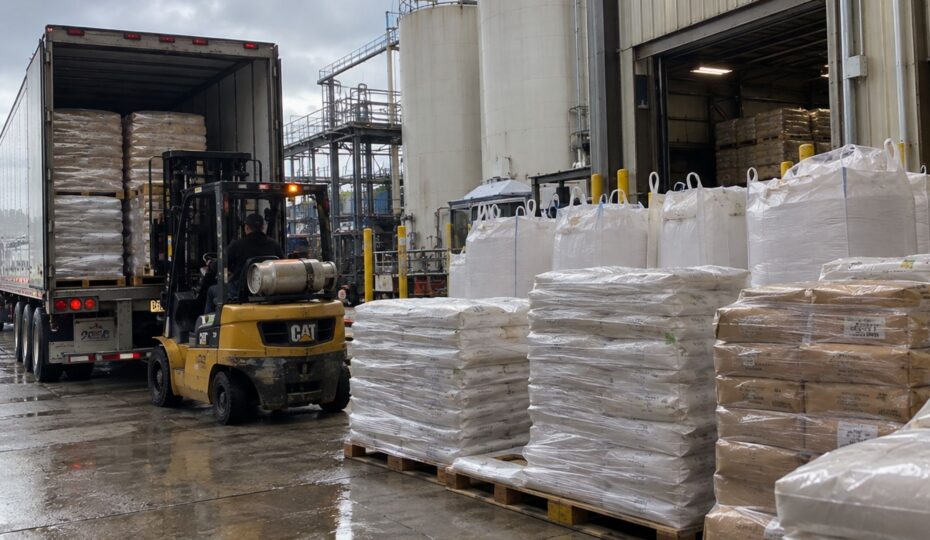
Bulk sweeteners can arrive in bags, supersacks, drums, totes, or tanker quantities depending on the ingredient. The right format depends on product form, usage rate, storage capacity, receiving equipment, and how the ingredient enters the production process.
| Packaging Format | Best Suited For | Typical Form | Key Consideration |
| Bags | Flexible or lower-volume production | Dry | More manual handling |
| Palletized bags | Regular dry ingredient use | Dry | Requires warehouse space |
| Supersacks | High-volume dry processing | Dry | Requires bulk handling equipment |
| Drums | Lower-volume liquid use | Liquid | More container handling |
| IBC totes | Medium-volume liquid production | Liquid | Requires pumping equipment |
| Tankers | High-volume continuous production | Liquid or dry, product dependent | Requires suitable unloading and storage |
Exact sizes vary by product. For example, the US Sweeteners erythritol page lists 25 kg bags and 1,000 kg supersacks, while other product pages offer drums, totes, or tanker quantities.
What Documentation and Certifications Should Buyers Check?
Commercial buyers should confirm documentation before ordering, not after the ingredient arrives. The required paperwork varies by ingredient and facility program, but it may include a Certificate of Analysis, specifications, lot information, allergen documentation, organic certificates, or other records needed by procurement and quality teams.
Common documents to ask about include:
- Certificate of Analysis
- Product specification sheet
- Lot traceability
- Allergen statement
- Safety Data Sheet where applicable
- Kosher documentation
- Non-GMO documentation
- Country-of-origin information
- Organic certification where applicable
USDA states that organic certification verifies that a farm or handling facility complies with USDA organic regulations before certified products can be sold, labeled, or represented as organic.
Imported food may carry additional supplier-verification requirements. The FDA’s Foreign Supplier Verification Programs rule requires covered importers to perform risk-based activities to verify that imported foods meet applicable U.S. food-safety requirements.
How Do Warehouse Coverage and Logistics Affect Supply Reliability?
Logistics affect how quickly ingredients can reach a facility, how much freight adds to the order, and how easily procurement can respond when demand changes. Buyers should confirm current inventory, shipping origin, dispatch timing, and freight options for the exact sweetener instead of assuming one fulfillment model applies to every product.
US Sweeteners product pages show nationwide delivery capabilities for specific ingredients. For example, its confectioners sugar page describes nationwide shipping, while its molasses page lists multiple U.S. distribution points and product-specific lead-time information.
Availability can still vary by product, grade, packaging format, and destination. Manufacturers should confirm those details on each quote before scheduling a production run.
What Affects Bulk Sweetener Pricing?
Bulk sweetener pricing depends on the ingredient, specification, quantity, packaging, freight, certification requirements, market conditions, and delivery location. Procurement teams should therefore compare total delivered cost instead of judging competing suppliers only by the quoted price per pound.
Important cost factors include ingredient type, order volume, packaging, freight distance, current availability, specialty requirements, and delivery frequency. Receiving and storage can matter as well. A tanker may make sense for one plant but create unnecessary cost for another facility without suitable tanks or pumping equipment.
Market conditions can also influence sweetener costs. Agricultural output, transportation conditions, trade factors, and commodity availability may affect pricing over time, so recurring buyers should discuss purchasing structure as well as current spot pricing.
Spot Purchasing vs. Contract Sweetener Supply
Spot purchasing gives buyers flexibility for irregular or immediate needs, while contract or recurring supply can better support predictable production schedules. The better choice depends on forecast accuracy, required volume, storage capacity, market conditions, and how much availability risk the manufacturer can accept.
| Factor | Spot Purchasing | Contract Supply |
| Flexibility | Higher | More structured |
| Volume planning | Variable | More predictable |
| Availability | Current market dependent | Planned ahead |
| Best fit | Irregular demand | Recurring production |
US Sweeteners’ liquid sucrose page lists standing orders and term contracts for high-volume manufacturers. Its granulated sugar page also describes holding contract volume for release against production schedules.
Neither purchasing model automatically offers the lowest total cost. Buyers should compare pricing, freight, storage, flexibility, and the financial impact of a supply interruption.
How Can Manufacturers Reduce Sweetener Supply Risk?
Manufacturers can reduce sweetener supply risk by forecasting usage, confirming lead times, setting reorder points, and maintaining appropriate safety stock. They should also establish approved specifications and understand which alternate order formats or supply options remain available if demand increases or a planned shipment changes.
A beverage manufacturer using liquid sucrose daily, for example, may focus on tanker scheduling and tank capacity. A bakery using granulated and powdered sugars may focus more on pallet availability, storage space, and order frequency.
Communication also matters. Operations teams should alert procurement early when production forecasts change so buyers have time to adjust quantities, freight, or delivery timing rather than sourcing ingredients at the last minute.
Sweetener Needs Across Food and Beverage Manufacturing
Different industries use sweeteners for different functional reasons. Sweetness matters, but manufacturers may also evaluate solubility, texture, moisture retention, browning, fermentation performance, particle size, and compatibility with existing production equipment.
Bakeries and Confectionery
Bakeries commonly use granulated and powdered sugars, while honey, molasses, corn syrup, and alternative sweeteners can influence moisture, flavor, texture, and sweetness. The best option depends on the final product and processing method.
Beverage Manufacturers
Liquid sweeteners can simplify pumping and dosing in beverage production because the sugar is already dissolved. Beverage manufacturers should still confirm concentration, storage needs, and how the ingredient affects the finished formulation.
Nutritional and Specialty Products
Supplement powders, dry mixes, reduced-sugar foods, and specialty products may use dextrose, maltodextrin, erythritol, monk fruit, or other ingredients. Final ingredient suitability depends on formulation, labeling, processing requirements, and regulatory review.
Conclusion
The right bulk sweetener supplier should fit the way your facility buys, receives, stores, and uses ingredients. That means matching the sweetener and specification with a practical order quantity, appropriate packaging, required documentation, and a delivery plan that supports production.
US Sweeteners’ current product catalog includes dry sugars, liquid sucrose, corn syrup, honey, molasses, dextrose, maltodextrin, erythritol, monk fruit, and other commercial sweeteners. Product-specific pages provide packaging, application, documentation, and shipping information that buyers can review before requesting pricing. For a more accurate quote, provide the ingredient, specification, quantity, packaging preference, delivery ZIP code, required documentation, and target delivery date. Confirm current availability and fulfillment timing before adding the shipment to your production schedule. Contact us now.
FAQs
What should I look for in a bulk sweetener supplier?
Look for appropriate product specifications, suitable packaging, clear documentation, realistic delivery timing, and dependable logistics. Ask how the supplier handles the exact volume and product your facility uses rather than relying on broad company claims. Total delivered cost and supply consistency usually matter more than unit price alone.
What is the minimum order for bulk sweeteners?
Minimum orders vary by ingredient and package size. Current US Sweeteners product pages show formats ranging from smaller commercial bags to supersacks, drums, totes, and full tanker quantities. Confirm the minimum for the exact product because one MOQ does not apply across every sweetener.
What packaging options are available for bulk sweeteners?
Common formats include bags, palletized bags, supersacks, drums, IBC totes, and tankers. Dry ingredients usually rely on bags or larger dry bulk formats, while liquid sweeteners commonly use drums, totes, or tankers. Production volume, storage, and receiving equipment should guide the choice.
Does a bulk sweetener supplier provide a Certificate of Analysis?
Commercial suppliers often provide Certificates of Analysis or other lot-specific documentation where applicable. US Sweeteners’ current product pages for dextrose, erythritol, monk fruit, and molasses list COAs or traceability documentation as available or included for those products. Buyers should still confirm the exact documents for their selected ingredient before ordering.
How fast can bulk sweeteners be delivered?
Delivery timing depends on stock, ingredient type, packaging, shipping origin, destination, and freight capacity. Some US Sweeteners product pages publish short lead times for specific stocked products, while other products list different schedules. Buyers should use the lead time stated on their actual quote rather than assuming one timeframe applies to the full catalog.
How do I find a reliable sweetener supplier in the USA?
Start by matching suppliers to the exact product, volume, packaging, and documentation your operation requires. Then compare inventory access, freight support, delivery expectations, quality records, and options for recurring supply. Ask for these details in writing before changing suppliers or scheduling production around a new source.

Thomas is a product expert at US Sweeteners, a trusted bulk sugar and sweetener distributor serving food and beverage manufacturers across the USA. He writes about sweetener sourcing, ingredient trends, and supply chain insights for the food industry.