Liquid sucrose totes usually save more for moderate, seasonal, or unpredictable demand because they require less fixed receiving infrastructure. Tankers usually save more at high, consistent volume because they reduce container handling and can improve freight efficiency. The right choice depends on total delivered cost, storage capacity, unloading equipment, labor, and monthly usage.
Choosing between a liquid sucrose tanker vs. tote is not simply a question of which shipment has the lowest price per pound. Food and beverage manufacturers need to consider freight, storage, production volume, handling, and facility readiness. US Sweeteners supplies bulk liquid sucrose in several commercial delivery formats. Contact the team for pricing based on your actual volume and receiving requirements.
Liquid Sucrose Tanker vs. Tote at a Glance
Totes favor flexibility because manufacturers can receive liquid sugar in smaller inventory increments without installing a full bulk receiving system. Tankers favor scale because one delivery moves much more product with fewer individual containers to handle. Mini-bulk systems can fill the middle ground when the supplier and facility support them.
According to US Sweeteners’ current bulk liquid sucrose specifications, standard liquid sucrose is listed at about 66.5% to 67% sucrose solids, approximately 11.1 pounds per gallon, with 2,000-pound totes and 48,000-pound bulk tankers among the available formats.
| Factor | IBC Tote | Mini-Bulk System | Full Tanker |
| Typical scale | Hundreds of gallons | Around 1,000 gallons, where available | Roughly 4,000–5,000 gallons |
| Best fit | Moderate or variable use | Growing production | High, predictable throughput |
| Storage | Tote or container storage | Intermediate bulk storage | Dedicated bulk tank |
| Handling | Forklift and tote pump | Pumped transfer | Bulk transfer |
| Initial infrastructure | Lower | Moderate | Highest |
| Inventory flexibility | High | Moderate | Lower |
| Container handling | Higher | Moderate | Lowest |
| Freight efficiency | Lower at high usage | Intermediate | Strongest at sufficient volume |
| Main advantage | Flexibility | Middle-ground capacity | Scale |
Using the published weight of approximately 11.1 pounds per gallon, a 48,000-pound tanker represents roughly 4,300 gallons of liquid sucrose. Actual shipment weight and volume can vary with product specifications, truck configuration, and transportation limits.
How Much Liquid Sucrose Fits in a Tote or Tanker?
Shipment size should be compared by net pounds and sucrose solids, not gallons alone. Different tote designs, fill levels, and liquid specifications can change how much usable sweetener arrives in one container. For procurement teams, the most useful comparison is the amount of sucrose solids received relative to freight, handling, and storage costs.
Liquid Sucrose Totes
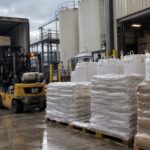
US Sweeteners currently lists 2,000-pound totes for its bulk liquid sucrose. An IBC-style tote gives a plant a movable supply that can feed production through a compatible pump without requiring a large permanent storage tank.
Totes work especially well when a bakery, beverage producer, dairy processor, or confectionery operation uses liquid sugar in selected batches rather than continuously. They also make inventory segregation easier when a facility manages different lots or production lines.
Bulk Liquid Sugar Tankers
US Sweeteners lists 48,000-pound bulk tanker loads on the same liquid sucrose product page. At approximately 67% sucrose solids, a full 48,000-pound solution load contains roughly 32,000 pounds of sucrose solids.
That scale changes the receiving decision. A plant needs enough usable storage capacity to accept the load and enough ongoing production to consume the inventory efficiently.
When Is a Liquid Sugar Tote the Better Choice?
Liquid sugar totes are usually the stronger choice when demand changes from week to week, production runs are seasonal, or the facility does not have dedicated bulk storage. They require less permanent infrastructure and give procurement teams more control over inventory increments, which can outweigh higher container handling and freight costs.
Totes often fit operations that:
- Have moderate or variable liquid sucrose use
- Run liquid sugar only in selected products
- Need flexibility between production lines
- Are testing a new beverage or food product
- Do not yet have a sanitary bulk storage tank
- Want to avoid committing to a full tanker load
Consider a regional beverage company that produces sweetened bottled products only a few days each week. Several totes may match its production schedule better than thousands of gallons arriving at once. The business can add inventory as demand changes without tying up as much storage capacity or working capital.
When Is a Bulk Liquid Sugar Tanker the Better Choice?
A bulk liquid sugar tanker becomes more attractive when production consumes sucrose consistently enough to justify bulk storage and recurring full-load deliveries. Tankers reduce individual container movements and repeated tote connections, which can lower labor intensity and improve freight efficiency when monthly throughput is high enough.
A large beverage or processed-food plant may meter liquid sucrose into production throughout the day. In that environment, receiving dozens of individual totes creates more forklift movements, storage requirements, container changes, and empty-tote handling.
Tankers are worth evaluating when the plant has predictable demand, adequate sanitary storage, suitable transfer equipment, truck access, and enough throughput to spread its infrastructure costs across a large production volume.
Manufacturers that do not need liquid sugar can also compare bulk granulated sugar, especially when dry storage and in-house dissolution already fit the production process.
What Equipment Do Totes and Tankers Require?
Totes require less fixed infrastructure, but they still need appropriate material handling, storage, and sanitary dispensing equipment. Tankers typically require a dedicated bulk tank and a compatible transfer system. Before choosing either format, the plant should understand how the product will move from receiving into production.
Tote Receiving
A tote operation may require a suitable forklift, sanitary pump, compatible fittings, storage space, and a process for handling empty containers. Because a filled liquid sugar tote is heavy, procurement and operations teams should verify forklift capacity, floor loading, and storage arrangements before ordering.
Tanker Receiving
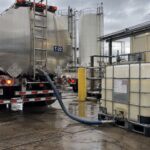
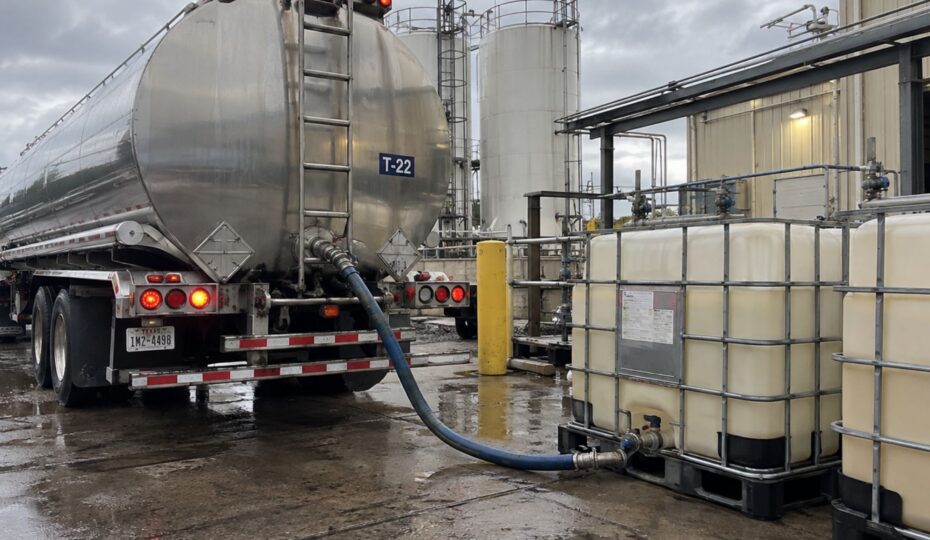
Bulk receiving generally requires a sanitary storage tank, truck access, transfer connections, sufficient empty tank capacity, and defined unloading responsibilities.
Rather than checking these items separately for every shipment, establish a receiving specification that records the plant’s approved:
- Connection and hose requirements
- Pumping responsibility
- Minimum available tank capacity
- Tanker access limits
- Receiving hours
- Required shipment documents
- Sanitation procedures
This creates a repeatable process and reduces the chance of a delivery arriving that the facility cannot efficiently receive.
Tote vs. Tanker Costs: What Should Buyers Compare?
A tanker can reduce freight and packaging costs per pound at high volume, but the ingredient quote alone does not show the true financial impact. Procurement teams should compare total delivered and operating costs, including freight, labor, storage, pumps, container handling, inventory, and any capital required for bulk receiving.
| Cost Factor | Tote | Tanker |
| Packaging/container handling | Higher | Lower |
| Freight per pound at scale | Usually higher | Often lower |
| Forklift handling | More | Less |
| Bulk tank investment | Usually unnecessary | Required |
| Transfer infrastructure | Simpler | More extensive |
| Inventory flexibility | Higher | Lower |
| Empty-container handling | Required | Minimal |
| Receiving volume | Smaller | Much larger |
Tankers tend to gain an economic advantage when a plant moves enough liquid sugar that repeated tote freight and handling become significant. However, a smaller or seasonal operation may save more overall with totes because it avoids the fixed cost of bulk-storage infrastructure.
Quick Decision Framework for Liquid Sucrose Delivery
Choose totes when your facility needs smaller inventory increments, uses liquid sucrose inconsistently, has limited bulk storage, or wants to avoid permanent receiving infrastructure.
Evaluate tanker delivery when liquid sucrose runs continuously, tote handling creates recurring warehouse or labor strain, and the facility has enough sanitary storage to accept and use a full bulk load efficiently.
Mini-bulk may provide a middle step where available when production has outgrown individual totes but does not yet justify full tanker receiving.
How to Calculate the Tote-to-Tanker Break-Even Volume
There is no universal number of totes per month that automatically makes tanker delivery cheaper. Break-even volume changes with the freight lane, delivered ingredient price, handling labor, order frequency, storage costs, equipment investment, and how consistently the plant consumes liquid sucrose. Procurement teams need to compare the two formats using their own operating numbers.
Start by comparing the cost of actual sucrose solids instead of only the weight of liquid solution.
Pounds of sucrose solids = solution weight × solids percentage
For a product at 67% solids:
48,000 lb solution × 0.67 = 32,160 lb sucrose solids
Then calculate:
Cost per pound of solids = total delivered shipment cost ÷ pounds of sucrose solids
For totes:
Totes per month = monthly liquid sucrose requirement ÷ net pounds per tote
Finally, compare annual costs:
Annual tote cost = ingredient + freight + container handling + labor + storage
Annual tanker cost = ingredient + freight + unloading + bulk storage + equipment costs
If a plant starts receiving enough totes that forklift time, storage space, freight, and container handling become significant recurring expenses, it has reached the point where requesting a tanker quote makes sense. The break-even calculation should determine the switch, not an arbitrary industry threshold.
How Do Storage and Sanitation Requirements Differ?
Both delivery formats require sanitary handling, but tanker delivery involves direct bulk transfer between transportation equipment and the manufacturer’s storage system. That makes equipment condition, cleaning, connections, previous-cargo controls, and clearly assigned transportation responsibilities especially important. Totes reduce some transfer complexity but still require clean storage and dispensing procedures.
The FDA’s FSMA Final Rule on Sanitary Transportation of Human and Animal Food establishes requirements for covered shippers, loaders, carriers, and receivers. The rule addresses vehicles and transportation equipment, transportation operations, training, records, and measures intended to prevent food from becoming unsafe during transportation.
For bulk vehicles, FDA’s FSMA Frequently Asked Questions also explains that, when applicable under the rule and agreements between parties, a carrier may need to provide information about the vehicle’s previous cargo or most recent cleaning when requested by the shipper.
Manufacturers should also follow the supplier’s product-specific requirements for storage temperature, holding time, and handling. Before approving a liquid sucrose shipment, procurement teams may also want to verify the product’s Brix or solids level, Certificate of Analysis, lot information, allergen statements, relevant certifications, and any unloading-temperature or viscosity requirements provided by the supplier.
How to Choose Between Liquid Sucrose Tanker and Tote Delivery
The right format depends on usage volume, consistency, available storage, equipment, labor, and total delivered cost. Totes usually win on flexibility, while tankers become more attractive as throughput rises and the plant develops the infrastructure to receive bulk shipments efficiently. The decision should follow the facility’s operating math.
Use this process:
- Calculate average monthly liquid sucrose consumption.
- Determine pounds of sucrose solids required.
- Estimate how many totes that volume would require.
- Confirm available storage and receiving capacity.
- Calculate freight and handling for both formats.
- Add labor and infrastructure costs.
- Review production variability and inventory risk.
- Request comparable delivered quotes.
For example, if two formats have different Brix levels or fill weights, comparing only price per gallon can distort the result. Converting both quotes to cost per pound of sucrose solids gives procurement teams a cleaner basis for comparison.
Conclusion
Totes offer flexibility. Tankers offer scale. The lowest-cost option depends on how consistently your facility uses liquid sucrose and whether freight and handling savings justify the storage and unloading infrastructure required for bulk delivery.
US Sweeteners supplies bulk liquid sucrose in 55-gallon drums, 2,000-pound totes, and 48,000-pound bulk tankers according to its current product specifications. Contact us to request pricing based on monthly volume, destination, production needs, and receiving capabilities to determine which delivery format makes the most operational and financial sense.
FAQs
Is a tote or tanker better for liquid sucrose?
Neither format is universally better. Totes usually fit moderate or variable demand because they provide smaller inventory increments and require less fixed infrastructure. Tankers generally fit predictable, high-volume production where the facility can receive and store a full bulk load efficiently.
How much liquid sucrose is in a tote?
Tote fill quantity depends on the supplier and container specification. US Sweeteners currently lists 2,000-pound totes for its bulk liquid sucrose. Buyers should confirm net weight, solids level, tote dimensions, and handling requirements instead of assuming every IBC contains the same amount.
How much liquid sucrose fits in a tanker?
US Sweeteners currently lists 48,000-pound bulk tanker loads for liquid sucrose. At its published approximate density of 11.1 pounds per gallon, that represents roughly 4,300 gallons of solution. Actual payload can vary based on the product, truck configuration, delivery specifications, and transportation limits.
When should a manufacturer switch from totes to a tanker?
A manufacturer should evaluate tanker delivery when frequent tote purchases create meaningful freight, labor, storage, and container-handling costs. Demand should also be predictable enough to consume a bulk shipment efficiently. There is no universal tote-per-month threshold, so the decision should come from a total-cost calculation.
What equipment is needed for liquid sucrose tanker delivery?
A facility generally needs suitable sanitary bulk storage, transfer connections, enough unused tank capacity, and an unloading process compatible with the carrier. Plants should also establish truck access requirements, pumping responsibility, sanitation procedures, receiving hours, and required shipment documentation before the first delivery.
Are liquid sucrose tankers cheaper than totes?
Tankers can lower freight, packaging, and handling costs per pound when volume is high enough, but they also require more receiving infrastructure. Totes may have higher handling costs at scale but provide greater flexibility and lower upfront infrastructure requirements. Compare total annual cost and cost per pound of sucrose solids rather than the ingredient quote alone.

Thomas is a product expert at US Sweeteners, a trusted bulk sugar and sweetener distributor serving food and beverage manufacturers across the USA. He writes about sweetener sourcing, ingredient trends, and supply chain insights for the food industry.