For commercial wineries, buying bulk sugar for wineries involves more than comparing price per pound. The intended use, sugar type, production method, storage setup, delivery format, and federal or state rules can all affect what a winery should purchase and how it can use that ingredient.
This guide is for winery owners, winemakers, production managers, and purchasing teams evaluating sugar for chaptalization, sweetening, sparkling wine production, or seasonal inventory needs. US Sweeteners supplies commercial sweeteners in dry and liquid formats for food and beverage manufacturers nationwide. Visit US Sweeteners to discuss specifications, volume, packaging, and delivery requirements.
What Should Wineries Know Before Ordering Bulk Sugar?
Wineries should define the sugar’s intended use, required specification, volume, storage needs, and applicable production rules before placing a bulk order. Chaptalization, post-fermentation sweetening, and sparkling-wine dosage are separate processes, so a sugar that works technically may not be permitted for every wine, production method, or jurisdiction.
For mid-size wineries, purchasing decisions often combine production and supply-chain questions. Confirming these details early makes it easier to compare products and suppliers without choosing a format that creates unnecessary handling or compliance problems.
| Buying Question | Why It Matters |
| What will the sugar be used for? | Chaptalization, sweetening, and dosage follow different rules |
| Which sugar specification is required? | Composition and concentration affect production |
| Dry or liquid? | Each format requires different handling and storage |
| How much is needed? | Volume influences packaging, freight, and inventory planning |
| What laws apply? | Federal requirements may be supplemented by state rules |
| When must it arrive? | Harvest and production schedules can narrow delivery windows |
A winery sugar supplier can help with product specifications, packaging, and logistics, but the winery remains responsible for determining whether a particular ingredient and use comply with current production rules.
What Is Bulk Sugar for Wineries?
Bulk sugar for wineries is food-grade sugar purchased in commercial quantities for permitted wine-production applications. Depending on the process, wineries may evaluate granulated sucrose, liquid sugar, dextrose, invert sugar syrup, or grape concentrate. The right option depends on formulation, equipment, storage, production goals, and the rules that apply to the wine.
Purchased sugar should not be confused with the natural sugar already present in grapes. Grape juice contains glucose and fructose, which yeast consumes during fermentation. Residual sugar refers to sugar left in the wine after fermentation rather than a type of bulk ingredient.
The Alcohol and Tobacco Tax and Trade Bureau defines pure dry sugar as refined sugar that meets specified purity requirements. TTB also defines liquid sugar as a substantially colorless refined sugar-and-water solution containing at least the equivalent of 60% pure dry sugar by weight, or 60 degrees Brix, and separately defines invert sugar syrup.
These distinctions matter because changing the type of sweetener can affect both production and regulatory treatment.
What Types of Bulk Sugar Do Wineries Use?
Commercial wineries may work with granulated sucrose, dextrose, liquid sucrose, invert sugar, or grape-derived concentrate depending on the intended process. These ingredients differ in composition, physical form, storage requirements, and handling. Wineries should compare those characteristics alongside regulatory suitability rather than assume one sugar works as a universal substitute.
Granulated Sucrose
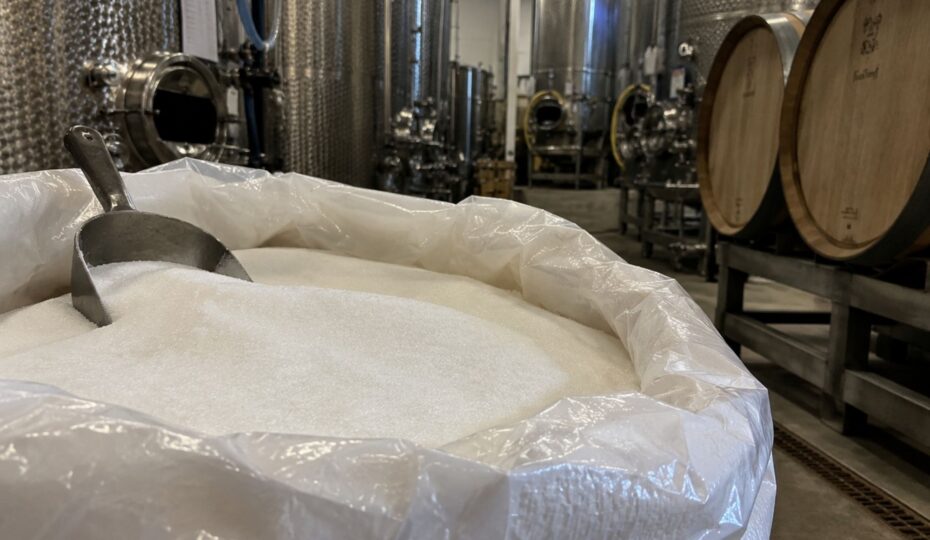
Refined granulated sugar consists primarily of sucrose and may come from sugar cane or sugar beets. It can suit wineries equipped to receive, store, measure, and dissolve dry ingredients.
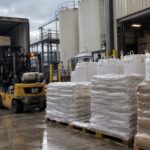
US Sweeteners supplies bulk granulated sugar for commercial food and beverage production. Dry sugar requires appropriate storage and typically needs dissolution before entering a liquid production process.
Dextrose
Dextrose is glucose, a monosaccharide that yeast can ferment directly. Because it differs from sucrose in composition and relative sweetness, wineries should use it only where it fits the intended formulation and production method.
Commercial buyers can source bulk dextrose for food and beverage manufacturing.
Liquid Sucrose
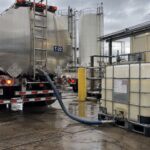
Liquid sucrose combines refined sugar with water. It can reduce the need for an on-site dissolution step when a winery already has tanks, pumps, and metering systems designed for liquid ingredients.
US Sweeteners offers bulk liquid sucrose for commercial production.
Invert Sugar Syrup
Invert sugar syrup contains glucose and fructose produced by splitting sucrose. Its liquid form provides high solubility, but wineries should confirm that the product and intended application fit the relevant wine category and production rules before substituting it for another sugar.
| Sugar Type | Form | Main Composition | Winery Consideration |
| Granulated sugar | Dry | Sucrose | Requires dry storage and dissolution |
| Dextrose | Dry | Glucose | Directly fermentable; process-specific use |
| Liquid sucrose | Liquid | Sucrose solution | Requires liquid storage and handling |
| Invert sugar syrup | Liquid | Glucose + fructose | Highly soluble; verify permitted use |
| Grape concentrate | Liquid | Grape sugars and solids | Adds grape-derived components as well as sugar |
How Does Chaptalization Work in Winemaking?
Chaptalization is the addition of permitted sugar or concentrated juice before or during fermentation to increase fermentable sugar and develop alcohol. It does not simply mean sweetening the finished wine. Federal rules specify the materials that may be used for qualifying natural grape and fruit wines and limit the resulting juice density.
Under 27 CFR §24.177, natural grape wine made from juice with low sugar content may receive pure dry sugar or concentrated grape juice before or during fermentation. The addition cannot raise the original density of the juice above 25 degrees Brix.
For natural fruit wine, the regulation permits sugar or concentrated juice of the same kind of fruit under the same 25-degree-Brix ceiling. The rule also addresses how liquid sugar or invert sugar used with fruit wine can affect later amelioration calculations.
This distinction matters when wineries purchase chaptalization sugar. Yeast converts fermentable sugar into ethanol and carbon dioxide, so a wine that receives sugar during chaptalization can still finish dry if fermentation consumes that sugar.
Because chaptalization depends on wine type, starting juice chemistry, production location, and intended product category, wineries should verify current federal and state requirements before ordering sugar for a specific production use.
Sucrose vs. Grape Concentrate: Which Should a Winery Use?
Sucrose and grape juice concentrate can both provide fermentable sugar, but they do not affect wine in the same way. Refined sucrose primarily contributes sugar, while grape concentrate also brings grape-derived solids and other components. The appropriate choice depends on the wine, production objective, handling system, cost, and applicable regulations.
Refined cane and beet sugar both primarily provide sucrose. For procurement purposes, wineries should focus on product specification, consistency, availability, storage, and price instead of assuming cane or beet sugar inherently produces better fermentation.
Grape concentrate may fit production when a grape-derived addition is preferred or required. Federal chaptalization rules specifically allow concentrated grape juice as an alternative to pure dry sugar for qualifying natural grape wine.
For a mid-size winery, the comparison should include:
- Required Brix adjustment
- Flavor and color considerations
- Ingredient consistency
- Storage requirements
- Freight and handling
- Production equipment
- Applicable federal and state restrictions
The lowest ingredient price does not necessarily produce the lowest total production cost if the material requires additional labor, storage, or handling.
What Federal and State Rules Should Wineries Check Before Chaptalizing?
Federal regulations provide the baseline for U.S. wine production, while states may impose additional requirements or incorporate federal standards into their own rules. Wineries should therefore verify both levels before chaptalizing. California, Washington, and Oregon illustrate different approaches and should not be treated as a complete 50-state legality map.
The following examples show why a winery should check the state where production occurs instead of assuming the federal rule settles every question.
| Jurisdiction | What Wineries Should Know |
| Federal | 27 CFR §24.177 permits defined chaptalization for qualifying natural grape and fruit wine, subject to material and Brix limits |
| California | State wine standards restrict sugar use in grape wine produced in California and contain specific exceptions, including traditional sparkling-wine secondary fermentation and dosage |
| Washington | State standards of identity for wine must meet TTB standards |
| Oregon | Winery licensing generally requires qualifying winery operations to hold an appropriate federal TTB producer and blender permit |
California’s Title 17 wine standards include specific rules for sugar use in wine produced in the state. Under 17 CCR §17010, sugar use in California-produced grape wine is restricted, with specified exceptions that include sugar or liquid sugar used for traditional sparkling-wine secondary fermentation and dosage. California’s Office of Administrative Law provides access to the official California Code of Regulations.
Washington handles the relationship differently. WAC 314-24-003 states that standards of identity for all classes and types of wine must meet TTB standards. That provision should not be interpreted as a separate blanket authorization for every sugar addition.
Oregon’s ORS 471.223 generally requires a winery licensee to possess a valid TTB producer and blender basic permit at a bonded Oregon premises or meet an alternative federal-permit arrangement described in the statute. It does not create its own universal chaptalization formula.
Wineries in these and other states should confirm the current rule with the appropriate state alcohol regulator before changing a production method. This article provides sourcing and regulatory context, not legal advice.
How Does Wine Dosage Sugar Work in Sparkling Wine?
Sparkling-wine dosage and chaptalization serve different production purposes. Sugar used before secondary fermentation can support fermentation and carbon dioxide development, while finishing dosage is added during the finishing of an effervescent wine. Federal rules specify permitted dosage materials and establish an important volume threshold for formula approval.
Under 27 CFR §24.192, sugar and permitted acids may be added with yeast or yeast culture when preparing still wine for secondary fermentation. Fruit syrup, sugar, wine, wine spirits, and acid may also be used in a finishing dosage.
The regulation states that finishing dosage may not exceed 10% by volume of the finished product unless the proprietor files for formula approval. This is different from saying that every sparkling wine should receive a fixed number of grams of sugar per liter.
For purchasing teams, wine dosage sugar should therefore be selected around the winery’s production method, target finished style, existing wine composition, and applicable federal and state requirements rather than a generic dosage formula.
What Should Mid-Size Wineries Consider When Buying Bulk Sugar?
Mid-size wineries should treat bulk sugar purchasing as both an ingredient decision and a logistics decision. A lower price may provide little operational benefit if the sugar requires extra labor, does not fit existing storage equipment, or arrives outside the required production window. Specification, format, inventory, lead time, and receiving capacity all matter.
The right starting format depends on how the winery already operates. Rather than recommending one sugar for every facility, buyers can use the following decision matrix to narrow their options.
US Sweeteners Winery Sugar Format Decision Matrix
| Winery Situation | Format to Evaluate | Practical Reason |
| Seasonal production with dry storage | Granulated sucrose | Flexible dry storage and handling |
| Facility with tanks and pumps | Liquid sucrose | Eliminates an on-site dissolution step |
| Process specifically requiring glucose | Dextrose | Supplies glucose directly |
| Grape-derived addition preferred | Grape concentrate | Provides grape sugars and other grape components |
| Sparkling-wine production | Confirm process first | Secondary fermentation and finishing dosage have different requirements |
Before requesting a quote, purchasing teams should confirm:
- The required sugar and specification
- Expected production volume
- Preferred package or delivery format
- Storage and receiving capacity
- Required delivery date
- Product documentation and traceability needs
- Any regulatory limits tied to the intended use
- Contingency plans for changing harvest or production demand
For mid-size wineries, a dependable supply plan can matter as much as the quoted ingredient price.
What Records and Compliance Details Matter When Adding Sugar?
Commercial wineries should document sugar additions carefully because federal rules distinguish among chaptalization, sweetening, amelioration, and sparkling-wine operations. Compliance depends on more than the ingredient itself. The purpose, amount, timing, wine category, and resulting composition can all affect the records and production requirements that apply.
Federal law separately regulates sweetening after fermentation. Under 27 CFR §24.179, sugar, juice, or concentrated fruit juice of the same kind of fruit may be added to natural wine after fermentation, subject to specific limits.
For natural grape wine, the finished product cannot exceed 17% total solids by weight when alcohol exceeds 14% by volume, or 21% total solids when alcohol does not exceed 14% by volume. Separate limits apply to natural fruit wine and specially sweetened natural wine.
A practical internal record should identify the ingredient lot, sugar type, quantity, date of addition, production purpose, and affected wine batch alongside any records required by TTB or the applicable state authority.
Changing from one sweetener to another should therefore trigger a review of both the production specification and regulatory requirements rather than an automatic substitution.
Conclusion
Choosing bulk sugar for winery production requires matching the ingredient to the production goal, equipment, storage capacity, order volume, and regulatory framework. Granulated sucrose, liquid sucrose, dextrose, and grape concentrate each create different handling and formulation considerations, while chaptalization, sweetening, and sparkling-wine dosage follow different rules. For mid-size wineries, the strongest purchasing decision combines ingredient specifications with supply reliability. Buyers should confirm what they need, how they will receive and store it, and whether the intended use complies with current federal and state requirements before placing an order.
US Sweeteners supplies commercial sweeteners in bulk formats for food and beverage manufacturers across the United States. Contact us to discuss your winery’s required sugar type, volume, packaging, and delivery schedule.
FAQs
What type of sugar do wineries use?
Wineries may use refined sucrose, dextrose, liquid sugar, invert sugar syrup, or grape-derived concentrate depending on the production goal. Grapes also contain natural glucose and fructose that yeast ferments into alcohol. The appropriate purchased ingredient depends on the wine, process, equipment, and applicable regulations.
Can wineries use bulk granulated sugar?
Federal rules permit pure dry sugar in certain wine-production applications, including qualifying chaptalization and post-fermentation sweetening. However, that does not mean every winery may use granulated sugar in every wine. State rules and the wine’s production category must also be considered.
Is cane sugar or beet sugar better for winemaking?
Neither is universally better for winemaking. Highly refined cane and beet sugars both primarily provide sucrose, so wineries should compare specifications, consistency, availability, price, storage, and handling. The permitted production use is more important than choosing sugar solely by plant source.
Does chaptalization make wine sweeter?
Not necessarily. Chaptalization adds fermentable sugar before or during fermentation to support alcohol development. When yeast consumes that additional sugar, the finished wine can remain dry rather than retain greater sweetness.
Does adding sugar increase alcohol content?
It can when yeast ferments the added sugar. Increasing fermentable sugar can increase potential alcohol, but qualifying chaptalization is subject to federal limits and any applicable state rules. Wineries should base adjustments on measured juice chemistry instead of a universal sugar dosage.
What should a winery look for in a sugar supplier?
A winery should look for consistent product specifications, suitable bulk formats, reliable inventory, traceability documentation, and delivery options that fit its production schedule. The sugar format should also match the facility’s storage and handling equipment. For mid-size wineries, dependable logistics can be as important as ingredient price.

Thomas is a product expert at US Sweeteners, a trusted bulk sugar and sweetener distributor serving food and beverage manufacturers across the USA. He writes about sweetener sourcing, ingredient trends, and supply chain insights for the food industry.