
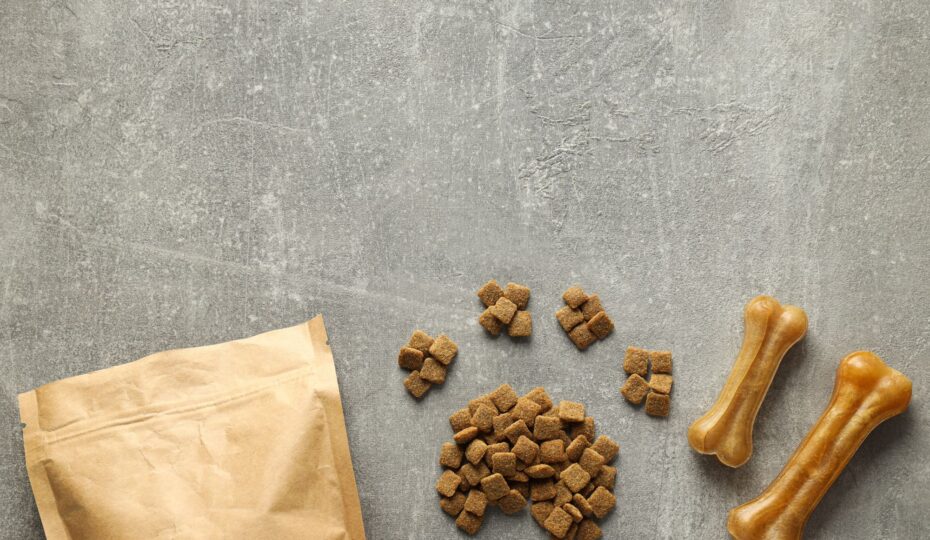
Bulk sweeteners for pet food can support flavor balance, binding, browning, moisture control, and processing consistency in treats and other specialty products. However, manufacturers must choose each ingredient according to its technical purpose, intended species, production equipment, and regulatory status, not simply its sweet taste or use in human food.
This guide is for pet treat manufacturers, private-label brands, ingredient co-packers, distributors, and procurement teams comparing dry and liquid sweetener options. US Sweeteners helps commercial buyers source food-grade sweeteners in suitable packaging while coordinating inventory and nationwide delivery.
What Are Bulk Sweeteners for Pet Food?
Bulk sweeteners for pet food are dry or liquid ingredients purchased in commercial quantities for use in treats, biscuits, chews, coatings, pastes, and certain specialty formulas. Depending on the ingredient and recipe, they may provide sweetness, energy, color, binding, texture, browning, moisture management, or more consistent processing.
A bulk sweetener differs from a retail sugar substitute sold for use in coffee, diet drinks, baked goods, or other household foods. Manufacturers purchase ingredients according to defined specifications, packaging requirements, lot controls, and delivery schedules.
Common commercial formats include:
- Multiwall bags and palletized dry products
- Granulated or powdered sweeteners
- Drums and intermediate bulk containers
- Liquid sweeteners delivered for pumping or metering
- Custom-packed ingredients for contract manufacturing
- Private-label ingredient packaging
Pet food manufacturers must also confirm that every ingredient has an appropriate legal pathway and technical purpose. The FDA states that a substance added to animal food must comply with an applicable food additive regulation unless it is generally recognized as safe for its intended use. AAFCO similarly explains that an ingredient or additive must have an established nutritional or technical purpose and must stay within its recognized conditions of safety and utility.
That distinction matters because an ingredient’s use in human food does not automatically make it suitable for every dog or cat product.
Why Do Pet Food Manufacturers Use Sweeteners?
Pet food and treat manufacturers may use sweeteners for several technical reasons beyond taste. In a properly developed formula, a sweetener can affect browning, binding, texture, energy density, viscosity, moisture behavior, or batch consistency. The exact result depends on ingredient chemistry, dosage, processing temperature, and the rest of the formula.
Flavor Balance and Palatability
A sweetener may help balance bitter, mineral, vitamin, or botanical notes in a treat or supplement. This can matter in soft chews, functional treats, pastes, and products containing ingredients with strong flavors.
Sweeteners should not replace a complete palatability strategy. Animal-protein flavors, fats, palatants, aromas, and texture often have a greater effect on acceptance. A manufacturer should therefore define what the ingredient needs to accomplish before selecting a palatant sweetener.
Binding, Texture, and Browning
Liquid sweeteners such as cane syrup, corn syrup, or molasses may contribute viscosity and binding in certain treat formats. Dry ingredients such as sucrose or dextrose may fit more easily into biscuit mixes, premixes, and dry-blending systems.
Heat also changes how some sugars behave. Reducing sugars such as dextrose can take part in browning reactions, while syrups may affect spread, firmness, and surface appearance. Manufacturers should test these effects under actual baking, extrusion, drying, or molding conditions.
Moisture and Processing Consistency
Sweeteners can influence how a soft treat holds moisture and how a mixture flows through depositing, molding, or extrusion equipment. However, a sweetener alone does not guarantee a safe water activity, longer shelf life, or stable texture.
Manufacturers should validate finished-product moisture, water activity, microbial stability, and shelf life through qualified testing. Ingredient selection supports that work, but it does not replace it.
Common technical reasons for using sweeteners include:
- Balancing strong or bitter flavors
- Supporting browning during baking
- Helping ingredients bind together
- Adjusting viscosity in liquid or soft products
- Contributing to moisture management
- Adding digestible carbohydrate energy
- Improving batch-to-batch processing consistency
Common Bulk Sweeteners for Pet Food Manufacturing
Common bulk sweeteners considered for pet treats include sucrose, dextrose, cane syrup, corn syrup, molasses, honey, and rice syrup. Each option behaves differently during blending, heating, pumping, drying, and storage. No single sweetener works best for every dog biscuit, soft chew, coating, or supplement.
Before comparing price, procurement teams should review the required sweetness, solids content, color, viscosity, particle size, flavor, and packaging format. The following table provides a practical starting point rather than a finished formulation recommendation.
| Sweetener | Common Commercial Form | Potential Function | Key Buying Consideration |
| Sucrose | Granulated, powdered, or liquid | Sweetness, structure, browning | Granulation, dissolution, packaging |
| Dextrose | Dry powder or monohydrate | Mild sweetness, energy, browning | Particle size, flow, moisture |
| Cane syrup | Liquid | Sweetness, binding, viscosity | Solids level, pumping, storage |
| Corn syrup | Liquid | Binding, body, moisture control | Viscosity, temperature, handling |
| Molasses | Liquid | Color, strong flavor, binding | Flavor intensity, consistency |
| Honey | Liquid or dry | Flavor, browning, label appeal | Cost, composition, storage |
| Rice syrup | Liquid | Sweetness, body, binding | Availability, viscosity, specifications |
| Custom blend | Dry or liquid | Balanced technical functions | Formula control, minimum order |
Sucrose and Liquid Sugar
Sucrose offers a familiar sweetness profile and comes in several forms. Granulated sugar fits many dry-production systems, powdered sugar disperses differently, and liquid sugar can reduce the need for on-site dissolving.
A manufacturer should match the form to its mixers, storage space, unloading process, and production volume. Buying liquid sugar without appropriate pumps, tanks, hoses, and sanitation procedures can create more problems than it solves.
Dextrose
Dextrose provides less sweetness than sucrose at the same weight and may contribute to browning in heated products. Its dry form makes it practical for premixes, biscuits, and operations built around bagged ingredients.
Particle size and moisture control matter. A specification that changes flow or dissolution can affect weighing, dust, mixing time, and finished-product consistency.
Cane Syrup, Corn Syrup, and Molasses
Liquid syrups can support binding and body in soft or molded treats. Corn syrup and cane syrup may also simplify incorporation when a plant already has liquid metering equipment.
Molasses brings a stronger flavor and darker color than many other sweeteners. That makes it useful in some recipes but unsuitable in others. Buyers should confirm viscosity, solids, flavor consistency, storage temperature, and pumping requirements before ordering.
Honey, Rice Syrup, and Custom Blends
Honey and rice syrup may support specific label or flavor goals, although availability, cost, and composition can vary. Manufacturers should buy against an approved specification rather than relying on a broad ingredient name.
Custom blends can combine sweetness, viscosity, and processing characteristics in one ingredient. They also require strong change control because even a small adjustment to the blend may affect texture, flavor, or line performance.
US Sweeteners supplies granulated, powdered, and liquid sweetener options for commercial production. Buyers can discuss packaging, inventory planning, and delivery requirements based on their equipment and expected order volume.
Dry vs. Liquid Sweeteners for Pet Food
Neither dry nor liquid sweeteners are automatically better for pet food manufacturing. Dry products often suit bag-handling and dry-blending systems, while liquid products can support pumping, metering, binding, and rapid incorporation. The best format depends on plant equipment, storage, sanitation, batch size, receiving access, and target texture.
A low per-pound quote may not represent the lowest operating cost. Buyers must also consider labor, unloading time, dust control, heating, pumping, storage losses, freight, and cleaning.
| Consideration | Dry Sweeteners | Liquid Sweeteners |
| Storage | Bags, pallets, or dry silos | Drums, totes, or tanks |
| Incorporation | Dry blending or dissolving | Pumping and metering |
| Main handling issue | Dust, clumping, flow | Leaks, viscosity, sanitation |
| Equipment | Mixers, conveyors, dissolving tanks | Pumps, hoses, meters, tanks |
| Useful feature | Flexible bagged handling | Fast, controlled addition |
| Receiving need | Pallet and bag handling | Liquid unloading capability |
Before selecting a format, a manufacturer should review the entire handling process from delivery through cleanup. Seven questions can prevent many packaging and production mismatches:
- Can the facility receive bags, drums, totes, or bulk liquid?
- Does the plant have suitable pumps and hoses?
- Will the liquid require temperature control?
- Can the line manage dust from powdered ingredients?
- Does the formula require dissolving before use?
- How much ingredient can the warehouse safely store?
- Which format produces the lowest total operating cost?
For example, a company may save mixing time by ordering liquid sugar but lose that benefit if cold temperatures make unloading slow. Another plant may prefer dry dextrose but need better dust extraction and sealed conveying.
How to Match Sweeteners to Pet Product Formats
The right sweetener depends partly on the finished product. Baked biscuits, soft chews, wet products, pastes, dental chews, and coatings have different needs for particle size, solubility, viscosity, binding, moisture, color, and heat response. Manufacturers should evaluate an ingredient inside the actual process rather than in isolation.
A practical comparison helps buyers identify which questions to take to their formulator, quality team, and supplier.
| Product Format | Common Formulation Priorities | Supplier Questions |
| Baked biscuits | Dry blending, browning, crispness | What particle size and moisture specification apply? |
| Soft treats | Binding, softness, viscosity | What are the solids and pumping requirements? |
| Dental chews | Structure and batch consistency | How tightly controlled is each lot? |
| Wet food | Dispersion and flavor balance | How does the ingredient mix into the process? |
| Coatings | Flow and surface coverage | Can the liquid be metered consistently? |
| Pastes and supplements | Smooth texture and controlled dosing | What viscosity and packaging are available? |
Baked Biscuits
Biscuit manufacturers often favor dry ingredients that enter a flour-based mix easily. Sucrose, dextrose, or dry molasses products may affect color, flavor, and browning, but the result depends on oven temperature, dough moisture, and the other proteins and carbohydrates in the formula.
Consistent particle size can reduce weighing and mixing variation. The supplier should notify buyers before making changes that could affect flow, dissolution, or color.
Soft and Chewy Treats
Soft treats may use a syrup to support binding, body, and moisture distribution. Plant teams must still control water activity, sanitation, packaging, and shelf-life conditions.
Viscosity can also affect pumps, depositors, and mixers. A product that handles well in a warm plant may flow differently during a winter delivery or in an unheated storage area.
Coatings, Wet Foods, and Pastes
Coating and paste systems need controlled flow and accurate dosing. These operations may benefit from liquid sweeteners when they already have appropriate metering and sanitation equipment.
A small baked-treat company may find palletized dry ingredients easier to manage. By contrast, a high-volume soft-chew co-packer may prefer tote-delivered syrup connected to an automated dosing system. Both approaches can work when the ingredient and packaging match the plant.
What Should Manufacturers Know About Xylitol?
Xylitol is a critical safety concern in products intended for dogs. Unlike common nutritive sugars, this sugar alcohol can trigger a rapid, life-threatening drop in blood sugar and may contribute to liver failure. Dog food and treat manufacturers should address xylitol during ingredient approval, substitution review, storage planning, and cross-contact assessment.
Xylitol may appear in sugar-free chewing gum, candy, baked goods, toothpaste, mouthwash, peanut butter, and other food or non-food items. It may also appear under descriptions such as birch sugar. Manufacturers should never assume that a sugar-free ingredient or human-food product belongs in a canine formulation.
The FDA lists vomiting, weakness, difficulty walking, collapse, shaking, seizures, coma, liver failure, and bleeding problems among the possible signs of xylitol poisoning. The agency advises pet owners to contact a veterinarian, emergency animal clinic, or animal poison control center immediately after suspected exposure.
A strong xylitol-control process should include the following steps. These safeguards matter especially in mixed-use plants that produce human foods, sugar-free products, and dog treats in the same facility.
- Flag xylitol in the facility’s ingredient-risk review.
- Check complete formulas for premixes and custom blends.
- Require technical approval before any ingredient substitution.
- Assess shared storage, weighing, and production equipment.
- Use clear ingredient identification and segregation controls.
- Verify cleaning procedures when cross-contact could occur.
- Train receiving and production teams to recognize alternate names.
- Consult qualified veterinary, animal-nutrition, food-safety, and regulatory professionals.
Other artificial sweeteners, sugar alternatives, and sugar alcohols should not be grouped together under a broad “generally safe” claim. Stevia, erythritol, sucralose, saccharin, aspartame, monk fruit, and allulose have different properties and evidence bases. A lack of the same acute xylitol response does not establish suitability for a pet’s diet or a commercial animal-food formulation.
What Pet Food Ingredient Rules Apply?
Pet food sweeteners must meet the legal requirements that apply to animal-food ingredients and their intended uses. A manufacturer cannot rely only on the fact that a substance appears in regular sugar, baked goods, salad dressings, drink mixes, or other human foods. The business must verify the ingredient’s accepted name, purpose, conditions of use, and labeling treatment.
The FDA explains that ingredients used in pet food must be safe and perform an appropriate function. Certain substances may be generally recognized as safe for a defined intended use, while others require an applicable food additive approval.
AAFCO provides ingredient definitions, model regulations, and other resources used by many state feed-control programs. Its guidance states that ingredients used in pet food generally must be officially defined feed ingredients, common or usual feed ingredients, approved food additives, or otherwise supported through a recognized legal pathway.
Manufacturers should not describe this simply as “AAFCO approval.” AAFCO does not regulate or approve finished pet foods in the same way a government agency issues a product license. Federal and state authorities enforce animal-food and labeling requirements, while AAFCO models and ingredient definitions play an important role in that system.
FDA labeling rules also require ingredients to appear by their common or usual names in descending order of predominance by weight. Buyers should therefore confirm the proper ingredient name before approving packaging or product labels.
What Documents Should a Sweetener Supplier Provide?
A pet food sweetener supplier should provide documentation that lets procurement and quality teams verify identity, specifications, traceability, storage, and lot consistency. The exact file set varies by ingredient and intended use, but buyers should establish their requirements before approving recurring orders or accepting substitute products.
At minimum, a commercial buyer may need to review:
- Product specification sheet
- Certificate of analysis
- Lot and traceability information
- Ingredient identity and common or usual name
- Allergen statement
- Country-of-origin information
- Safety and handling documentation
- Shelf-life information
- Recommended storage conditions
- Packaging specifications
- Applicable food-safety certifications
- Recall and withdrawal procedures
- Intended-use information
- Change-notification policy
A certificate of analysis should connect clearly to the received lot. Quality teams should also know which characteristics the supplier tests and which values come from a standard specification rather than a lot-specific result.
Change control deserves equal attention. A change in manufacturing location, raw material source, particle size, solids concentration, color, packaging, or processing method can affect production even when the ingredient name remains the same.
The buyer and supplier should agree on advance-notification requirements. This gives formulators and plant teams time to assess a change before it reaches the production floor.
How to Choose a Pet Treat Sugar Supplier
A suitable pet treat sugar supplier must meet both technical and operational requirements. Price matters, but it does not protect production when an ingredient arrives in the wrong package, lacks required documentation, misses its delivery window, or performs differently from the approved lot. Supplier evaluation should cover quality, logistics, traceability, and contingency planning.
Use the following process when qualifying a source of bulk sweeteners for pet food:
- Define the ingredient’s technical purpose.
- Confirm its legal and regulatory status for the intended use.
- Establish the required specification.
- Choose a dry or liquid format.
- Match packaging to receiving and production equipment.
- Review supplier documentation and traceability.
- Confirm normal lead times and order minimums.
- Evaluate available inventory and alternate warehouse options.
- Review change-control and recall procedures.
- Complete internal quality and trial approvals.
Review Packaging and Receiving Limits
Packaging must fit the plant, not just the purchase order. A facility that can receive pallets may not have room for totes. Another site may have liquid tanks but lack heated unloading equipment for a viscous ingredient.
Buyers should review dock access, forklifts, floor loading, hoses, pumps, storage temperature, spill controls, and sanitation before choosing a package. These details often determine whether the delivery moves directly into production or creates avoidable labor.
Evaluate Supply Continuity
Manufacturers should ask what happens when demand rises, freight routes tighten, or the primary warehouse runs low. A dependable supplier should provide clear lead times, inventory communication, and realistic contingency options.
Multi-warehouse distribution may shorten delivery routes and give buyers access to stock outside one region. It can also support co-packers or brands with several production plants that need matching specifications across locations.
With more than 30 years of logistics experience, US Sweeteners coordinates bulk ingredient supply, packaging requirements, warehouse availability, and nationwide delivery for manufacturers and distributors.
How Multi-Warehouse Distribution Reduces Supply Risk
Multi-warehouse distribution can lower ingredient risk by giving manufacturers more than one potential shipping point, supporting regional inventory, and reducing dependence on a single facility. It can also help multi-site producers coordinate matching ingredients across plants while responding more quickly to unexpected orders, shortages, or production changes.
The benefit depends on actual inventory, approved lots, freight capacity, and the buyer’s delivery location. For that reason, manufacturers should confirm stock and lead time rather than assume every product is available at every warehouse.
Consider a private-label pet treat manufacturer with plants in two states. Both facilities may need the same molasses specification, but each site could have different delivery windows and storage limits. Centralized documentation and coordinated inventory help the buyer maintain consistency without treating each order as an unrelated purchase.
Multi-warehouse planning can support:
- Regional stock access
- Multiple manufacturing locations
- Emergency replenishment
- Seasonal demand planning
- Shorter freight routes where stock is available
- Reduced dependence on one shipping point
- Coordinated specifications and lot records
Questions to Ask Before Ordering Bulk Sweeteners
A pre-order review helps prevent specification, packaging, storage, and delivery problems. Procurement teams should complete this work with formulation, quality, regulatory, warehouse, and production personnel before approving a sweetener or committing to a recurring purchase schedule.
Start with the ingredient’s purpose. A purchasing team cannot compare suppliers effectively until it knows whether the formula needs sweetness, binding, viscosity, browning, color, energy, or another measurable function.
Ask these questions before placing an order:
- What technical function should the ingredient perform?
- Is the ingredient suitable for the intended species and use?
- What specification must each lot meet?
- Does the process need a dry or liquid product?
- What packaging can the facility unload and store?
- Will the ingredient need heating or dissolving?
- Which quality documents must accompany the shipment?
- What is the normal order lead time?
- What minimum order applies?
- Does the supplier maintain contingency inventory?
- How will specification or site changes be communicated?
- Can the supplier serve more than one production facility?
- What lot-traceability records will the supplier provide?
These questions move the decision beyond the unit price. They help manufacturers evaluate the ingredient’s total effect on production, labor, inventory, and quality.
Conclusion
The right pet food sweetener must match the formula, intended species, production equipment, quality system, packaging needs, and delivery plan. Manufacturers should confirm the ingredient’s legal pathway and technical purpose, validate its performance, establish supplier documentation, and address xylitol as a serious canine safety risk. Reliable sourcing also requires more than product availability. Buyers need consistent specifications, traceable lots, suitable packaging, realistic lead times, and a plan for seasonal demand or supply interruptions.
US Sweeteners supplies bulk granulated, powdered, and liquid sweeteners for manufacturers, distributors, and pet-ingredient co-packers. Contact us to discuss specifications, volume, custom packaging, private-label requirements, warehouse availability, and nationwide delivery for your pet food or treat operation.
FAQs
What sweeteners are commonly used in pet food?
Pet treat formulas may use sucrose, dextrose, cane syrup, corn syrup, molasses, honey, rice syrup, or approved custom blends. Manufacturers may select them for flavor, binding, browning, body, energy, or processing needs. The right ingredient depends on the species, recipe, product format, manufacturing process, and accepted conditions of use.
Why do pet food manufacturers use sweeteners?
Manufacturers may use sweeteners to balance flavor, support browning, bind ingredients, adjust viscosity, manage texture, or improve processing consistency. Sweetness may be only one part of the ingredient’s technical role. A formulator should define the purpose and confirm it through product testing before commercial production.
Are dry or liquid sweeteners better for pet treats?
Neither form works best in every plant. Dry sweeteners often fit biscuits and powder-based systems, while liquid sweeteners may support binding, metering, or soft-chew production. Equipment, storage, sanitation, batch size, receiving access, and total handling cost should guide the decision.
Is molasses used in pet food and dog treats?
Molasses may be used in certain pet treat formulations for its color, strong flavor, carbohydrate content, and binding properties. However, its intensity and viscosity can change taste, processing, and appearance. Manufacturers should use an approved specification and validate the ingredient in the finished formula.
Is xylitol suitable for dog food or dog treats?
No. Xylitol creates a serious poisoning risk for dogs and can cause a dangerous drop in blood sugar, seizures, liver failure, or death. Dog-product manufacturers should screen ingredients, blends, substitutions, and shared production areas for xylitol and consult qualified safety and regulatory professionals.
Are artificial sweeteners safe for pets?
Manufacturers should not apply one safety conclusion to all artificial sweeteners or sugar substitutes. Xylitol is highly toxic to dogs, while other ingredients may have different toxicological effects, digestive consequences, or regulatory limitations. An ingredient must have a valid purpose and an accepted use for the intended animal food, even when small amounts appear generally tolerated in accidental exposures.

Thomas is a product expert at US Sweeteners, a trusted bulk sugar and sweetener distributor serving food and beverage manufacturers across the USA. He writes about sweetener sourcing, ingredient trends, and supply chain insights for the food industry.