
To qualify a bulk sugar supplier, QA managers need to look beyond price and product availability. A supplier must consistently meet the company’s specifications, food-safety requirements, documentation standards, order volume, and delivery schedule without creating avoidable risks for production.
This guide is for quality assurance managers, food-safety leads, procurement teams, and operations managers sourcing sugar for bakeries, beverage plants, breweries, dairy products, confectionery, sauces, and other food applications. US Sweeteners supplies bulk sweeteners to food manufacturers, wholesalers, and distributors across the United States from its Brooklyn, New York base.
What Does It Mean to Qualify a Bulk Sugar Supplier?
Qualifying a bulk sugar supplier means verifying that the supplier can meet defined quality, food safety, traceability, volume, packaging, and delivery requirements. The process should include a risk review, document assessment, audit evaluation, sample approval, logistics check, and ongoing performance monitoring rather than relying on price or sales claims alone.
Finding a company that sells granulated sugar, powdered sugar, raw sugar, brown sugar, or liquid sugar is only the first step. Supplier qualification determines whether that company and its approved manufacturing locations can support your specific food application.
A qualified supplier should demonstrate that it can:
- Supply the correct sugar type and grade
- Meet written product specifications
- Provide current quality and food-safety records
- Trace products to the appropriate lot and source
- Fulfill normal and peak order quantities
- Deliver in suitable bags, bulk containers, or liquid formats
- Respond quickly to delays, complaints, and rejected loads
- Maintain consistent performance over time
The Safe Quality Food Institute defines an approved supplier as one that a site has assessed and approved, based on risk, as capable of meeting its food-safety and quality requirements.
How Do You Qualify a Bulk Sugar Supplier?
A strong supplier qualification process starts with a precise product requirement and ends with documented approval and ongoing review. QA and procurement teams should evaluate the sugar, the manufacturing facility, the supplier’s food-safety controls, logistical capacity, commercial terms, and performance during a representative trial order.
Use the following process as a practical sugar supplier audit checklist:
- Define the sugar type and specification.
- Identify the supplier and manufacturing source.
- Determine the applicable FSMA requirements.
- Review third-party audit documentation.
- Examine product specifications and certificates of analysis.
- Evaluate allergen and cross-contact controls.
- Confirm traceability and recall procedures.
- Assess production capacity and backup sourcing.
- Review packaging, storage, and delivery capabilities.
- Complete a sample review and trial order.
- Document approval conditions.
- Monitor performance after approval.
Define the Sugar and Its Intended Use
Start by documenting what production actually needs. “Bulk sugar” is too broad for an accurate qualification or quote because suppliers may offer cane sugar, beet sugar, white sugar, brown sugar, powdered products, specialty sugars, raw sugar, liquid sugar, and several levels of refinement.
The specification should identify relevant factors such as:
- Product name and form
- Cane or beet source, when material
- Crystal or particle size
- Color and purity requirements
- Moisture limits
- Anti-caking ingredients in powdered sugar
- Required liquid concentration or Brix
- Organic, Kosher, Halal, or non-GMO requirements
- Packaging size
- Monthly quantity
- Intended food application
A commercial bakery may focus on crystal size, flowability, moisture, and performance in baked goods. A beverage plant using liquid sugar may place more weight on concentration, tanker sanitation, unloading connections, storage conditions, and consistency between deliveries.
Identify the Supplier and Manufacturing Source
Determine whether the company acts as a sugar mill, refiner, importer, broker, wholesaler, distributor, or repacker. This distinction affects which records you should review and who controls production, storage, packaging, transportation, and corrective actions.
Ask for the legal company name, manufacturing or refining location, warehouse locations, country of origin, and any alternate sources that may fulfill your orders. When suppliers switch between mills or countries, your approval should state whether they must notify you before using a different source.
Food manufacturers should also confirm whether certificates and audit reports apply to the exact facility producing or packing the sugar. A company-wide document may not cover every warehouse, refinery, repacking site, or private-label operation.
When Do FSMA and FSVP Requirements Apply?
FSMA requirements depend on the buyer’s role, the food, the identified hazards, and how the product enters the United States. FSVP applies to covered U.S. importers of food from foreign suppliers, while domestic receiving facilities may have supply-chain obligations under the Preventive Controls for Human Food rule when a hazard requires a supply-chain-applied control.
Under the Foreign Supplier Verification Programs rule, covered importers must use risk-based activities to verify that imported food meets applicable U.S. safety requirements, is not adulterated, and is not misbranded regarding allergen labeling. FDA requires an FSVP for each applicable food and foreign supplier unless an exemption or modified requirement applies.
An FSVP generally includes:
- Hazard analysis for the imported food
- Evaluation of the food’s risk and supplier performance
- Approval of foreign suppliers
- Appropriate verification activities
- Corrective actions
- Required records
FDA identifies onsite audits, sampling and testing, and review of relevant food-safety records as possible verification activities. The appropriate method depends on the hazard, the food, and the foreign supplier’s performance.
FSVP does not automatically apply to every company that buys imported sugar from a domestic distributor. The responsible FSVP importer is generally the U.S. owner or consignee at the time of entry, or an identified U.S. agent or representative when no U.S. owner or consignee exists. QA teams should confirm responsibility through their regulatory or legal review rather than assuming the supplier handles every obligation.
How Should You Review Third-Party Food-Safety Audits?
A third-party certification can provide valuable evidence of a supplier’s food-safety system, but it does not replace your company’s risk assessment. Review the certificate’s scope, facility address, audit date, expiration date, rating, exclusions, nonconformities, and corrective actions before accepting it as part of supplier approval.
Common food-safety certification programs include SQF, BRCGS Food Safety, and FSSC 22000. These programs use structured requirements for food-safety management, but buyers should confirm that the specific site, activity, and product category fall within the certificate’s scope.
SQF
SQF uses HACCP-based food-safety codes for sectors throughout the food supply chain. Its requirements include risk-based supplier audits conducted by people who understand relevant regulatory and food-safety requirements.
As of July 2026, SQF Edition 10 has been released, while SQFI states that Edition 9 remains the official code currently used for certification audits and Edition 10 may support future audits beginning in 2027. QA teams should therefore verify which edition appears on an audit report rather than assuming every supplier has moved to the newest code.
BRCGS Food Safety
BRCGS Food Safety provides a framework for product safety, integrity, legality, quality, and operational controls in food and ingredient manufacturing, processing, and packing. BRCGS reports adoption at more than 22,000 sites in over 130 countries.
Review the audit grade, scope, product categories, exclusions, and corrective-action closure. A high-level certificate alone will not show whether the auditor found repeated issues with traceability, housekeeping, pest control, allergens, foreign material, or supplier management.
FSSC 22000
FSSC 22000 combines ISO 22000 requirements, sector-specific prerequisite programs, and additional scheme requirements. Version 7 was released in May 2026, but FSSC permits Version 6 audits through April 30, 2027, followed by a formal upgrade period.
FSSC maintains a public register that buyers can use to confirm whether an organization currently holds certification. This check helps identify expired, suspended, or incorrectly represented certificates.
What to Check on Any Audit
Before approving a wholesale sugar supplier, verify:
| Audit Item | What QA Should Confirm |
| Facility identity | Name and address match the actual manufacturing or packing site |
| Certification scope | Sugar refining, processing, packing, storage, or distribution is covered |
| Audit date | The report and certificate remain current |
| Audit type | Announced, unannounced, surveillance, or recertification |
| Nonconformities | Findings are relevant, understood, and properly closed |
| Corrective actions | Root causes and preventive steps address the issue |
| Certification status | The certificate remains valid in the scheme’s directory |
| Product coverage | The sugar or ingredient category is within scope |
A certification supports qualification, but it should not become a substitute for reviewing specifications, supplier history, traceability, testing, logistics, and customer-specific risks.
What Documents Should a Bulk Sugar Supplier Provide?
A bulk sugar supplier should provide documents that allow QA to verify product identity, specifications, food-safety controls, traceability, and requested claims. The exact file set will vary by product and risk, but every document should match the correct item code, supplying facility, production source, and current approval period.
A practical document package may include:
| Document | Purpose |
| Product specification sheet | Defines agreed physical, chemical, and quality attributes |
| Certificate of analysis | Reports specified lot or batch test results when applicable |
| Third-party audit certificate | Shows the facility’s certification status and scope |
| Audit report or summary | Provides information on findings and corrective actions |
| Allergen statement | Identifies allergen status and cross-contact information |
| Country-of-origin statement | Supports origin and import records |
| Ingredient statement | Confirms composition and processing aids |
| Organic, Kosher, Halal, or non-GMO certificate | Supports specific product claims |
| Traceability procedure | Explains how lots and sources are tracked |
| Recall procedure | Describes escalation, notification, and product recovery |
| Food defense or food fraud information | Supports vulnerability and intentional-adulteration reviews |
| Insurance certificate | Supports commercial risk review |
A certificate of analysis should not become a box-checking exercise. QA should compare the reported tests with the approved specification, confirm the correct lot number, review the test method when important, and investigate values that trend toward limits.
Ask the supplier whether every shipment receives a COA or whether the document is available only by request. The answer may differ by sugar type, customer agreement, and risk level.
How Should QA Evaluate Allergen Controls?
Sugar itself is not one of the nine major food allergens recognized under U.S. labeling law, but allergen cross-contact may still matter when a facility handles, stores, or repacks other food ingredients. QA should examine shared equipment, warehouse practices, sanitation, labeling controls, and the accuracy of the supplier’s allergen statement.
FDA defines allergen cross-contact as the unintentional incorporation of a food allergen into food. The Preventive Controls for Human Food rule requires applicable facilities to implement written procedures that control allergen cross-contact and ensure correct allergen labeling.
Ask the supplier:
- Does the site handle milk, eggs, fish, shellfish, tree nuts, peanuts, wheat, soy, or sesame?
- Are sugar lines, packing stations, totes, scoops, and forklifts shared?
- How does the facility segregate allergenic materials?
- Does the site validate allergen cleaning?
- How does it control labels and packaging?
- Does the allergen statement cover the manufacturing and repacking sites?
- How does the company approve changes to ingredients, processing aids, or facilities?
Powdered sugar deserves special attention because some products contain starch to prevent clumping. Confirm the starch source, ingredient declaration, and allergen status rather than assuming every powdered product uses the same formulation.
How Do You Review Sugar Specifications and COAs?
A sugar specification should define the characteristics that affect food safety, regulatory compliance, production performance, and finished-product quality. QA should approve measurable limits and test methods before purchasing, then compare incoming COAs and inspection results against those requirements.
Depending on the product, the specification may address:
- Sugar type and source
- Sucrose or solids content
- Color
- Moisture
- Ash
- Crystal or particle size
- Microbiological limits
- Foreign material controls
- Bulk density
- Flowability
- Anti-caking ingredients
- Liquid concentration or Brix
- Packaging and net weight
- Shelf-life and storage guidance
Not every characteristic carries the same importance. A manufacturer producing clear beverages may have tight color requirements, while a bakery may care more about crystal texture, moisture, and predictable mixing. Brown sugar and raw Turbinado sugar may intentionally retain molasses color and flavor, so buyers should not judge them against refined white sugar specifications.
Review several recent COAs instead of one ideal example. Repeated values copied across many lots, unexplained test omissions, incorrect item numbers, or results consistently near specification limits should trigger questions.
After the document review, US Sweeteners can help customers identify bulk granulated, powdered, or liquid sugar options that match the required application, packaging, quantity, and delivery schedule.
What Should a Facility Inspection Cover?
A facility inspection should verify that written programs operate effectively in the areas that affect the sugar you purchase. Preparation should focus on traceability, sanitation, allergen controls, pest management, foreign-material prevention, storage, packaging, loading, testing, corrective actions, and staff responsibilities.
Before an onsite or remote review, send a clear agenda and request relevant records. The inspection team should include people who understand food safety and the production or logistics risks under review.
Receiving and Storage
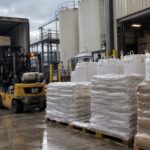
Inspect how the supplier protects bags, super sacks, totes, and other containers from moisture, pests, damage, chemicals, and cross-contact. Dry sugar can absorb moisture and clump when storage conditions are poorly controlled, so examine roof integrity, humidity risks, pallet conditions, wall clearance, and stock rotation.
Processing and Packing
Where the site refines, blends, grinds, repacks, or private-labels sugar, review line clearance, screens, magnets, metal detection where applicable, sanitation, label control, and packaging inspections. Confirm how the facility prevents mix-ups between refined white sugar, organic products, powdered sugar, brown sugar, and specialty products.
Traceability and Recall Readiness
Select a recent lot and ask the facility to trace it backward to the source and forward to affected customers. Review the time required, quantities accounted for, supporting records, and any unexplained gaps.
Corrective Actions
Inspect how the supplier handles damaged bags, specification failures, foreign-material complaints, missing documents, late deliveries, and customer rejections. Strong systems identify the root cause, correct the immediate issue, and reduce the chance of recurrence.
Can the Supplier Reliably Meet Your Volume?
Supply reliability requires more than a statement that a product is “in stock.” Buyers should assess normal capacity, peak capacity, available inventory, lead times, warehouse coverage, alternate sources, transportation options, and the supplier’s record of fulfilling orders during demand spikes or disruptions.
Ask the supplier to explain:
- Normal and peak monthly capacity
- Minimum and maximum order quantities
- Standard and emergency lead times
- Stock held at each warehouse
- Forecast and order-release requirements
- Backup mills or approved production sites
- Process for changing sources
- Freight capacity
- On-time and in-full delivery performance
- Response plan for shortages
- Ability to serve multiple plants
A supplier’s financial stability also matters because repeated cash-flow problems, unpaid carriers, sudden credit changes, or poor inventory investment may disrupt future orders. Procurement may review trade references, credit information, insurance, years in business, and contract terms as part of commercial qualification.
Consider a bakery group with plants in New York, New Jersey, and Pennsylvania. The lowest-priced supplier may still create higher risk if it ships from one distant location, requires large minimums, or cannot support split deliveries. A multi-warehouse distributor may offer better continuity and lower emergency freight exposure even when the base product price is slightly higher.
How Should Packaging and Logistics Be Qualified?
Packaging and delivery formats should match the customer’s consumption rate, storage space, receiving equipment, sanitation program, and production workflow. A package that lowers the unit price can still increase total cost when the facility lacks suitable unloading equipment, storage capacity, labor, or inventory turnover.
Review available formats and their operational impact before approving a supplier.
| Format | Common Use | Qualification Questions |
| Bags | Bakeries, distributors, smaller production lines | Are seals, liners, weights, and pallet patterns consistent? |
| Palletized bags | Regular dry sugar purchasing | Can the site store and rotate full pallets safely? |
| Super sacks | Higher-volume dry applications | Does the plant have suitable lifting, discharge, and dust controls? |
| Totes | Some liquid sugar operations | Are the tote, valve, pump, return, and sanitation requirements defined? |
| Bulk tanker | High-volume liquid sugar use | Can the site manage tank capacity, access, hoses, seals, unloading, and cleaning records? |
| Retail packs or sachets | Distribution and private-label programs | Are label approval, code dates, case counts, and packaging controls documented? |
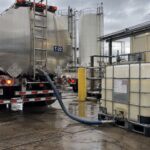
For liquid sugar, confirm unloading connections, hose ownership, seal control, tanker wash records, delivery temperature when relevant, pump capacity, sampling procedures, and the maximum volume the storage tank can safely receive.
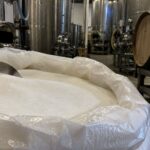
For dry sugar, assess moisture protection, bag strength, pallet stability, foreign-material controls, and how the supplier manages damaged packages. Custom packaging and private-label orders also require written artwork approval, label checks, packaging specifications, and change-control procedures.
How Should Buyers Compare Total Landed Cost?
Total landed cost includes more than the quoted sugar price. A useful comparison includes product cost, freight, fuel surcharges, customs and import costs when applicable, packaging, storage, handling, payment terms, testing, minimum orders, and the financial impact of late or rejected deliveries.
Price still matters, especially when a company purchases sugar in bulk quantities. However, switching to a cheaper vendor may create a false saving if it leads to larger inventories, slower delivery, inconsistent quality, extra receiving labor, or production downtime.
What Red Flags Can Disqualify a Sugar Supplier?
Serious warning signs include unclear product origins, expired certificates, missing traceability records, inconsistent specifications, weak corrective actions, and vague delivery commitments. A supplier does not need a perfect history, but it should disclose problems, investigate root causes, provide evidence, and communicate clearly when quality or supply issues occur.
Investigate these red flags before approval:
- The supplier refuses to identify the manufacturing source.
- Audit certificates do not match the producing facility.
- COAs contain incorrect products, lots, or repeated results.
- Samples do not match commercial deliveries.
- The company changes sources without notification.
- Traceability records contain unexplained gaps.
- Allergen statements conflict with site activities.
- Lead times and stock levels remain vague.
- The supplier lacks a documented recall procedure.
- Complaints remain open without root-cause analysis.
- Sales claims conflict with written specifications.
- Freight and customs costs appear only after purchase.
- The company cannot explain its backup sourcing plan.
One missing document may result from an administrative delay. Several unresolved inconsistencies, however, may indicate a weak quality system or poor ingredient transparency.
Why Should You Complete a Trial Order?
A trial order tests whether a supplier can perform under normal commercial conditions. It gives QA, procurement, receiving, production, and accounts payable a chance to assess the product, documentation, packaging, delivery, communication, and invoicing before the company commits to larger or recurring purchases.
During the trial, record:
- Product conformity
- COA accuracy
- Packaging condition
- Lot and date-code legibility
- Pallet stability
- Delivery timing
- Seal and trailer condition
- Receiving efficiency
- Production performance
- Invoice accuracy
- Response to questions or deviations
When possible, run the sugar through its intended product and process. A small sample may not reveal clumping, unloading delays, inconsistent dissolving, packaging failures, or issues that arise during full-scale baking, beverage, dairy, or confectionery production.
Procurement teams ready to test a new source can contact US Sweeteners to discuss a trial order for bulk granulated, powdered, or liquid sugar.
How Should Supplier Performance Be Monitored?
Supplier qualification continues after approval. QA should track quality results, document status, complaints, corrective actions, lead times, delivery accuracy, and changes to products or facilities so the company can identify declining performance before it affects food safety or production.
A structured scorecard keeps reviews consistent:
| Category | Suggested Weight | Example Measures |
| Product quality | 25% | Specification compliance, rejects, consistency |
| Food safety and documentation | 20% | Audit status, COAs, traceability, document accuracy |
| Supply continuity | 20% | Fill rate, available stock, backup sourcing |
| Logistics | 15% | On-time delivery, damage, order accuracy |
| Pricing and terms | 10% | Landed cost, invoices, payment terms |
| Communication | 10% | Response times, escalation, corrective actions |
The weights are an example and should match your risk assessment. A beverage plant using bulk liquid sugar may assign more weight to tanker sanitation and unloading performance, while a distributor handling retail bags may place greater emphasis on packaging accuracy and private-label controls.
FDA requires covered FSVP importers to reevaluate food and supplier risk at least every three years or sooner when new information arises about hazards or supplier performance. Other businesses may use annual reviews, risk-based schedules, or event-driven requalification based on their own food-safety programs.
Requalification should also occur after:
- A serious complaint or recall
- Repeated specification failures
- A change in manufacturing facility
- A change in product source or formulation
- A certification lapse
- Major ownership or operational changes
- New food-safety information
- Significant delivery-performance decline
Why Work With US Sweeteners?
US Sweeteners supports U.S. distributors, wholesalers, and food manufacturers that need dependable access to sweeteners and related ingredients. Its role extends beyond selling sugar by helping customers coordinate product requirements, bulk quantities, packaging needs, stock availability, and delivery across the United States.
The company serves markets that include bakery goods, beverages, breweries and wineries, sweets and snacks, dairy, sauces and condiments, health and nutrition, pet food, meat and seafood, and other manufacturing applications. Its product and market coverage includes bulk sugar and liquid sugar supply.
A productive supplier discussion should begin with:
- Required sugar type
- Product specification
- Monthly and annual volume
- Packaging format
- Delivery location
- Delivery frequency
- Required certifications
- Current supply challenge
- Preferred start date
Sharing these details gives the sales and logistics team enough information to determine product availability, pricing, and operational fit.
Conclusion
A reliable bulk sugar supplier should consistently meet product specifications, food-safety expectations, documentation requirements, order volumes, and delivery schedules. Price deserves careful review, but it should not outweigh traceability, quality performance, stock availability, responsive communication, or the supplier’s ability to prevent disruptions.
US Sweeteners helps manufacturers, distributors, and wholesalers source bulk sweeteners for operations across the United States. Contact us and share your required sugar type, specification, quantity, packaging format, delivery location, and schedule with the US Sweeteners team to discuss a supply plan that fits your QA and production needs.
FAQs
How do you qualify a bulk sugar supplier?
Qualify a bulk sugar supplier by defining the required product, reviewing the manufacturing source, evaluating food-safety documents, confirming specifications, and assessing supply capacity and logistics. Approve a representative sample and complete a trial order before authorizing routine purchases. Continue monitoring quality, delivery, documentation, and corrective-action performance after approval.
What documents should a sugar supplier provide?
A sugar supplier should generally provide a product specification, allergen statement, origin information, traceability records, recall procedure, and relevant audit or certification documents. A certificate of analysis may also be required for each lot or shipment, depending on the product and customer agreement. All documents should match the correct product and supplying facility.
Does every imported sugar supplier require an FSVP?
No. FSVP applies to covered U.S. importers and includes exemptions and modified requirements for certain situations. The responsible importer must determine whether the rule applies to each imported food and foreign supplier, then establish the required verification program. Companies buying imported sugar from a U.S. distributor should confirm which party serves as the FSVP importer.
Is a GFSI-recognized certification enough to approve a supplier?
No. Certification provides useful evidence, but it does not replace the buyer’s hazard analysis, specification review, supplier-risk assessment, or performance evaluation. QA should verify the certificate’s scope and status, review relevant findings, and determine whether additional audits, testing, or records are needed.
What should QA review on a sugar certificate of analysis?
QA should verify the supplier, product code, lot number, production date, specification limits, test results, and approval status. The COA should reflect the attributes important to the application, such as moisture, color, purity, particle size, microbiological results, or liquid concentration. Any missing, unusual, or out-of-specification value should receive documented review.

Thomas is a product expert at US Sweeteners, a trusted bulk sugar and sweetener distributor serving food and beverage manufacturers across the USA. He writes about sweetener sourcing, ingredient trends, and supply chain insights for the food industry.