Liquid Sucrose Explained: Applications, Specs, and Bulk Delivery Logistics
Liquid sucrose helps food manufacturers simplify production, improve batching consistency, and reduce ingredient handling time across beverage, bakery, dairy, confectionery, and processed food operations. Unlike granulated sugar, liquid sucrose arrives in a ready-to-use liquid form that dissolves quickly and supports faster large-scale production.
For ingredient buyers, production managers, and procurement teams, selecting the right liquid sucrose supplier involves more than sweetness alone. Storage requirements, Brix concentration, tanker sanitation, packaging format, warehouse access, lead times, and documentation standards all affect production reliability. US Sweeteners supports manufacturers and distributors with bulk liquid sucrose sourcing, food-grade handling, and nationwide delivery solutions designed for commercial food production.
What Is Liquid Sucrose?
Liquid sucrose is a concentrated sugar syrup made by dissolving refined sugar into water under controlled production conditions. Food manufacturers use it because it provides consistent sweetness, faster dissolving performance, cleaner handling, and more efficient ingredient integration compared to granulated sugar in large-scale operations.
Most liquid sucrose originates from refined sugar produced from sugar cane or sugar beet crops, including Beta vulgaris. During production, sugar crystals dissolve into heated water until the solution reaches a target concentration. Manufacturers then filter and pasteurize the syrup to improve clarity, reduce contamination risk, and stabilize the product before transportation.
Commercial liquid sucrose products are commonly standardized around 67°–68° Brix, although exact specifications vary by supplier and application. Brix measures dissolved sugar concentration within the solution and directly affects sweetness, viscosity, flowability, and production consistency.
According to research, Brix is one of the most widely used units in the food and beverage industry for measuring dissolved sugar concentration, and 1° Brix equals 1 gram of sucrose in 100 grams of solution. The review also notes that Brix measurement plays an important role in sweetness control for soft drinks, fruit juices, honey, winemaking, and brewing, which makes Brix verification a practical quality-control step for buyers sourcing bulk liquid sucrose.
Food manufacturers commonly use liquid sucrose in:
- Soft drinks
- Coffee beverages
- Dairy products
- Baking applications
- Candies and confectionery
- Sauces and syrups
- Canned and bottled products
- Prepared foods
Unlike icing sugar or powdered sugar, liquid sucrose eliminates the need for additional dissolution during processing. That advantage can reduce production downtime while improving batching accuracy in high-volume food manufacturing environments.
How Liquid Sucrose Is Produced?
Liquid sucrose production depends on precise concentration control, filtration standards, sanitation practices, and temperature management. Small specification differences can affect flavor consistency, viscosity, shelf stability, and processing performance during manufacturing.
The production process typically begins with refined sugar sourced from sugarcane or sugar beet processing plants. Manufacturers dissolve sugar crystals into heated water until the syrup reaches a target concentration level suitable for beverage, dairy, bakery, or processed food applications.
Most commercial liquid sucrose production includes:
- Sugar dissolution
- Heating and concentration control
- Fine filtration
- Pasteurization or microbial reduction
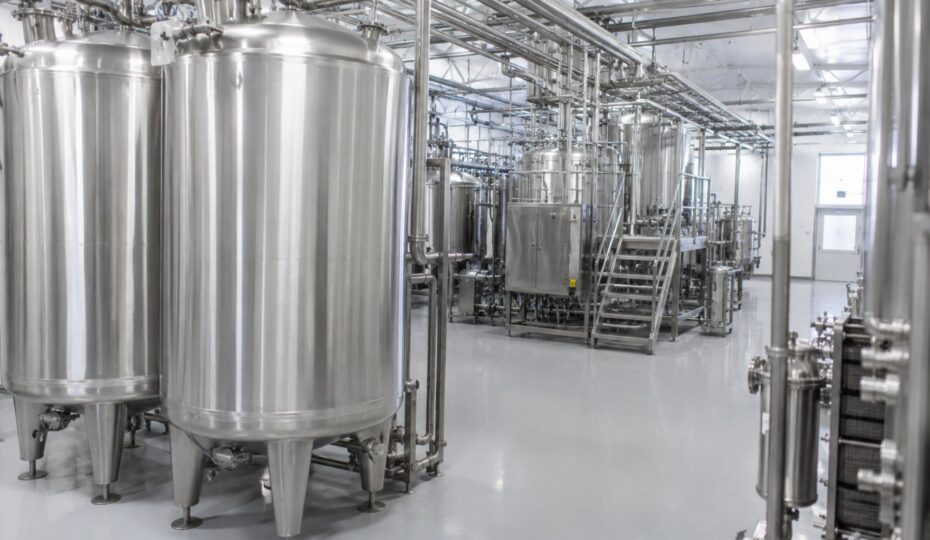
- Storage in sanitary food-grade tanks
- Bulk packaging and transportation
Production quality matters because improperly processed sugar syrup can create crystallization issues, inconsistent sweetness, microbial growth, or pumping problems during manufacturing.
Experienced procurement teams usually review several technical factors before approving a liquid sucrose supplier:
| Specification Area | Why It Matters |
| Brix concentration | Sweetness consistency |
| Viscosity | Pumping performance |
| Color clarity | Beverage appearance |
| Filtration quality | Reduced sediment risk |
| Odor profile | Product consistency |
| Microbial limits | Food safety compliance |
| Shelf-life stability | Inventory planning |
| COA availability | Traceability and compliance |
Many beverage plants and dairy facilities also request certificates of analysis (COAs) with every shipment. Those documents often include Brix concentration, microbiological results, color standards, and production batch traceability.
Why Manufacturers Use Liquid Sucrose Instead of Granulated Sugar
Liquid sucrose improves production efficiency by reducing dissolution time, simplifying ingredient handling, and supporting more consistent batching during large-scale food and beverage manufacturing. Facilities that process thousands of pounds of sugar daily often prefer liquid systems because they reduce labor demands and improve production flow.
Granulated sugar remains useful in retail baking and smaller production environments. However, large beverage, dairy, and prepared food manufacturers often switch to liquid sugar systems because dry sugar handling creates additional mixing, sanitation, and transport challenges.
Several operational advantages make liquid sucrose attractive in commercial manufacturing:
| Production Factor | Liquid Sucrose | Granulated Sugar |
| Dissolving Time | Fast | Slower |
| Dust Production | Minimal | Higher |
| Pump Compatibility | Yes | No |
| Batch Consistency | High | Moderate |
| Labor Requirements | Lower | Higher |
| Mixing Efficiency | Faster | Slower |
Manufacturers also use liquid sucrose to improve ingredient accuracy during beverage applications and syrup production. Since the sugar is already dissolved, the sweetener integrates more evenly into production batches without requiring additional heating or mixing time.
Large bakery operations often use liquid sugar to maintain moisture consistency in cakes, fillings, icings, syrups, and dessert products. Automated pumping systems can also move liquid sucrose more efficiently than powder or crystal-based sugar systems, especially in facilities with continuous production schedules.
Additionally, liquid sugar reduces airborne sugar particles during processing. That cleaner handling environment can reduce cleanup demands and improve sanitation management in food production facilities.
Liquid Sucrose vs. Invert Sugar vs. Corn Syrup
Liquid sucrose, invert sugar, and corn syrup all serve as sweeteners, but each ingredient behaves differently during food production. Manufacturers choose between them based on sweetness profile, moisture retention, crystallization control, viscosity, and shelf-life requirements.
Liquid sucrose contains dissolved sucrose and provides a neutral sweetness profile commonly used in beverages and dairy products. Invert sugar undergoes hydrolysis, which breaks sucrose into glucose and fructose. Corn syrup, meanwhile, is produced from starch conversion and commonly supports texture stabilization in processed foods.
The differences become important during large-scale manufacturing because ingredient functionality affects texture, production stability, and finished product consistency.
| Sweetener | Composition | Best Uses | Functional Benefit |
| Liquid Sucrose | Sucrose + water | Beverages, dairy, baking | Clean sweetness |
| Invert Sugar | Glucose + fructose | Candies, baked goods | Moisture retention |
| Corn Syrup | Glucose-rich syrup | Candy, sauces | Crystallization control |
| HFCS | High fructose corn syrup | Soft drinks | Higher sweetness |
Invert sugar often appears in candies and baked goods because fructose retains moisture more effectively than standard sucrose. That characteristic can help maintain softer textures and longer shelf stability in confectionery products.
Corn syrup and HFCS commonly support processed foods, sauces, and soft drinks because they improve texture stability and reduce crystallization. However, many beverage manufacturers still prefer liquid sucrose because of its cleaner taste and predictable sweetness profile.
Common Applications of Liquid Sucrose in Food Manufacturing
Liquid sucrose supports multiple food categories because it blends quickly into production systems while maintaining stable sweetness and consistent ingredient performance. Manufacturers often use it in operations where production speed and batching accuracy directly affect output.
Beverage production remains one of the largest liquid sucrose categories. Soft drinks, flavored water, tea products, syrups, coffee beverages, and energy drinks frequently use liquid sugar because it dissolves immediately and distributes evenly throughout the product.
In dairy manufacturing, liquid sucrose helps improve sweetness consistency in flavored milk, yogurt, ice cream, and frozen desserts. Since dairy processing often involves strict temperature control and rapid batching, liquid sweeteners simplify ingredient integration compared to granulated sugar.
Bakery manufacturers commonly use liquid sucrose in:
- Cakes
- Icings
- Fillings
- Dessert sauces
- Syrups
- Sweet breads
Many large bakeries prefer liquid systems because they reduce mixing time and support more consistent moisture distribution across high-volume production runs.
Confectionery manufacturers also combine liquid sucrose with invert sugar or corn syrup during candy production. Gummies, caramel, coatings, and syrup-based candies often depend on balanced sweetener systems to achieve target texture and shelf stability.
Production teams frequently evaluate liquid sweeteners based on how efficiently they move through pumps, holding tanks, and ingredient lines. A poorly filtered or overly viscous syrup can slow production or increase equipment maintenance requirements.
Bulk Liquid Sucrose Specifications Buyers Should Review
Liquid sucrose specifications directly affect production performance, storage stability, ingredient handling, and transportation efficiency. Buyers should review technical specifications carefully before placing bulk orders because even small inconsistencies can create production problems in beverage, bakery, or dairy operations.
Most commercial liquid sucrose products are standardized around 67°–68° Brix, although exact tolerances vary between suppliers. Higher or lower concentration levels can affect sweetness intensity, viscosity, pumping speed, and finished product consistency.
Experienced buyers often evaluate several technical specification categories before approving a supplier relationship.
Bulk Liquid Sucrose Buyer Specification Checklist
| Specification | Typical Buyer Concern |
| Brix range | Sweetness consistency |
| Brix tolerance | Batch-to-batch accuracy |
| Color clarity | Beverage appearance |
| Odor | Product consistency |
| Viscosity | Pump and line flow |
| Filtration level | Sediment prevention |
| Shelf life | Inventory planning |
| Microbial limits | Food safety |
| COA availability | Traceability |
| Tanker sanitation | Contamination prevention |
| Packaging format | Storage compatibility |
| Lead times | Production continuity |
Storage conditions also matter. Most suppliers recommend maintaining liquid sucrose in clean, food-grade storage systems at stable temperatures to reduce crystallization risk and maintain pumpability. Facilities operating in colder climates may require heated storage or insulated transfer lines during winter deliveries.
Buyers should also confirm whether the supplier provides lot tracking, COAs, allergen statements, sanitation records, and microbiological documentation with each shipment.
Packaging Formats and Bulk Delivery Logistics
Bulk liquid sucrose logistics affect production scheduling, warehouse management, unloading procedures, and ingredient reliability. Beverage plants, bakeries, and food manufacturers often require different packaging formats depending on production volume, storage capacity, and unloading infrastructure.
A facility receiving tanker shipments operates differently from a bakery using drums or totes. Procurement teams usually evaluate storage space, pump access, unloading speed, and delivery frequency before selecting packaging formats.
Common packaging options include:
| Packaging Format | Typical Use Case | Operational Consideration |
| 5-gallon pails | Small production runs | Manual handling |
| 55-gallon drums | Medium-volume production | Easier storage |
| Totes / IBCs | Large facilities | Forklift access required |
| Tanker trucks | High-volume manufacturing | Pump and unloading systems needed |
Bulk liquid sucrose logistics should also be evaluated by:
- Delivery lead times
- Warehouse proximity
- Emergency replenishment capability
- Tanker sanitation standards
- Pump compatibility
- Seasonal demand planning
- Inventory turnover schedules
- Unloading access requirements
For example, beverage facilities receiving tanker deliveries often require dedicated unloading systems, sanitary hose connections, and heated transfer capabilities during colder weather. Meanwhile, bakeries using drums or totes may prioritize flexible delivery scheduling and warehouse storage efficiency instead of tanker access.
Lead time management also matters during peak seasonal demand periods. Beverage production, candy manufacturing, and baking operations frequently increase sweetener purchasing before holidays and summer production cycles. Suppliers with regional warehouse networks can often reduce transportation delays and improve replenishment speed during high-demand periods.
Rather than using generic “nationwide delivery” claims, buyers should evaluate whether a supplier can support emergency replenishment, regional inventory access, documentation support, and food-grade handling requirements that align with actual production risks.
How to Choose the Right Liquid Sucrose Supplier
The best liquid sucrose supplier should support both ingredient quality and operational reliability. Food manufacturers often evaluate suppliers based on logistics performance, technical documentation, inventory consistency, and food safety standards rather than price alone.
Ingredient shortages can quickly disrupt beverage production, bakery manufacturing, and processed food operations. Procurement teams, therefore, prioritize suppliers that maintain stable inventory systems and dependable transportation coordination.
A strong supplier relationship should include:
- Consistent product specifications
- Food-grade handling standards
- COA and documentation support
- Flexible packaging options
- Reliable lead times
- Regional warehouse access
- Responsive logistics coordination
- Emergency replenishment capability
Food manufacturers also benefit from suppliers that understand different production environments. Beverage applications, dairy products, sauces, and confectionery systems often require different viscosity levels, delivery schedules, and unloading procedures.
US Sweeteners supports manufacturers and distributors with bulk liquid sucrose sourcing, scalable packaging formats, regional inventory support, and logistics coordination designed for commercial food production operations across the United States.
Conclusion
Liquid sucrose supports modern food manufacturing by improving batching efficiency, reducing ingredient handling complexity, and delivering consistent sweetness across beverage, dairy, bakery, confectionery, and processed food applications. However, successful bulk sourcing depends on more than sweetness alone. Procurement teams should evaluate Brix concentration, viscosity, microbial standards, tanker sanitation, packaging compatibility, storage requirements, warehouse proximity, and lead-time reliability before selecting a supplier. Operational details such as emergency replenishment capability, documentation support, and unloading compatibility can directly affect production continuity.
US Sweeteners supports manufacturers and distributors with bulk liquid sucrose sourcing, scalable packaging formats, food-grade handling standards, and logistics coordination for large-scale commercial food production. If your operation needs a reliable liquid sucrose supply, flexible delivery options, or documentation support, our team can help match your sourcing needs with the right bulk sweetener solution. Contact US Sweeteners today to discuss your liquid sucrose requirements.
FAQs
What is liquid sucrose used for?
Liquid sucrose commonly supports beverage applications, dairy products, baking, confectionery manufacturing, sauces, and processed foods. Manufacturers use it because it dissolves quickly and delivers consistent sweetness during large-scale production. Soft drinks, syrups, candies, cakes, bottled products, and flavored dairy items frequently contain liquid sucrose.
What Brix concentration is common for liquid sucrose?
Most commercial liquid sucrose products are standardized around 67°–68° Brix, although exact concentration ranges vary by supplier and application. Brix concentration affects sweetness, viscosity, pumpability, and batching consistency during food production. Buyers should confirm Brix tolerance ranges before approving bulk orders.
What should buyers review before ordering bulk liquid sucrose?
Buyers should review Brix concentration, viscosity, color clarity, microbial limits, filtration standards, shelf life, packaging formats, tanker sanitation procedures, and certificate of analysis availability. Those specifications directly affect production consistency and food safety compliance. Procurement teams should also confirm lead times and emergency replenishment capabilities.
How is bulk liquid sucrose delivered?
Suppliers commonly deliver liquid sucrose in pails, drums, totes, IBCs, or tanker trucks, depending on production volume requirements. Large beverage plants often receive tanker deliveries, while bakeries and smaller food manufacturers may use drums or totes. Delivery systems should match unloading equipment and storage capacity.
Why do manufacturers use liquid sucrose instead of granulated sugar?
Manufacturers use liquid sucrose because it reduces dissolution time, improves batching consistency, and simplifies ingredient handling. Pump systems can move liquid sugar more efficiently than dry sugar, especially in continuous production environments. Liquid systems also reduce airborne sugar dust and cleanup requirements.
What storage conditions are recommended for liquid sucrose?
Liquid sucrose should generally be stored in clean, food-grade tanks or containers under stable temperature conditions to reduce crystallization risk and maintain flowability. Facilities operating in colder climates may require insulated or heated transfer systems during the winter months. Storage systems should also follow sanitary handling practices to reduce contamination risks.

Thomas is a product expert at US Sweeteners, a trusted bulk sugar and sweetener distributor serving food and beverage manufacturers across the USA. He writes about sweetener sourcing, ingredient trends, and supply chain insights for the food industry.