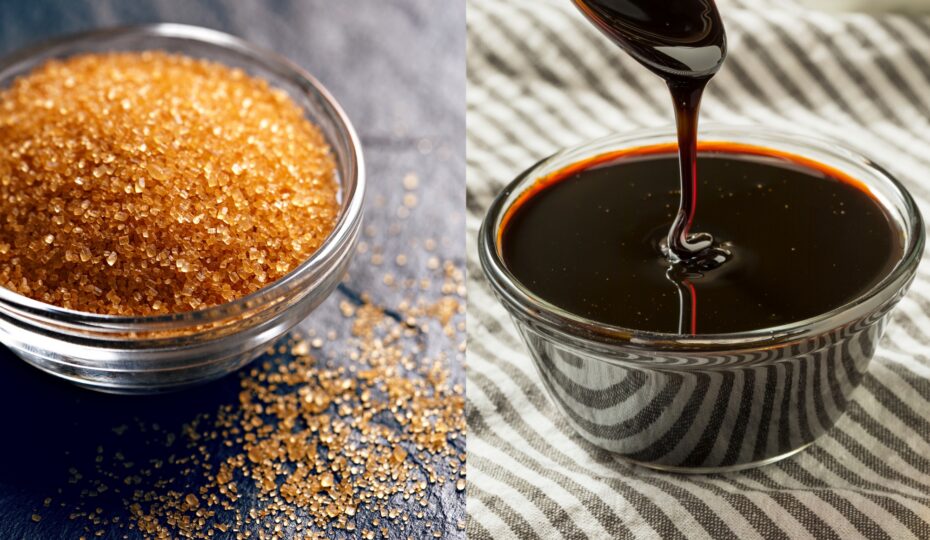
In a brown sugar vs molasses comparison, the right choice depends on more than sweetness. Bakers, sauce makers, beverage producers, and food manufacturers need to consider flavor intensity, finished color, moisture, batching method, and the product’s shelf-life validation plan.
Brown sugar is usually the best fit when a formula needs dry handling, caramel flavor, and chewiness. Molasses is better when a dark color and a pronounced bittersweet flavor are part of the product profile. Invert syrup is most useful when moisture retention, smooth texture, and crystallization control matter more than color or molasses flavor.
Brown Sugar vs. Molasses vs. Invert Syrup
Brown sugar, molasses, and invert syrup all provide sweetness, but they work differently in a formula. Brown sugar is mainly sugar crystals with molasses; molasses is a concentrated syrup from sugar processing, and invert syrup is made by hydrolyzing sucrose into glucose and fructose. Commercial invert syrups may also retain some sucrose, so buyers should review the supplier specification for solids, sugar profile, and viscosity.
Brown sugar works well in dry bakery mixes, cookies, rubs, and toppings. Molasses brings stronger flavor and darker color to sauces, gingerbread, dark breads, and barbecue products. Invert syrup is often used where smooth texture, moisture retention, and reduced crystallization are more important than molasses flavor.
| Feature | Brown Sugar | Cane Molasses | Invert Syrup |
| Form | Soft sugar crystals or granules | Thick liquid syrup | Liquid sweetener |
| Main composition | Sugar with molasses | Syrup from sugar processing | Glucose, fructose, and sometimes residual sucrose |
| Flavor | Mild caramel and molasses notes | Rich, robust, bittersweet profile | Sweet, mostly neutral |
| Color | Light to dark brown | Dark brown to nearly black | Clear to amber |
| Moisture impact | Can contribute to softness in baked goods, depending on formula, bake profile, packaging, and storage | Adds liquid and may affect density, spread, or viscosity | Can support moisture retention; validate through product-specific testing |
| Crystallization role | Limited | Limited | Can help reduce crystallization in suitable applications |
| Best uses | Cookies, cakes, dry mixes, rubs | BBQ sauce, gingerbread, dark breads, baked beans | Fillings, confectionery, syrups, beverages, soft baked goods |
| Handling | Dry batching and blending | Liquid transfer and dosing | Liquid transfer and dosing |
US Sweeteners works with food businesses that need dependable bulk sweetener sourcing and practical support around product selection, packaging, and delivery planning. The right choice starts with the finished product, not simply the ingredient name.
Brown Sugar vs. Molasses: Which Is Better for Your Formula?
Brown sugar is typically the better fit for dry formulas that need a mild caramel note and a chewy texture. Molasses is usually the stronger choice when a product needs dark color, deeper flavor, and liquid sweetener functionality. Neither ingredient is automatically better because their performance depends on the formula, process, and finished-product target.
Brown sugar is commonly made by combining refined sugar with molasses. Light brown sugar generally contains less molasses than dark brown sugar, which gives it a milder taste and lighter appearance. King Arthur Baking estimates that light brown sugar contains about 3.5% molasses, while dark brown sugar contains about 6.5%.
Molasses is more concentrated in flavor and liquid content than brown sugar. It may deepen color and add a pronounced bittersweet note, but it can also change viscosity, dough spread, and moisture balance. That difference matters most in products with tight texture specifications, such as cookies, sauces, fillings, and ready-to-bake mixes.
Formula Selection Checklist
For commercial formulation, select the sweetener by starting with the product requirement rather than the ingredient name. Choose brown sugar when dry handling and caramel flavor are priorities. Choose molasses when dark color and a robust bittersweet profile are required. Choose invert syrup when moisture retention, smoothness, and crystallization control are the main functional goals.
Before pilot testing, confirm these product specifications with the supplier:
- Flavor intensity and sensory profile
- Finished-product color target
- Brix or total soluble solids
- Viscosity and pumping requirements
- pH and acidity considerations
- Moisture and water-activity implications
- Sugar profile, including residual sucrose in invert syrup
- Packaging format and storage requirements
- Label and ingredient-declaration impact
This approach gives purchasing and formulation teams a clearer basis for comparing ingredients before committing to a full production run.
How Brown Sugar Affects Flavor, Color, and Texture
Brown sugar gives baked goods a mild caramel flavor, a warm brown color, and more moisture than white granulated sugar alone. It is often used in cookies, muffins, cakes, crumb toppings, dry rubs, and snack coatings where a soft texture and recognizable brown sugar flavor are desired.
Light brown sugar usually suits products that need a softer caramel note and lighter color. Dark brown sugar adds a deeper flavor and darker finish because it contains more molasses. Although light and dark brown sugar can often be exchanged in home baking, manufacturers should validate the change for color, flavor, processing consistency, and finished-product appearance.
Light Brown Sugar
Light brown sugar works well in cookies, coffee cakes, muffins, blondies, and crumb toppings. It can also suit dry bakery mixes where the product needs a mild molasses flavor without a dark appearance.
Dark Brown Sugar
Dark brown sugar fits spice cakes, ginger cookies, barbecue rubs, baked beans, and darker sauces. It can provide a fuller flavor than light brown sugar, but its impact on color may be more noticeable than its impact on sweetness.
How Molasses Performs in Baking and Sauces?
Molasses provides a stronger flavor, darker color, and more liquid than brown sugar. It is commonly used in gingerbread, barbecue sauces, marinades, baked beans, dark breads, and spice-forward baked goods where the ingredient’s robust profile is part of the product identity.
Because molasses is a liquid ingredient, it can affect total formula weight, dough spread, sauce viscosity, and finished texture. In a barbecue sauce, that added body may support the desired consistency. In a cookie, however, the same change may require adjustments to dry ingredients or other liquids to protect the target texture.
First and Second Molasses
Molasses terms can vary by supplier and region, so buyers should request a product specification rather than rely on a name alone. In general, earlier-stage molasses tends to be lighter and sweeter, while later-stage molasses is darker and more intense.
For procurement and product-development purposes, request details such as Brix, viscosity, pH, ash or mineral content, color, origin, and flavor profile. These factors can influence how molasses performs in a sauce, bakery product, beverage, or seasoning blend.
Blackstrap Molasses
Blackstrap molasses is not interchangeable with standard baking molasses. It is produced through additional boiling, has a darker color and more assertive flavor, and may create a more bitter or salty result in baked goods. Serious Eats specifically advises against using blackstrap as a general replacement unless a recipe calls for it by name.
Add a “do not substitute without testing” step when blackstrap molasses is under consideration. Its sensory profile can change a formula more sharply than a switch between light and dark brown sugar.
What Invert Syrup Adds to a Formula
Invert syrup is a liquid sweetener that can provide sweetness, moisture retention, and a smoother texture in baked goods, fillings, syrups, confectionery, and beverages. It is particularly useful when a formula needs functional support without the dark color or strong molasses flavor of cane molasses.
Its use does not guarantee a longer shelf life. Product stability still depends on the full formula, water activity, packaging, process controls, and storage conditions. For that reason, manufacturers should validate texture, crystallization, and shelf-life performance through product-specific testing.
When Invert Syrup May Be the Better Choice
Invert syrup can be worth evaluating when a product needs:
- A clean sweetness profile
- A smoother texture in fillings or confectionery
- Lower crystallization risk in syrups or sugar systems
- More moisture retention in soft baked goods
- A lighter product color than molasses would provide
- Liquid handling for a sauce, beverage, or filling process
Invert syrup does not replace brown sugar or molasses when the finished product depends on their distinct caramel or bittersweet flavor.
Which Sweetener Works Best for Bakery, Sauce, and Beverage Products?
The best sweetener depends on the product’s desired flavor, color, texture, and manufacturing process. Brown sugar often fits dry bakery systems, molasses supports dark and flavor-forward products, and invert syrup can help manage texture in liquid, confectionery, and moisture-sensitive applications.
A cookie formula may use brown sugar as the primary sweetener for chewiness and caramel flavor, then add molasses for a deeper profile. A barbecue sauce may rely on molasses for color and character while using another sweetener to balance overall sweetness. A confectionery filling may use invert syrup to help reduce crystallization and maintain a smoother texture.
| Product Type | Best Starting Option | Why |
| Chocolate chip cookies | Light or dark brown sugar | Supports caramel flavor and chewiness |
| Gingerbread | Brown sugar with molasses | Builds dark color and a stronger spice profile |
| Coffee cake or crumb topping | Light brown sugar | Supports dry blending and mild flavor |
| BBQ sauce | Molasses | Adds color, body, and robust flavor |
| Dark bread | Molasses | Supports a deeper color and pronounced taste |
| Soft cookies | Brown sugar with invert syrup | May support chewiness and moisture retention |
| Candy fillings | Invert syrup | Can help reduce crystallization |
| Beverage syrup | Invert syrup or molasses | Depends on desired color and flavor profile |
A single formula may use more than one sweetener. The key is to assign each ingredient a defined purpose, such as sweetness, color, moisture retention, viscosity, or signature flavor.
Can You Substitute Brown Sugar for Molasses?
Brown sugar can replace part of the sweetness and flavor contribution from molasses, but it is not a direct one-to-one substitute. Molasses adds more liquid and a stronger flavor, so replacing it with brown sugar can make a product lighter in color, less intense in taste, and different in texture.
For home baking, white sugar and molasses can be combined to create brown sugar. King Arthur Baking recommends 1 cup of white sugar with 2 teaspoons of molasses for a light brown sugar substitute or 1 tablespoon of molasses for a dark brown sugar substitute.
Commercial substitutions require more caution. Use a pilot batch to evaluate color, flavor, viscosity, spread, and finished texture before changing a production formula. This is especially important when replacing molasses in cookies, sauces, dry mixes, or products with a controlled moisture target.
Bulk Handling and Storage Considerations
Brown sugar, molasses, and invert syrup each need a handling plan that fits the production environment. Brown sugar is easier to dry blend and portion, while molasses and invert syrup require liquid transfer, dosing, and storage systems that account for viscosity and package size.
Brown sugar can harden as it loses moisture, so sealed packaging and controlled storage help preserve handling quality. Molasses and invert syrup should be evaluated for storage temperature, transfer method, clean-in-place procedures, and dosing accuracy based on their supplier specifications.
Before placing a bulk order, ask:
- Which packaging formats are available?
- What are the recommended storage conditions?
- What is the product’s target Brix or viscosity range?
- What color and flavor variation is acceptable between lots?
- Does the facility need bags, pails, drums, or totes?
- What documentation supports ingredient and label review?
- Can the supplier support recurring orders and multi-location distribution?
US Sweeteners can help food businesses assess bulk sweetener options based on application needs, packaging requirements, and delivery planning across the United States.
Shelf Life, Moisture, and Labeling Considerations
Brown sugar, molasses, and invert syrup can all influence texture, but none replaces proper product development and shelf-life validation. The formula’s water activity, pH, processing method, packaging, and storage conditions all affect how a finished product performs over time.
Brown sugar can contribute to softness in baked goods because of its molasses content. Molasses adds more liquid and may affect density or spread. Invert syrup can support moisture retention and reduce crystallization in appropriate products, but manufacturers should confirm those effects through real product testing.
For U.S. labeling, brown sugar made from cane sugar and cane molasses is a multi-ingredient product. FDA guidance states that multi-ingredient sugar and syrup products must declare both grams and percent Daily Value for added sugars. Single-ingredient sugars and syrups follow different Nutrition Facts display rules, so manufacturers should review the applicable FDA guidance for the finished product and package format.
Conclusion
Brown sugar, molasses, and invert syrup each bring a different benefit to food production. Brown sugar supports dry handling and caramel flavor. Molasses provides deeper color and a robust profile. Invert syrup can help with moisture retention, smooth texture, and crystallization control where those functions matter most.
US Sweeteners helps distributors, bakeries, beverage producers, sauce makers, and food manufacturers evaluate bulk sweetener options for their product and supply needs. Contact us to discuss available ingredients, packaging formats, private-label requirements, and delivery planning for your next order.
FAQs
Is brown sugar the same as molasses?
No. Brown sugar is mainly sugar crystals combined with molasses, while molasses is a concentrated syrup from sugar processing. Brown sugar is drier and has a milder flavor. Molasses adds more liquid, a darker color, and a stronger taste.
Is invert syrup the same as molasses?
No. Invert syrup is produced by hydrolyzing sucrose into glucose and fructose, while molasses comes from sugar processing. Invert syrup usually has a cleaner, sweeter profile and lighter color. Molasses is darker and has a more robust, bittersweet flavor.
Can I use molasses instead of brown sugar?
You can replace part of brown sugar’s flavor contribution with molasses, but the two ingredients do not behave the same way. Molasses adds liquid and can change color, spread, texture, and viscosity. Test the adjustment before using it in commercial production.
Does brown sugar make baked goods softer?
Brown sugar can help create a softer or chewier texture than white sugar alone because it contains molasses. The final result also depends on the fat level, bake profile, flour, packaging, and storage conditions. Dark brown sugar may create a stronger flavor and darker finish than light brown sugar.
Does invert syrup improve shelf life?
Invert syrup can support moisture retention and reduce crystallization in suitable applications. It does not automatically extend shelf life because product stability depends on the full formula, water activity, packaging, and storage conditions. Validate performance through finished-product shelf-life testing.
Which sweetener is best for barbecue sauce?
Molasses is often a strong starting point for barbecue sauce because it contributes dark color, body, and a bold flavor profile. Brown sugar can add sweetness and caramel notes, while invert syrup may help adjust sweetness or texture. Many formulas use more than one sweetener to reach the intended balance.

Thomas is a product expert at US Sweeteners, a trusted bulk sugar and sweetener distributor serving food and beverage manufacturers across the USA. He writes about sweetener sourcing, ingredient trends, and supply chain insights for the food industry.