Cane Sugar vs. Beet Sugar: Does the Source Matter for Your Formulation?
Choosing between cane sugar vs beet sugar matters more for sourcing, labeling, and formulation goals than for sweetness alone. Both sugars are refined sucrose and perform similarly in many foods and beverages, but differences in processing, GMO status, caramelization behavior, and sourcing strategy can influence manufacturing decisions.
For food manufacturers, beverage brands, bakeries, and procurement teams, the real issue is not whether one sugar is “healthier.” The more important question is whether the sugar source affects production consistency, certification requirements, cost control, or consumer perception. At US Sweeteners, manufacturers compare cane and beet sugar based on formulation goals, warehouse availability, packaging format, certification needs, and production scale. A clean-label beverage company may prioritize non-GMO cane sugar, while a high-volume bakery may prioritize domestic beet sugar availability and operational efficiency.
What Is the Difference Between Cane Sugar and Beet Sugar?
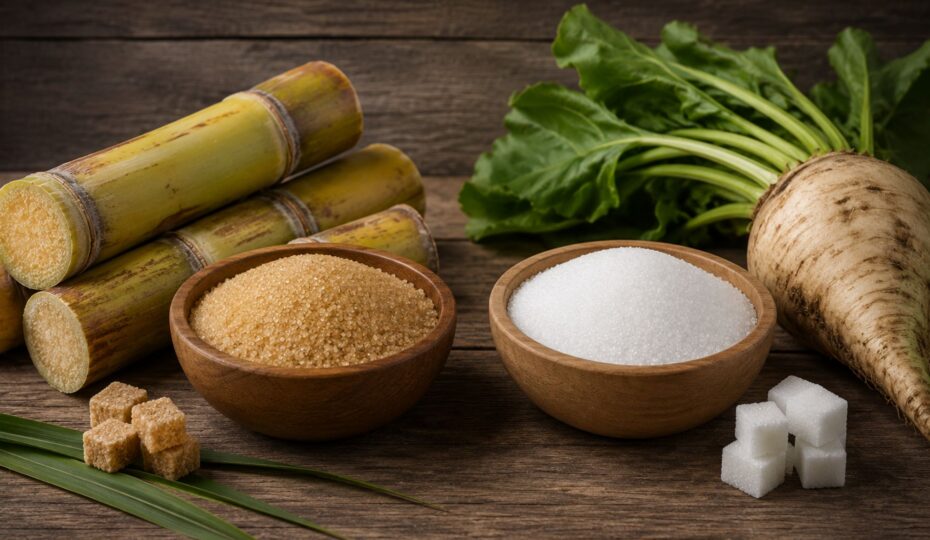
Cane sugar comes from the sugarcane plant, a tropical grass, while beet sugar comes from sugar beet plants, which are root vegetables grown mainly in cooler climates. After refining, both become highly purified sucrose, but differences in sourcing, refining methods, and trace compounds can affect labeling, caramelization, and manufacturing decisions.
Sugar cane is harvested above ground and processed by crushing stalks to extract juice. Beet sugar production uses sliced sugar beets soaked in hot water to diffuse sugar from the root. Both juices go through clarification, evaporation, crystallization, and refining before becoming granulated sugar or refined white sugar.
From a chemical standpoint, both sugars are nearly identical. Refined cane and beet sugar contain roughly 99.9% sucrose after processing. However, trace impurities left behind during refining may slightly influence flavor, browning, or texture in sensitive formulations such as caramel, hard candy, syrups, or premium baked goods.
Cane Sugar vs Beet Sugar Comparison
Food manufacturers often compare beet and cane sugar based on operational performance, certifications, and sourcing strategy rather than sweetness alone. Although both sugars work similarly in many products, the sourcing differences can influence logistics, branding, and ingredient selection.
| Category | Cane Sugar | Beet Sugar |
| Plant Source | Sugarcane grass | Sugar beet root |
| GMO Status | Usually non-GMO | Often GMOs in the U.S. |
| Vegan Concerns | May involve bone char refining | Typically bone-char free |
| Flavor Notes | Slight fruity/molasses notes | Slight earthy notes |
| Caramelization | Often preferred in confectionery | Can brown faster in some applications |
| Supply Chain | More import exposure possible | Strong domestic supply |
| Common Applications | Candy, premium bakery, beverages | Industrial manufacturing |
Most large-scale food production systems can use both sugars interchangeably. In practice, manufacturers typically match the sugar source to the product goal rather than assuming one source performs better in every application.
Does Cane Sugar Taste Different Than Beet Sugar?
Most consumers cannot reliably distinguish cane sugar from beet sugar in finished foods or beverages because both are refined sucrose with nearly identical sweetness. However, confectionery applications and minimal-ingredient products sometimes reveal small differences in aroma or aftertaste.
Some manufacturers describe beet sugar as having slightly earthy notes in delicate syrups or candies, while cane sugar may create a cleaner sweetness in premium confectionery applications. In commercial formulations, stronger ingredients such as cocoa, vanilla, dairy, fruit concentrates, or spice blends usually overpower these subtle differences.
Manufacturers working with craft soda, premium syrups, or high-end candy products may notice the difference more clearly. In those cases, cane sugar is sometimes chosen because it aligns better with consumer expectations around “pure cane sugar” branding and flavor positioning.
Which Sugar Performs Better in Baking and Manufacturing?
Cane sugar and beet sugar perform similarly in most industrial baking and beverage applications, but differences may appear in caramelization, crystal behavior, moisture handling, and confectionery production. These differences matter more in sensitive formulations than in standard commercial foods.
In formulation trials, cane and beet sugar should be tested under the same temperature curve before switching suppliers. For caramel, brittle, and hard candy, even small differences in crystal size, moisture, or trace compounds can affect browning speed and batch consistency. Manufacturers should validate performance through pilot batches rather than relying on sugar source alone.
A bakery evaluating a supplier switch, for example, may discover that one sugar source creates slightly faster browning in high-sugar cookie production. Another beverage manufacturer may find no measurable difference because syrup dilution and flavor systems minimize source-related variations.
Manufacturers evaluating sugar performance often compare:
- Crystal size consistency
- Moisture migration behavior
- Dissolution speed
- Batch repeatability
- Storage stability
At an industrial scale, process control usually matters more than the sugar source itself. Oven calibration, humidity, syrup concentration, and mixing conditions often have a larger impact on final product quality than whether the sugar came from cane or beet crops.
GMO Status Is One of the Biggest Real Differences
GMO status is one of the clearest differences between cane sugar and beet sugar. In the United States, most sugar beets are genetically modified for herbicide resistance and agricultural durability, while most domestic sugar cane remains non-GMO.
This distinction matters mainly for:
- Non-GMO formulations
- Organic products
- Clean-label positioning
- Natural product marketing
- Consumer transparency goals
Refined sugar itself contains virtually no detectable genetic material after processing because refining removes proteins and DNA from the final product. Even so, many brands still choose cane sugar because consumers often associate “pure cane sugar” with natural or premium products.
Beverage companies, snack brands, and organic manufacturers frequently use cane sugar to align with non-GMO or clean-label positioning strategies. Meanwhile, many industrial food manufacturers prioritize consistency, domestic availability, and operational efficiency instead of marketing claims tied to the sugar source.
Is Beet Sugar More Sustainable Than Cane Sugar?
Sustainability comparisons between beet and cane sugar depend heavily on transportation, farming practices, water use, and refinery logistics rather than the sugar source alone. One source is not automatically more sustainable in every situation.
Beet sugar offers strong domestic sourcing advantages in North America because many sugar beet facilities operate closer to major manufacturing regions. Shorter transportation distances can reduce freight costs and simplify inventory planning. Cane sugar, meanwhile, can produce high sugar yields per acre in tropical growing regions, which may improve agricultural efficiency under certain conditions.
A manufacturer producing snacks, for example, may lower transportation costs and shorten lead times by sourcing domestically refined beet sugar instead of imported cane sugar. Another company focused on organic or non-GMO positioning may accept higher transportation exposure to maintain cane sugar sourcing for branding purposes.
Manufacturers evaluating sustainability typically compare:
- Transportation requirements
- Regional sourcing stability
- Water usage
- Supplier certifications
- Refinery efficiency
Operational sustainability often depends more on the total supply chain than on whether the sugar originated from sugar cane or sugar beets.
Domestic vs Imported Sugar Supply
Supply chain stability has become increasingly important for food manufacturers managing volatile ingredient markets. Beet sugar offers strong domestic supply coverage in the United States because much of the country’s sugar production comes from northern beet-growing regions.
Cane sugar sourcing can involve domestic refining, imported raw sugar, or international transportation exposure, depending on the supplier network. This can influence lead times, inventory availability, and transportation volatility during supply-chain disruptions.
Food manufacturers should evaluate total landed cost instead of focusing only on price per pound. Transportation exposure, storage conditions, inventory timing, and supplier consistency can significantly affect operational efficiency during large-scale production.
When Does the Difference Actually Matter?
The sugar source matters most when branding, certifications, or sensitive formulations become part of the product strategy. For many standard industrial applications, the performance difference between cane and beet sugar remains minimal.
| Product Goal | Better Fit |
| Non-GMO positioning | Cane sugar |
| Organic formulations | Cane sugar |
| Premium confectionery | Often cane sugar |
| Domestic sourcing priority | Beet sugar |
| Transportation efficiency | Beet sugar |
| High-volume production | Either, depending on logistics |
| Standard industrial baking | Either |
| Clean-label marketing | Often cane sugar |
Manufacturers should choose cane or beet sugar by matching the source to the production goal instead of relying on broad assumptions. In many commercial formulations, process control and ingredient consistency matter more than the crop itself.
How Food Manufacturers Choose Between Cane and Beet Sugar
Large-scale manufacturers rarely choose sugar based only on online claims or consumer trends. Most production teams evaluate sugar through pilot testing, sourcing analysis, technical reviews, and supplier qualification processes before approving ingredients for commercial production.
Manufacturers commonly evaluate:
- Product positioning
- Crystal uniformity
- Dissolution performance
- GMO requirements
- Total landed cost
Documentation also plays a major role during supplier qualification. Procurement and quality assurance teams frequently request certificates of analysis, allergen statements, kosher certifications, halal documentation, organic verification, and specification sheets before approving a sugar supplier.
Reliable ingredient sourcing helps manufacturers reduce production interruptions, maintain formulation consistency, and simplify compliance requirements across multiple product lines.
Conclusion
Cane sugar and beet sugar are far more similar than many online comparisons suggest. Both are highly refined sucroses and perform similarly in many foods and beverages. The most meaningful differences involve GMO status, branding strategy, caramelization behavior, and sourcing logistics. For manufacturers, the best choice depends on the product goal. Premium, organic, or non-GMO brands may prefer cane sugar, while large-scale production teams may prioritize domestic availability and operational efficiency with beet sugar. Manufacturers evaluating bulk sugar suppliers should compare technical performance, sourcing stability, and production fit before making long-term purchasing decisions.
At US Sweeteners, we help food manufacturers compare cane sugar vs beet sugar options based on formulation goals, sourcing needs, and production requirements. Our team supports commercial sweetener sourcing with dependable supply, flexible packaging, and delivery coordination for large-scale operations. Request a quote today to find the right sugar solution for your production needs.
FAQs
Is cane sugar healthier than beet sugar?
No. Cane sugar and beet sugar are nutritionally almost identical because both are refined sucrose. Neither offers meaningful health advantages over the other when consumed in standard amounts. The main differences involve sourcing, GMO status, and processing preferences rather than nutrition.
Why do some bakers prefer cane sugar?
Some bakers believe cane sugar caramelizes more evenly and develops a cleaner flavor during confectionery production. These differences are usually subtle, but they may become more noticeable in caramel, brittle, syrups, and minimal-ingredient recipes.
Is beet sugar vegan?
Most beet sugar is considered vegan because manufacturers typically do not use bone char during refining. Some cane sugars may involve bone char filtration unless specifically labeled vegan-friendly.
Can cane sugar and beet sugar be used interchangeably?
Yes. Most industrial formulations and household recipes can use either sugar interchangeably because both are nearly pure sucrose. In many finished products, consumers cannot detect a noticeable difference in flavor or performance.

Thomas is a product expert at US Sweeteners, a trusted bulk sugar and sweetener distributor serving food and beverage manufacturers across the USA. He writes about sweetener sourcing, ingredient trends, and supply chain insights for the food industry.