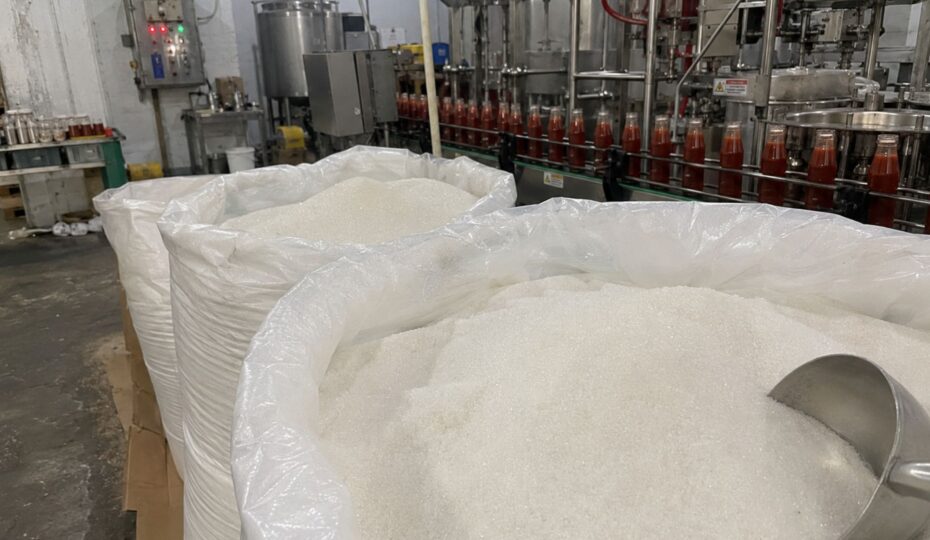
Bulk sugar for sauce manufacturers typically includes granulated sugar, brown sugar, molasses, liquid sucrose, invert sugar, and HFCS. The best choice depends on the sauce’s flavor, color, texture, processing method, labeling goals, and production volume.
Choosing the right sweetener involves more than comparing price per pound. It can affect flavor, color, acid balance, texture, labeling, production speed, and storage. A barbecue sauce may need brown sugar or molasses, while a high-volume dressing line may work better with pumpable liquid sucrose or HFCS.
This guide is for procurement teams, product developers, operations managers, and co-packers producing sauces, marinades, dressings, condiments, and ready meals. US Sweeteners supplies dry and liquid sweeteners in multiple packaging formats through a nationwide warehouse network.
What Is Bulk Sugar for Sauce Manufacturing?
Bulk sugar for sauce manufacturing includes commercial quantities of granulated sugar, brown sugar, molasses, liquid sucrose, invert sugar, and corn-based sweeteners. These products may arrive in 50 lb bags, pallets, supersacks, drums, totes, or tankers, depending on the ingredient and the plant’s receiving setup.
Unlike retail table sugar, industrial sweeteners must meet repeatable specifications and fit the production process. A manufacturer may need dry sugar for flexible kettle batches, liquid sweeteners for automated metering, or specialty sugars for a specific flavor or label position.
Before requesting a quote, define:
- Required sweetener and grade
- Monthly or annual usage
- Preferred packaging
- Receiving and storage capabilities
- Production and delivery schedule
The USDA recognizes refined sugar, brown sugar, molasses, liquid sugar, and invert sugar as distinct sugar products.
Which Sweeteners Do Sauce Manufacturers Use?
Sauce and ready-meal manufacturers commonly use granulated sugar, brown sugar, molasses, liquid sucrose, invert sugar, and HFCS. Each contributes a different mix of sweetness, flavor, color, water, solids, and handling requirements. The best option depends on the recipe, equipment, label goals, and total production cost.
Granulated Sugar
Granulated sugar, also called white sugar or table sugar, provides a clean taste that works in tomato sauces, ketchup, marinades, dressings, and ready-meal components. Fine or extra fine granulated sugar may dissolve faster than larger crystals, although temperature, agitation, water, and other solids also affect dissolution.
US Sweeteners offers bulk granulated sugar for commercial food production.
Brown Sugar
Brown sugar combines sucrose with molasses, creating a darker color and richer flavor. It works well in BBQ sauce, teriyaki-style sauces, meat glazes, baked-bean sauces, and savory marinades.
Light and dark brown sugar should not be treated as identical. Darker grades generally provide stronger molasses notes and may change the finished sauce’s color, flavor, and moisture balance.
Molasses
Molasses adds deep color, caramel notes, bitterness, and complexity. It commonly appears in bold BBQ sauces, steak sauces, gravies, marinades, and prepared-meal applications.
Because small changes can noticeably affect flavor, manufacturers should specify the exact grade, color, solids, and sensory profile required.
Liquid Sucrose
Liquid sucrose is refined sugar dissolved in water. It provides neutral sweetness and arrives ready to pump or meter, which may reduce bag handling and on-site dissolution.
It can suit high-volume sauce lines with compatible tanks and pumps. However, it contributes water as well as sugar, so formulators must adjust the recipe before replacing dry sugar.
Invert Sugar
Invert sugar contains glucose and fructose produced from sucrose. It may support smooth texture and help reduce crystallization in selected glazes, fruit sauces, fillings, and specialty condiments.
Manufacturers should review sweetness, water, solids, color, viscosity, and shelf-life performance before using it as a substitute.
HFCS
High-fructose corn syrup is a liquid sweetener made from corn starch. FDA identifies HFCS 42 and HFCS 55 as common commercial grades, although the correct product depends on the application.
HFCS supports pumpable handling and consistent metering, but brands must also consider sweetness, label strategy, and consumer preferences.
| Sweetener | Common Uses | Main Benefit | Key Consideration |
| Granulated sugar | Tomato sauce, ketchup, marinades | Clean sweetness | Requires dissolution |
| Brown sugar | BBQ sauce, glazes | Molasses flavor and color | Grade consistency |
| Molasses | Bold sauces and gravies | Deep flavor and color | Strong sensory impact |
| Liquid sucrose | Dressings and high-volume sauces | Pumpable and ready to meter | Adds water |
| Invert sugar | Glazes and fruit sauces | Smooth texture | Formula validation |
| HFCS | Sauces and ready meals | Consistent liquid sweetness | Grade and labeling |
How Does Sugar Affect Sauce Quality?
Sugar can influence sweetness, perceived acidity, browning, soluble solids, mouthfeel, and cooking behavior. Its effect depends on the full recipe, including acids, proteins, starches, gums, salt, fat, fruit solids, pH, time, and temperature.
Acid Balance
Sugar can soften the sharp taste of tomato, vinegar, citrus, and fermented ingredients. However, sweeter taste does not mean a safer pH or water activity.
Shelf-stable products still require validated formulation and processing controls. Manufacturers should never rely on taste alone to assess food safety.
Browning and Flavor Development
Caramelization involves the thermal breakdown of sugars, while the Maillard reaction occurs between reducing sugars and amino acids. These reactions can create browned, roasted, or caramel flavors. The Institute of Food Technologists notes that sugar can contribute to Maillard browning, texture, and mouthfeel.
Sucrose, invert sugar, HFCS, brown sugar, and molasses do not brown or taste exactly the same. Pilot testing helps manufacturers identify excessive darkening or unwanted cooked flavors.
Solids, Texture, and Brix
Sugar adds dissolved solids and can affect body and mouthfeel. Quality teams often monitor Brix, but Brix does not measure sugar alone in a complex sauce. Salt, acids, tomato solids, fruit solids, and other ingredients also affect the reading.
Viscosity also depends on starches, gums, oils, proteins, and suspended solids. Manufacturers should review Brix, pH, viscosity, and sensory results together.
Granulated Sugar vs. Liquid Sugar
Granulated sugar often suits flexible batch production, while liquid sugar may suit repeated or automated runs. Dry sugar requires storage, feeding, and dissolution. Liquid sugar arrives ready to pump, but it adds water and requires sanitary liquid-handling equipment.
| Factor | Granulated Sugar | Liquid Sugar |
| Packaging | Bags, pallets, supersacks | Drums, totes, tankers |
| Storage | Dry, moisture-controlled area | Sealed tank or container |
| Addition | Manual or dry feeder | Pump and meter |
| Dissolution | Required | Already dissolved |
| Formula effect | Adds dry solids | Adds sugar and water |
| Flexibility | Better for changing recipes | Better for repeated formulas |
| Main concern | Dust, clumping, dissolution | Water balance and sanitation |
Liquid sugar may fit when:
- The same formula runs at high volume.
- Bag handling slows production.
- The plant already has tanks and pumps.
- Dissolution limits throughput.
- The formula can accept the syrup’s water content.
Granulated sugar may work better for smaller batches, changing recipes, limited tank space, or facilities that use several dry sweeteners.
How Should Manufacturers Choose Packaging?
The right package depends on usage, storage, labor, unloading equipment, and delivery access. A lower ingredient price can still create higher costs if the plant lacks the equipment or space needed to handle the package safely.
| Format | Best Fit | Main Requirement |
| 50 lb bags | Small or flexible batches | Manual handling and dry storage |
| Palletized bags | Regular dry use | Forklift or pallet jack |
| Supersacks | High-volume dry use | Hoist and discharge system |
| Drums | Lower-volume liquid use | Pump or dispenser |
| IBC totes | Medium-to-high liquid use | Pump, fittings, and storage |
| Tankers | Large recurring liquid demand | Bulk tank and receiving access |
Before ordering, inspect dock access, door width, forklift capacity, ceiling clearance, hose reach, tank capacity, and receiving hours.
Store granulated, brown, and powdered sugar in clean, dry conditions away from moisture, pests, and strong odors. Humidity and damaged packaging can cause clumping even though properly stored sugar has a long shelf life.
What Should You Ask a Sweetener Supplier?
A qualified condiment sweetener supplier should answer questions about product grade, packaging, current inventory, documentation, traceability, lead times, and backup options. The supplier should also understand the plant’s usage, storage limits, receiving equipment, and production schedule.
Ask:
- Which product matches our approved specification?
- What is the ingredient source?
- Which packaging formats are available?
- What is the minimum order?
- Is the product currently in stock?
- Which warehouse will ship it?
- What delivery window can be confirmed?
- Which freight or accessorial charges apply?
- Will the shipment include a lot-specific COA?
- Are kosher, halal, organic, non-GMO, allergen, and origin documents available where required?
- Can the supplier support recurring orders?
- What alternatives are available during shortages?
FDA’s Preventive Controls for Human Food rule requires covered facilities to conduct hazard analysis and apply risk-based controls. Some manufacturers may also need a supply-chain program and supplier-verification activities.
Which Documents Should Accompany Bulk Sweeteners?
Bulk orders should include the approved specification and any lot-specific records required by the manufacturer’s quality program. These documents support receiving, traceability, audits, label review, and recall readiness.
| Document | Purpose |
| Product specification | Defines identity and acceptance limits |
| Certificate of Analysis | Reports lot-specific results |
| Lot identification | Supports traceability |
| Allergen statement | Supports allergen review |
| Country-of-origin statement | Supports sourcing records |
| Kosher, halal, or organic certificate | Verifies applicable certification |
| Non-GMO documentation | Supports customer programs |
| Safety Data Sheet | Provides handling information where applicable |
Document requirements vary by product. Buyers should confirm scope, expiration date, issuing body, and lot connection before approving a shipment.
How Do Label Claims Affect Sweetener Choice?
Label strategy can influence sourcing, especially for brands using claims such as “real sugar” or “no HFCS.” A no-HFCS formula may use granulated sugar, liquid sucrose, brown sugar, molasses, or another sweetener, but the ingredient list and Nutrition Facts panel must remain accurate.
FDA recognizes sucrose, glucose, fructose, corn syrup, and HFCS as sweetener names used on labels. Added sugars must also appear in the Nutrition Facts panel.
Changing from HFCS to dry or liquid sucrose may affect:
- Water and total solids
- Sweetness and flavor
- Pumping and dissolution
- Cook time and color
- Label declaration
- Shelf-life validation
- Delivered and operating cost
Manufacturers should complete formulation and labeling reviews before making a commercial change.
How Should Manufacturers Compare Costs?
Manufacturers should compare total delivered and operating costs, not only price per pound. Freight, packaging, labor, storage, equipment, sanitation, ingredient loss, and rush delivery can change the real cost of a sweetener.
Landed sweetener cost = ingredient price + freight + surcharges + packaging + receiving and handling
Also consider:
- Bag-dumping labor
- Dust control
- Pumps and tanks
- Tote or drum disposal
- Dissolution time
- Residual syrup
- Emergency freight
- Production downtime
- Excess inventory
Compare quotes using the same grade, quantity, packaging, destination, freight terms, documents, and delivery date.
How Can Manufacturers Prevent Shortages?
Manufacturers can reduce supply disruptions by forecasting demand, setting reorder points, monitoring stock, and sharing seasonal requirements early. They should also confirm warehouse inventory, alternate packaging, approved substitutes, and realistic lead times before inventory becomes critical.
A practical plan includes:
- Track average and peak weekly usage.
- Confirm normal supplier lead time.
- Add a buffer for freight delays.
- Set a reorder point.
- Share large production forecasts.
- Preapprove substitutions after technical review.
- Track delivery and quality performance.
Conclusion
The right sweetener helps a manufacturer reach the target flavor, color, solids, label position, and handling method. Granulated sugar offers flexibility, brown sugar and molasses add richer character, and liquid sucrose or HFCS can support efficient large-batch production.
US Sweeteners supplies granulated sugar, brown sugar, molasses, liquid sucrose, HFCS, invert sugar, and specialty sweeteners for sauces, condiments, marinades, dressings, and ready meals. The company also offers custom packaging, private labeling, and nationwide multi-warehouse distribution. Contact us with your product, quantity, package format, destination ZIP code, and delivery schedule to request a quote.
FAQs
What type of sugar is best for sauce manufacturing?
No single sugar works best for every sauce. Granulated sugar provides clean sweetness, brown sugar and molasses add deeper flavor, while liquid sucrose and HFCS support pumpable production. The right choice depends on the formula, equipment, label goals, and cost.
Is liquid sugar better than granulated sugar?
Liquid sugar may work better for high-volume lines because it arrives dissolved and can be pumped directly into a batch. Granulated sugar may offer more flexibility for smaller runs and changing recipes. Manufacturers should compare water content, labor, storage, equipment, and total cost.
Why is brown sugar used in BBQ sauce?
Brown sugar adds sweetness, molasses flavor, and darker color. These qualities complement tomato, vinegar, smoke, and savory spices. Manufacturers should specify light or dark brown sugar to maintain consistent flavor and color.
What is the difference between liquid sucrose and HFCS?
Liquid sucrose contains dissolved sucrose, while HFCS contains glucose and fructose in water. They may differ in sweetness, solids, flavor, labeling, and processing behavior. Manufacturers should not exchange them without formulation testing.
Do manufacturers need a certificate of analysis?
Many food manufacturers require a COA for receiving and lot-release procedures. Requirements depend on the facility’s quality program, approved specification, and customer needs. Buyers should confirm COA, traceability, allergen, and certification requirements before ordering.

Thomas is a product expert at US Sweeteners, a trusted bulk sugar and sweetener distributor serving food and beverage manufacturers across the USA. He writes about sweetener sourcing, ingredient trends, and supply chain insights for the food industry.