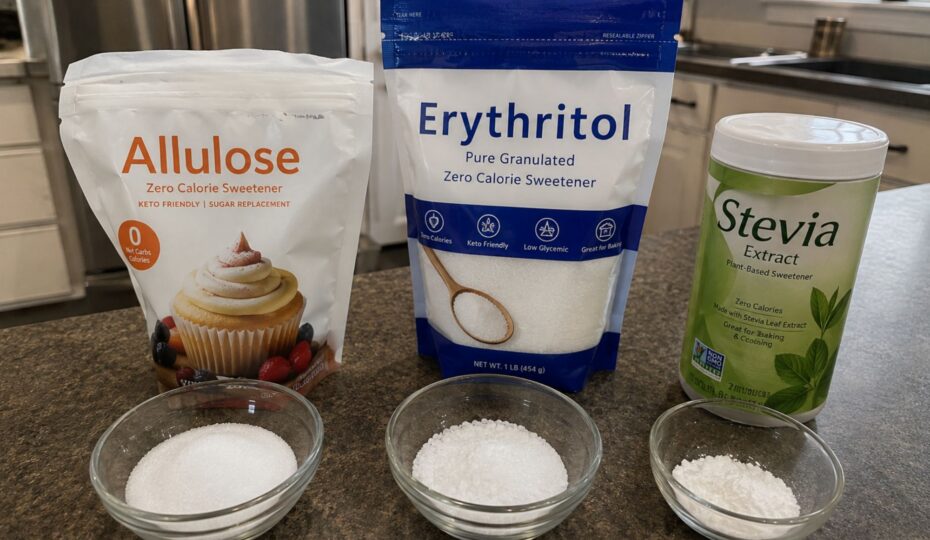
Allulose, erythritol, and stevia serve different roles in food formulation. Allulose offers the most sugar-like bulk, browning, and mouthfeel. Erythritol provides crystalline bulk but may create a cooling sensation, while stevia delivers intense sweetness at very low use levels but adds almost no bulk. The best choice depends on the product and the function sugar needs to replace.
This guide is for food manufacturers, product developers, purchasing teams, and commercial brands reducing added sugar. US Sweeteners supplies bulk sweeteners for food manufacturing and helps buyers coordinate specifications, ordering, and nationwide delivery.
What Is the Difference Between Allulose, Erythritol, and Stevia?
Allulose is a rare sugar that supplies sweetness and physical bulk. Erythritol is a sugar alcohol that also adds bulk but may create a cooling sensation. Stevia is a high-intensity sweetener that provides strong sweetness at a low use level without replacing sugar’s volume, texture, or browning.
Regular sugar performs several jobs in food. It can affect structure, viscosity, moisture, color, crystallization, freezing point, and shelf stability. A successful reformulation must identify which functions need replacement before selecting a sweetener.
Allulose
Allulose occurs naturally in small quantities in foods such as figs, raisins, wheat, and maple syrup. It provides about 70% of the sweetness of sucrose and 0.4 calories per gram under current FDA labeling guidance.
Because allulose has physical mass, it can support:
- Browning and caramelization
- Moisture retention
- Body and mouthfeel
- Softness in baked goods
- Solids replacement
Allulose tastes similar to regular sugar with little noticeable aftertaste. However, it may brown faster than sucrose, so manufacturers may need to adjust temperature or processing time.
Erythritol
Erythritol is a sugar alcohol, or polyol, that provides roughly 60% to 70% of the sweetness of table sugar. It supplies crystalline bulk and appears in chewing gum, mints, chocolate, baked goods, and dry sweetener blends.
Most erythritol is absorbed in the small intestine and excreted largely unchanged. Its main sensory challenge is a cooling effect created as the crystals dissolve. It can also recrystallize in some formulas, producing a firm or gritty texture.
Stevia
Stevia sweeteners use purified steviol glycosides associated with the Stevia rebaudiana plant. Depending on the preparation, stevia may provide roughly 150 to 300 times the sweetness of sucrose.
Because manufacturers use very small quantities, stevia adds little bulk. Some grades can create bitterness, a licorice-like aftertaste, or lingering sweetness. Reb A, Reb M, purity, carrier ingredients, and concentration can all affect the final taste.
Allulose vs Erythritol vs Stevia
Allulose offers the most sugar-like physical performance. Erythritol supplies crystalline bulk but may introduce cooling or crystallization. Stevia provides the greatest sweetness at the lowest dosage but normally requires another ingredient to replace sugar’s body. No option works as a universal one-to-one sugar substitute.
| Factor | Allulose | Erythritol | Stevia |
| Ingredient type | Rare sugar | Sugar alcohol | High-intensity sweetener |
| Sweetness vs. sucrose | About 70% | About 60%–70% | About 150–300 times sweeter |
| Provides bulk | Yes | Yes | Very little |
| Taste | Generally sugar-like | Clean with possible cooling | May taste bitter or linger |
| Browning | Promotes browning | Limited browning | No sugar-like browning |
| Main challenge | Fast browning at some conditions | Cooling and crystallization | Aftertaste and lack of bulk |
| Common role | Bulk, moisture, color | Crystalline bulk | Concentrated sweetness |
| Typical uses | Bakery, sauces, dairy, beverages | Gum, chocolate, dry mixes | Beverages, dairy, blended systems |
Exact performance depends on ingredient grade, concentration, processing conditions, and the full food matrix.
Which Sweetener Tastes Most Like Sugar?
Allulose generally tastes the most like traditional sugar. Erythritol also offers a clean sweetness, but its cooling sensation can change the experience. Stevia delivers intense sweetness, although some products produce bitter, licorice-like, or lingering notes when formulators use too much or select an unsuitable grade.
Temperature, acidity, aroma, fat, and serving format can change how each option tastes. A stevia extract that complements a citrus drink may not perform as well in chocolate or vanilla dairy.
Why Does Erythritol Feel Cool?
Erythritol absorbs heat as it dissolves. This creates a cool sensation that becomes more noticeable at higher concentrations or when crystals dissolve quickly.
The effect can suit mints, chewing gum, or cooling drink powders. However, it may feel out of place in caramel, chocolate, bakery fillings, or creamy products. Grinding erythritol more finely may reduce grittiness, but it does not always remove the cooling sensation.
Why Does Stevia Grade Matter?
Commercial stevia ingredients differ in glycoside profile, purity, concentration, and carrier. Reb A may create more bitterness or linger at higher use levels, while other glycoside systems may provide a cleaner profile.
How Do These Sweeteners Perform in Food Manufacturing?
The right option depends on the function sugar performs in the finished product. A formula may need to restore sweetness, bulk, moisture, browning, viscosity, crystallization control, or freezing-point reduction. Manufacturers often use a blend because one sweetener rarely replaces every function of sucrose.
The table below highlights common starting points for commercial testing.
| Application | Best Starting Role | Main Testing Concern |
| Bakery | Allulose for bulk and browning | Color, spread, moisture |
| Beverages | Stevia for sweetness; allulose for body | Linger, acidity, mouthfeel |
| Dairy | Allulose or a blended system | Flavor finish and creaminess |
| Chocolate | Erythritol for bulk; stevia for sweetness | Cooling and crystallization |
| Frozen desserts | Allulose for softness and solids | Scoopability and ice formation |
| Sauces and glazes | Allulose for body and color | Viscosity and browning |
| Dry mixes | Erythritol for crystalline bulk | Flow and even dispersion |
Bakery and Confectionery
Allulose can support moisture and the browned appearance customers expect in baked goods. However, it may darken faster than bulk granulated sugar. Developers should test color, spread, softness, and storage stability rather than judging only the first batch.
Erythritol replaces some dry solids but may recrystallize as a product cools. Stevia raises sweetness but cannot replace sugar’s structure or mass. A bakery formula may therefore need allulose or erythritol for bulk and stevia for added sweetness.
Beverages and Frozen Products
Stevia works well when a beverage needs strong sweetness with few additional solids. Still, removing sugar can leave the drink thin. Allulose or another bulking ingredient may help restore body.
For liquid production, manufacturers may also compare the alternative system with bulk liquid sugar as a sucrose control. Frozen desserts require additional testing because sugar replacement can change hardness, ice crystals, and scoopability.
US Sweeteners can help product teams review current ingredient options, specifications, samples, and delivery requirements for commercial applications.
Why Do Manufacturers Blend Sweeteners?
Manufacturers blend sweeteners because one option rarely delivers the ideal combination of sweetness, bulk, texture, flavor, calories, and cost. Allulose or erythritol can provide physical mass, while stevia raises sweetness without requiring the same amount of material. Blends can also reduce the weaknesses of each ingredient.
Common strategies include:
- Allulose and stevia: Allulose supports bulk, moisture, and browning, while stevia closes the sweetness gap.
- Erythritol and stevia: Erythritol supplies crystalline bulk, while stevia increases sweetness.
- Allulose and erythritol: The combination may balance moisture, crystallinity, and cost.
- Three-way blend: Each ingredient handles a different part of the sweetness and texture target.
For example, a reduced-sugar cookie might use allulose for browning, erythritol for solids, and a small amount of stevia for sweetness. The development team must still test cooling, color, spread, texture, and shelf life.
How Should Manufacturers Compare Sweetener Costs?
Manufacturers should compare cost per finished batch or sweetening-equivalent unit, not only price per kilogram. Stevia may have a higher price per kilogram but requires a very small quantity. Allulose and erythritol need higher use levels because they provide less sweetness and also function as bulk ingredients.
A complete calculation should include:
- Price per kilogram
- Required inclusion rate
- Bulking ingredients
- Flavor modifiers
- Stabilizers or texturizers
- Processing adjustments
- Freight and storage
- Yield and waste
- Reformulation time
A simplified sweetening-equivalent calculation is:
Cost per SEU = cost per kilogram ÷ sucrose-equivalent sweetness per kilogram
However, SEU only compares sweetness. It does not value browning, moisture, texture, or body. The lowest-cost system is the one that reaches the full product target at the lowest finished-batch cost.
What FDA Labeling Differences Matter?
Allulose, erythritol, and stevia do not receive identical treatment on U.S. labels. Manufacturers must review ingredient declarations, total carbohydrates, total and added sugars, sugar-alcohol disclosure, and calorie calculations for the specific formula and ingredient grade.
Allulose
Current FDA allulose guidance allows allulose to be excluded from Total Sugars and Added Sugars under the agency’s enforcement-discretion approach. The FDA also advises using 0.4 calories per gram. Allulose still counts under total carbohydrate and must appear in the ingredient list.
Erythritol
Erythritol belongs to the sugar-alcohol category and does not receive the same labeling treatment as allulose. The final presentation may depend on the product and claims made.
The European Food Safety Authority’s erythritol review provides useful safety context, but manufacturers selling in the United States must follow FDA requirements.
Stevia
The FDA has evaluated GRAS notices for several high-purity steviol glycoside preparations. Whole stevia leaves and crude extracts do not hold the same status for use as sweeteners in conventional foods.
The FDA’s overview of high-intensity sweeteners also cites an acceptable daily intake of 4 milligrams per kilogram of body weight, expressed as steviol equivalents. Qualified regulatory personnel should review the final formula and claims before launch.
What Should Buyers Check Before Ordering?
A bulk sweetener supplier should provide more than an attractive quote. Buyers need consistent specifications, traceable lots, suitable packaging, complete documentation, and dependable delivery. Reviewing these details before formula approval can prevent quality problems and costly substitutions during production.
Before ordering, confirm:
- Exact ingredient name and grade
- Purity or assay
- Specification sheet
- Certificate of analysis
- Allergen statement
- Country of origin
- Lot traceability
- Particle size or physical form
- Packaging and storage requirements
- Shelf life
- Minimum order quantity
- Sample availability
- Lead time and freight terms
- Backup supply options
Manufacturers comparing other sugar-reduction tools can also review products such as bulk sucralose, bulk xylitol, and bulk maltitol.
Formulation-Choice Decision Tree
A decision tree helps teams select the best ingredient for the first test. It does not replace bench, pilot, sensory, and shelf-life trials.
- Does the formula need physical bulk? If no, begin with stevia. If yes, evaluate allulose or erythritol.
- Does the product need browning or caramelization? If yes, start with allulose.
- Is cooling acceptable? If yes, erythritol may fit. If no, limit it or use allulose.
- Does the formula need strong sweetness with few solids? If yes, evaluate an appropriate stevia grade.
- Does one ingredient miss the taste or texture target? If yes, test a blended system.
- Does the bench formula survive scale-up and storage? If yes, complete the regulatory, cost, and supply review.
Conclusion
Allulose, erythritol, and stevia solve different formulation problems. Allulose provides bulk and browning, erythritol supplies crystalline mass, and stevia offers intense sweetness. The best system depends on the application, process, label target, sensory standard, cost, and supply requirements.
US Sweeteners supplies sweeteners and food ingredients to manufacturers, distributors, bakeries, breweries, and beverage producers across the United States. Contact us to discuss current availability, specifications, packaging, and nationwide delivery.
FAQs
Which is better between allulose, erythritol, or stevia?
No option wins in every formulation. Allulose supports bulk, moisture, and browning; erythritol supplies crystalline bulk with possible cooling; and stevia provides strong sweetness at a low dosage. Many manufacturers blend them to balance function and taste.
Which sweetener tastes most like sugar?
Allulose generally tastes closest to traditional sugar. Erythritol also has a clean taste but may feel cool as it dissolves. Stevia can taste bitter or linger depending on grade and use level.
Which is best for baking?
Allulose often provides the closest physical performance because it adds bulk, moisture, and browning. Erythritol may crystallize, while stevia cannot replace structure by itself. The final choice depends on color, spread, texture, and shelf-life goals.
Can all three sweeteners be used together?
Yes. A three-way blend can combine allulose’s browning, erythritol’s crystalline bulk, and stevia’s concentrated sweetness. Exact ratios require application-specific testing.
Does stevia replace sugar one for one?
No. Stevia replaces sweetness but not sugar’s bulk, browning, viscosity, moisture control, or texture. The formula usually needs another bulk or texturizing ingredient.
Do they raise blood sugar?
Each generally creates a lower glycemic response than table sugar when considered alone. However, other carbohydrates in the finished food may still raise blood glucose. Manufacturers should evaluate the complete formulation and avoid unsupported medical claims.

Thomas is a product expert at US Sweeteners, a trusted bulk sugar and sweetener distributor serving food and beverage manufacturers across the USA. He writes about sweetener sourcing, ingredient trends, and supply chain insights for the food industry.