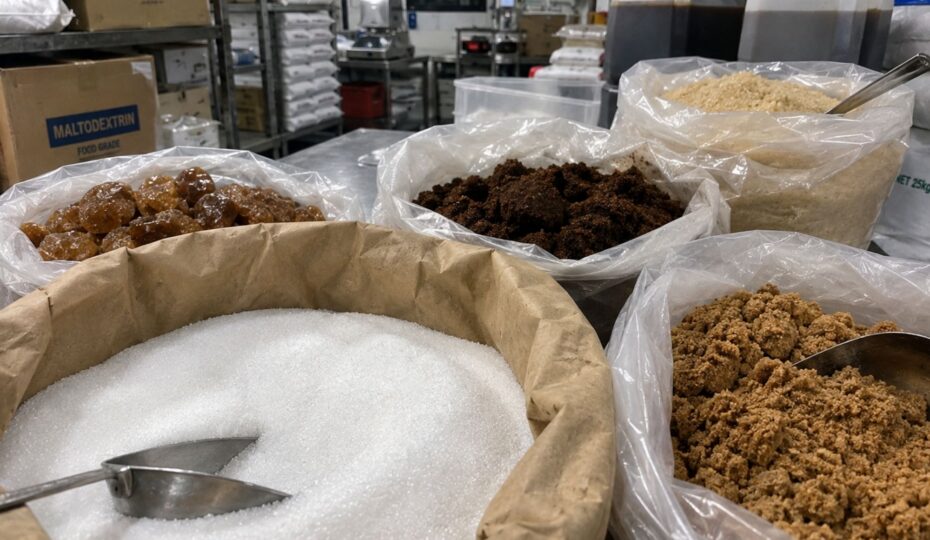
Choosing bulk sweeteners for ethnic food manufacturers requires more than comparing sweetness or price. Food manufacturers producing South Asian, Latin American, Middle Eastern, Caribbean, and specialty food lines often need sweeteners that support a specific flavor, color, texture, moisture level, and processing method while remaining practical for large-scale production.
Piloncillo, panela, jaggery, coconut sugar, date-based sweeteners, honey powders, muscovado, and other specialty cane sugars can perform differently from standard table sugar. The challenge is finding the right specification and sourcing it consistently.
Why Do Specialty Food Manufacturers Need Different Sweeteners?
Specialty food manufacturers often choose sweeteners for both taste and functional performance. Different sweeteners can influence flavor, color, texture, volume, moisture retention, sweetness intensity, and processing behavior. When a traditional formulation moves into industrial food manufacturing, consistent ingredient specifications become important for maintaining product quality from batch to batch.
Traditional sugars and alternative sweeteners do not behave identically simply because they provide sweetness. A dark specialty cane sugar may add caramel or molasses notes, while a liquid sweetener can change moisture and mixing requirements. Some products need mild sweetness that lets spices or fruit flavors remain prominent, while others rely on the sweetener for a stronger flavor contribution.
The best choice should therefore match the specific product rather than a broad cuisine category. Sauces, beverages, baked goods, confectionery, dairy products, and specialty snacks may each require a different balance of sweetness, texture, moisture, color, and functional performance.
Piloncillo and Panela for Latin Food Manufacturing
Piloncillo and panela are non-centrifugal cane sugars made by concentrating sugarcane juice instead of refining it fully into white sucrose. Their darker color and distinctive cane flavor can work in Latin-inspired sauces, beverages, baked goods, desserts, and confectionery where manufacturers want the sweetener to contribute flavor as well as sweetness.
A manufacturer evaluating a panela supplier or piloncillo supplier should confirm more than the product name. Important purchasing factors include:
- Country and producer of origin: Verify where the sweetener comes from and whether the source matches the product requirements.
- Physical format: Determine whether the production line needs blocks, granules, powder, or another form.
- Color and sweetness profile: Establish an acceptable sensory range for the finished formulation.
- Moisture and handling characteristics: Check how the ingredient will behave during storage, measuring, and processing.
- Lot-to-lot consistency: Confirm that repeat orders can meet the required specification.
- Food-safety documentation and certifications: Request the documents needed by procurement and quality teams.
- Packaging and import lead times: Make sure the supply format and replenishment schedule fit production needs.
Research indexed by FAO documents variation in characteristics such as moisture, pH, color, and reducing sugars among commercial panela products. For manufacturers needing a related cane-sugar option rather than traditional panela or piloncillo, bulk raw cane sugar may also be evaluated against the finished product’s requirements.
Jaggery Bulk Sourcing for South Asian Food Lines
Jaggery is a traditional non-centrifugal sugar widely associated with South Asian foods. Compared with highly refined regular sugar, it can contribute stronger cane-derived flavor, darker color, moisture, and different cooking characteristics. Manufacturers buying jaggery bulk should therefore establish clear specifications for origin, composition, physical form, and consistency.
Research indexed by FAO identifies jaggery as a traditional unrefined sugar widely consumed in India and notes that regional and production differences can affect its characteristics. FAO AGRIS research on jaggery supports the need to evaluate individual sources rather than assuming every jaggery ingredient will perform the same way.
Jaggery can contain minerals and other compounds retained through less intensive refining, but it remains a source of sugar rather than a nutritional substitute for a balanced diet. Broader research on non-centrifugal cane sugars also documents differences in sucrose, glucose, fructose, moisture, color, and other physicochemical characteristics. FAO AGRIS research on non-centrifugal cane sugar.
When sourcing jaggery for large-scale production, buyers should specify:
- Required color and flavor range
- Moisture limits
- Block, granulated, or powdered form
- Ingredient origin
- Batch consistency
- Required certificates and documentation
- Packaging and import requirements
Manufacturers should also test jaggery in the actual product formulation before replacing refined sugar. Research on baked products has found differences in processing and finished-product properties when jaggery replaces refined sugar. FAO AGRIS research on jaggery in muffins.
Coconut, Date, Honey, and Other Natural Sweeteners
Coconut sugar, date-derived ingredients, honey powders, agave, and tapioca syrup provide manufacturers with additional specialty sweetener options. Each has a different sweetness profile, flavor, physical form, and functional role, so natural origin alone does not determine whether an ingredient will fit a culturally specific food or commercial production process.
Bulk coconut sugar is made from coconut palm sap and has a warm, caramel-like flavor profile. It may fit selected baked goods, beverages, snacks, and specialty food formulations where its flavor complements the finished product.
Date sugar and date syrup can contribute fruit-derived sweetness to selected Middle Eastern-inspired desserts, bakery items, sauces, and drinks. Honey powder provides honey flavor in a dry format that may fit bakery mixes, snack seasonings, and other powdered applications. Manufacturers sourcing honey powder should verify whether the product contains carriers or other food ingredients and review the FDA guidance on proper labeling of honey and honey products.
Other natural options can solve different formulation needs. Bulk agave syrup offers mild liquid sweetness for beverages, sauces, bars, and baking applications, while bulk tapioca syrup can provide sweetness, binding, and moisture retention in products such as protein bars, cookies, cereals, beverages, and confectionery.
Muscovado and Specialty Cane Sugar for Caribbean and Craft Foods
Muscovado and other specialty cane sugars can provide flavor, color, moisture, or crystal characteristics that standard refined sugar does not offer. These qualities can make them useful in Caribbean-inspired foods, craft baking, sauces, marinades, confectionery, and other specialty applications where the sugar contributes directly to the finished sensory profile.
Bulk muscovado sugar retains natural molasses and has a moist texture with strong molasses and earthy flavor notes. Because its moisture and taste differ from regular sugar, food manufacturers should evaluate its effect on dough, batter, browning, spread, texture, and finished flavor before scaling a formulation.
Specialty cane sugar can also include raw cane sugar, demerara, turbinado, and different crystal sizes. US Sweeteners specialty sugar sizes provide options for manufacturers that need specific crystal characteristics for bakery, beverage, decorating, dry-mix, or confectionery applications.
Manufacturers can compare several specialty sweeteners according to the characteristics needed in the finished product:
- Panela or piloncillo: Provides concentrated cane flavor and a darker color. Manufacturers can evaluate it for Latin-inspired sauces, beverages, desserts, and other products where cane character contributes to the expected flavor profile.
- Jaggery: Provides a strong cane character that can vary with origin and processing. It may suit South Asian sweets, bakery products, and confectionery, but manufacturers should establish specifications for flavor, moisture, color, and physical form.
- Coconut sugar: Has a warm, caramel-like flavor rather than the neutral sweetness of standard table sugar. It can be evaluated for bakery products, snacks, beverages, and other specialty food applications.
- Date sweeteners: Provide fruit-derived sweetness and a distinctive flavor profile. Date sugar or syrup may fit selected Middle Eastern-inspired desserts, baked goods, sauces, and related formulations.
- Honey powder: Provides honey flavor in a dry format. It may be useful for dry mixes, bakery products, seasonings, and snacks where liquid honey would be less practical to handle.
- Muscovado: Has a moist texture and strong molasses flavor. It can work well in Caribbean-inspired foods, sauces, marinades, dark baked goods, and craft baking applications where deeper cane flavor is desirable.
- Tapioca syrup: Provides mild sweetness along with binding and moisture retention. Manufacturers may evaluate it for protein bars, bakery products, confectionery, cereals, and other formulations where functional performance matters alongside sweetness.
- Specialty cane sugar: Offers specific crystal sizes or distinct cane characteristics. Fine or coarse forms may suit bakery products, beverages, toppings, decorating applications, dry mixes, and confectionery.
These examples provide a starting point rather than a formulation prescription. Manufacturers should validate each sweetener against the actual production process, finished-product targets, and approved ingredient specifications.
Where Do Alternative Sweeteners Fit in Specialty Food Lines?
High-intensity sweeteners and sugar alternatives become most relevant when ethnic and specialty food manufacturers reformulate an existing product for reduced sugar, lower calories, or a specific nutrition-positioning goal. These ingredients can provide sweetness efficiently, but they may not reproduce the bulk, moisture, browning, texture, or flavor contribution of traditional sugars.
The FDA explains that high-intensity sweeteners provide intense sweetness at much lower inclusion levels than table sugar. Steviol glycosides from stevia can be about 200 to 400 times sweeter than sucrose, while monk fruit extract can also provide high-intensity sweetness. These ingredients may support reduced sugar formulations, but product developers still need to account for the functional performance lost when sucrose levels fall.
US Sweeteners offers bulk stevia extract and bulk monk fruit sweetener for applicable formulations. Sugar alcohols such as erythritol, sorbitol, and xylitol can also provide sweetness and some physical bulk in sugar-free or reduced-sugar products, including confectionery and chewing gum.
For culturally specific formulations, these alternatives work best as a secondary consideration. The priority remains preserving the expected taste, texture, and product identity while meeting the intended sugar-reduction goal.
What Makes Specialty Sweeteners Harder to Source?
Specialty bulk sweeteners can create greater sourcing challenges than standard commodity sugar because manufacturers may depend on specific origins, processing methods, certifications, or imported supply chains. Authenticity, specification consistency, documentation, international regulations, and import reliability become especially important when the sweetener contributes directly to a product’s expected flavor or identity.
Authenticity and Specifications
Names such as panela, piloncillo, jaggery, and muscovado can describe related traditional sugars without guaranteeing identical composition or functional performance. FAO-indexed research on non-centrifugal cane sugar groups several regional products within the same broad category while documenting differences among them.
Procurement teams should therefore define measurable requirements such as color, flavor, moisture, particle size, physical format, and origin rather than buying by product name alone.
Certification and Documentation
Food manufacturers may require organic, kosher, non-GMO, gluten-free, allergen, origin, or other documentation depending on the ingredient and intended claims. The FDA also requires manufacturers to identify food ingredients appropriately on packaged-food labels. FDA information on types of food ingredients provides additional regulatory context.
Natural sweeteners are not automatically easier from a regulatory or formulation standpoint. Manufacturers still need to verify the ingredient’s identity, intended use, safety requirements, and labeling treatment.
Import Reliability
Imported specialty sugars may involve international freight, customs processing, longer replenishment cycles, and supply disruptions. Buyers should establish expected lead times, minimum order quantities, warehouse locations, and alternative sourcing plans before a specialty ingredient becomes essential to ongoing production.
How Can a Multi-Site Distributor Reduce Sourcing Risk?
A multi-site distributor can help food manufacturers manage specialty sweetener sourcing by coordinating domestic warehousing, packaging, documentation, freight, and recurring orders through fewer supply relationships. This can be particularly useful when a manufacturer needs both everyday production sugars and specialty ingredients across several products, plants, or delivery locations.
US Sweeteners offers a broad portfolio of conventional and specialty sweeteners, including raw cane sugar, muscovado, coconut sugar, liquid sweeteners, and specialty sugar sizes. Its multi-warehouse distribution model can help manufacturers coordinate bulk ingredient requirements across U.S. production needs.
Manufacturers should still confirm current availability for piloncillo, panela, jaggery, date sugar, honey powder, and other ingredients that are not clearly listed in the online catalog. When requesting a quote, provide the exact ingredient, preferred origin, specification, certifications, packaging format, expected volume, and delivery location. This gives the supplier the information needed to evaluate sourcing options without assuming availability.
Conclusion
The right bulk sweetener for an ethnic or specialty food line should match the product’s expected flavor, color, texture, moisture, processing behavior, and sourcing requirements. Piloncillo, panela, jaggery, coconut sugar, date sweeteners, honey powders, muscovado, and specialty cane sugars each bring different formulation and procurement considerations.
US Sweeteners offers food manufacturers a portfolio that includes bulk muscovado sugar, bulk raw cane sugar, bulk coconut sugar, bulk tapioca syrup, and specialty sugar sizes. For piloncillo, panela, jaggery, date sugar, honey powder, or other specialty ingredients not clearly listed in the current catalog, contact us to confirm sourcing availability, specifications, certifications, packaging, and delivery requirements.
FAQs
Are panela and piloncillo the same?
Panela and piloncillo belong to the broader family of non-centrifugal cane sugars made by concentrating sugarcane juice. Regional terminology, processing methods, moisture, color, flavor, and physical form can differ. Manufacturers should define the required specification instead of assuming the names guarantee identical products.
What should I look for in a piloncillo supplier or panela supplier?
Look for documented origin, product specifications, food-safety records, certifications, packaging options, and dependable import or domestic distribution. Confirm whether your production process requires blocks, granules, powder, or another physical form. Lot consistency is especially important when the ingredient affects both flavor and color.
What matters when buying jaggery bulk?
Review origin, flavor, moisture, physical form, composition, certifications, and batch consistency. Jaggery can vary according to raw material and production conditions, so a validated specification matters in large-scale production. Manufacturers should also conduct production trials before replacing an established traditional sugar or sucrose ingredient.
Is muscovado the same as regular brown sugar?
No. Muscovado is minimally processed cane sugar that retains natural molasses, which gives it a moist texture and stronger flavor. Commercial brown sugar may instead consist of refined sugar with molasses added back, so the two ingredients can perform differently in baking applications and other formulations.
Are natural sweeteners always better than artificial sweeteners?
No sweetener category is automatically better for every product. Natural options, artificial sweeteners, high-intensity sweeteners, and traditional sugars differ in taste, sweetness intensity, functional performance, regulatory treatment, and consumer positioning. Manufacturers should choose according to the complete product formulation and intended use.
Why use a distributor for specialty sweeteners?
A distributor can help coordinate ingredient sourcing, warehousing, packaging, documentation, and freight across multiple products or facilities. This may simplify purchasing when manufacturers use a combination of commodity and specialty sweeteners. Buyers should still verify current product availability, specifications, certifications, and delivery requirements before ordering.

Thomas is a product expert at US Sweeteners, a trusted bulk sugar and sweetener distributor serving food and beverage manufacturers across the USA. He writes about sweetener sourcing, ingredient trends, and supply chain insights for the food industry.