What Is Liquid Cane Sugar? A Plain-English Guide for Food Makers and Curious Cooks
Quick answer: Liquid sugar is just regular sugar dissolved in water — specifically, refined cane or beet sugar mixed at 67° Brix (a measurement of sugar concentration) so it’s pourable, pumpable, and ready to use. One popular form, liquid cane sugar syrup, is a syrup derived from sugar cane juice, acting as an instant-dissolving sweetener and humectant in cooking and baking. It is typically made from sugarcane and consists primarily of cane sugar and water. It’s what soda makers, coffee chains, ice cream plants, and commercial bakeries use instead of bagged sugar. Liquid cane sugar syrup provides natural sweetness and is great for a variety of food and beverage applications. There are three main forms: liquid sucrose (standard), medium invert syrup, and total invert syrup — each one does a different job. This guide breaks down what each one is, why they exist, and how to tell them apart.
Why liquid sugar exists
If you’ve watched a barista pump simple syrup into an iced latte, you’ve seen liquid sugar in action. Scale that idea up and you get the reason commercial manufacturers use it: when you’re producing thousands of gallons of soda, yogurt drinks, or ice cream base a day, dumping bags of crystal sugar into a mixer and waiting for it to dissolve is slow, dusty, and inconsistent. Liquid cane sugar syrup is an effective sweetener for both hot and cold drinks, dissolving easily compared to granulated sugar and making it particularly suitable for iced beverages.
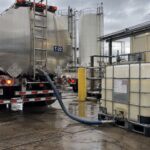
Liquid sugar arrives by tanker, pumps straight into a storage tank, and delivers the same sweetness lot after lot. For home cooks, the same idea shows up as simple syrup in cocktails and coffee. Industrial liquid cane sugar syrup is simple syrup’s stronger, pasteurized, standardized cousin, and using it allows for precise sweetness control, which is why it is popular in professional settings like cafés and bubble tea shops.
At-a-glance specifications
The following information provides detailed product specifications for each form of liquid sugar.
| Spec | Liquid Sucrose (67° Brix) | Medium Invert (76° Brix) | Total Invert |
|---|---|---|---|
| Composition | 100% sucrose | ~50/50 sucrose / glucose+fructose | ≥ 90% glucose+fructose (USP) |
| Brix (sugar concentration) | 67.0–68.0 (Golden Barrel, SMBSC) | 76.0–77.0 | 76–77 |
| Color (ICUMSA scale — lower = clearer) | ≤ 45 (water-clear) | Light straw | Light straw |
| pH | 6.0–8.5 | 4.5–5.5 | 4.5–5.5 |
| Microbiological | Mesophilic < 50 cfu/g; yeast/mold < 10 cfu/g | Similar | Similar |
| Typical shelf life | 30 days under controlled storage | Longer | Longer |
| Packaging | Tanker (4,000–6,000 gal), 275/330 gal totes, 55 gal drums | Totes, drums, tankers | Totes, drums |
| Regulatory | GRAS, 21 CFR 184.1854 | Food-grade | USP/Food-grade |
Translation for non-specialists:
- Brix = grams of sugar per 100 grams of solution. 67° Brix means 67% sugar by weight. (For comparison, the simple syrup behind your coffee shop counter is usually around 50° Brix.)
- ICUMSA = the international color scale for sugar. ICUMSA 45 is the “sparkling white” standard — clearer than water you’d drink.
- GRAS = “generally recognized as safe” — the FDA’s designation for ingredients with a long track record.
What “liquid sugar” actually is (and what it isn’t)
In the food and beverage industry, “liquid sugar” almost always means liquid sucrose — refined white sugar (the same molecule in your sugar bowl) dissolved in purified water and pasteurized. The molecule is chemically identical to the granulated sugar in a baker’s pantry; only the form has changed.
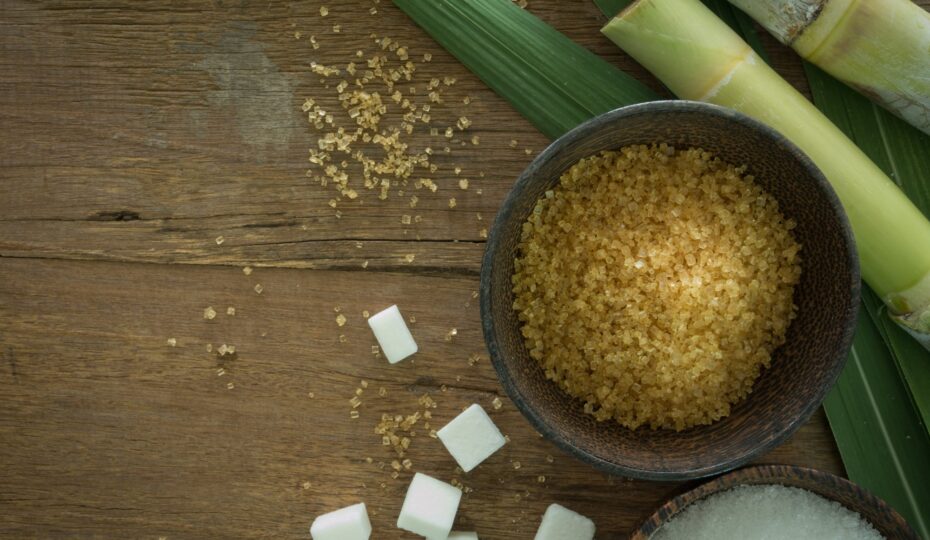
One clarification that trips people up: “Cane syrup” is not the same as liquid sucrose. Cane syrup is concentrated sugar cane juice with the molasses still in it — brown, molasses-forward, and used in Southern cooking, craft sodas, and specialty bakery. If you see “liquid cane sugar” on a label or in a spec sheet, ask whether it means refined liquid sucrose (clear, neutral flavor) or cane syrup (brown, strong flavor). Two very different products. Liquid cane sugar is often marketed as a natural sweetener, free from preservatives and artificial additives, and is valued for its natural sweetness.
The three forms — and what each one does
Picking the right form comes down to the job you need the sugar to do: sweeten, ferment, hold moisture, or stop crystals from forming.
Liquid sucrose (67° Brix) — the workhorse
Pure sucrose at 67–68° Brix, water-clear (ICUMSA ≤ 45), and GRAS under 21 CFR 184.1854. The 67° Brix concentration isn’t arbitrary — concentrated enough to ship economically, stable enough not to crystallize in the tank or grow microorganisms. This is the product behind sodas, sports drinks, RTD coffee and tea, sauces, dairy beverages, and most bakery and confectionery work. Liquid cane sugar is great for aiding caramelization and crust browning in baked items, leading to a more appealing golden color, and provides a smooth mouthfeel and uniform sweetness throughout a dish. The “simple syrup” in a cocktail is the home version — same idea, lower concentration, shorter shelf life.
Medium invert syrup (~76° Brix)
When sucrose is “inverted,” it splits into its two simpler sugars — glucose and fructose. Medium invert is roughly half-inverted: about 50% sucrose, 50% glucose and fructose. The USP monograph specifies 45–55% glucose+fructose on dry solids.
Where it shows up:
- Ice cream — keeps texture smooth by preventing sugar crystals from forming
- Bakery glazes and hard candy — controls how the finished product sets
- Hard seltzers and hard lemonades — often the primary fermentable, because yeast can ferment glucose and fructose faster than sucrose
Total invert syrup
Almost fully inverted — at least 90% glucose and fructose. Strongest crystallization prevention and highest fermentability of the three forms. Used in fondants and icings (where any crystal ruins texture), high-end confectionery, and pharmaceutical syrups.
Think of it like this: liquid sucrose is sugar water. Medium invert is sugar water that yeast loves and crystals avoid. Total invert is the specialist — reach for it when even a tiny residual crystal would wreck the finished product.
How it’s made
Refined granulated sugar is dissolved in deionized water, filtered, pasteurized, and cooled. Storage tanks are kept under UV-sterilized HEPA-filtered air to prevent contamination. For invert syrups, an extra step uses food-grade acid or the enzyme invertase to split the sucrose into glucose and fructose before the syrup is neutralized and standardized. Beverage-grade liquid sucrose targets ICUMSA ≤ 45 — the same color standard as the whitest refined sugar.
Where you’ll find it
- Sodas, RTD coffee and tea, sports and energy drinks — liquid sucrose at tanker volumes; eliminates dissolution time and sugar dust. Liquid cane sugar can enhance the flavor of coffee, tea, cocktails, and bubble tea, providing a clean and natural sweetness without clouding the drink.
- Hard seltzers, hard lemonades, flavored malt beverages — medium invert as the primary fermentable
- Brewing and distilling — invert syrups as adjunct fermentables, especially in Belgian-style ales and rum
- Ice cream and frozen desserts — invert syrups depress freezing point and prevent crystallization, controlling scoopability and texture
- Bakery and glazes — liquid sucrose for moisture and crust browning; total invert for non-crystallizing glazes and fondants
- Sauces, dressings, dairy beverages, yogurts — liquid sucrose for sweetness without crystalline grit
- Pharmaceutical syrups — USP-grade liquid sucrose and invert syrups as carriers in oral medications and elixirs
For the curious: the next time you drink a hard seltzer or eat a scoop of premium ice cream, chances are invert syrup is part of what makes the texture work.
Storage and tanker logistics
Liquid sugar has a much shorter shelf life than dry sugar — typically 30 days under controlled storage (Golden Barrel), with some industrial specs guaranteeing only 24 hours from shipment (SMBSC). Practical handling:
- Storage temp — 70–100 °F. Store syrup in a cool, dry place to maintain quality. Above 130 °F the syrup darkens from heat; below 60 °F it risks crystallization.
- Tank sanitation — UV-sterilized, HEPA-filtered headspace; periodic CIP cycles.
- Turnover — match tank volume to production demand. Stagnant syrup is the #1 spoilage risk.
- Delivery — dedicated food-grade tankers; verify wash certificates for shared-fleet loads.
- Receiving QC — check Brix, color, and pH at intake; reject loads outside spec.
Invert syrups generally hold longer than liquid sucrose because their lower pH and higher solids discourage microbial growth.
What to ask for when you buy
| Document | What it tells you |
|---|---|
| Certificate of Analysis (CoA), per shipment | Provides important information such as Brix, color, pH, invert %, and microbiological results for the lot you’re receiving, ensuring product quality and safety. |
| Spec sheet | Detailed information on form, target Brix, packaging, shelf life, and storage instructions. |
| Allergen statement | Information about source crop (cane vs. beet) and allergens in the facility. |
| Tanker wash certificate | Information on last three loads — important for shared-fleet deliveries. |
| Country of origin | Information required for FDA Foreign Supplier Verification (FSVP). |
| Facility certifications | Information on SQF, FSSC 22000, BRCGS, or other GFSI-recognized scheme. |
| Religious / market certs | Information on Kosher, Halal, Non-GMO Project Verified, Organic, Fair Trade certifications. |
| USP/FCC compliance letter | Information for pharma or supplement applications. |
| Safety Data Sheet (SDS) | Information for OSHA HazCom. |
If a supplier can’t produce these documents with the necessary information on request, that’s a sourcing risk worth noting.
How US Sweeteners supports liquid sugar buyers
US Sweeteners is a U.S.-based bulk sugar and sweetener distributor supplying bakeries, breweries, wineries, food manufacturers, distributors, and wholesalers nationwide. For liquid sweeteners:
- Forms: liquid sucrose (67° Brix), medium invert, and total invert
- Sources: cane (standard), beet on request
- Documentation per shipment: lot-specific CoA, allergen statement, tanker wash certificate, kosher letter, country-of-origin, and SDS
- Packaging: bulk tanker, 275/330 gal totes, 55 gal drums; custom configurations available
- Private labeling for distributors and co-packers
- Lead time / MOQ: [Insert standard lead time and MOQ — varies by form and package size]
Frequently asked questions
Is “liquid cane sugar” the same as “liquid sucrose”?
In most cases, yes — both refer to refined cane sugar dissolved at 67° Brix. Just confirm you’re not getting cane syrup (with molasses) by mistake.
Can I make liquid sugar at home?
Yes — it’s just simple syrup: equal parts sugar and water, heated until dissolved. Home versions top out around 50° Brix because without pasteurization they crystallize or spoil quickly.
Is liquid sugar healthier than regular sugar?
No. It’s the same sucrose — same calories, same sweetness, same effect on blood sugar. It’s a format choice, not a nutrition upgrade.
What’s the shelf life of Liquid Cane Sugar?
About 30 days under proper storage. Some specs guarantee only 24 hours from shipment, with longer real-world performance in clean, temperature-controlled tanks.
When do I use invert syrup instead of liquid sucrose?
When you need to stop crystals from forming (frozen desserts, fondants), boost fermentability (hard seltzers, brewing), or pack more solids into less tank space.
What ICUMSA color do I need?
≤ 45 for clear beverages and premium dairy. 100–150 is fine for colored beverages, confectionery, and syrups where the final product color masks the input.
Cane vs. beet liquid sucrose — does it matter?
The molecule is identical. Choose based on label claims (cane is preferred for clean-label), GMO status (most U.S. beet sugar is GMO; cane is non-GMO by default), and customer specs.
Is liquid sucrose available in pharmaceutical grade?
Yes. Specify USP, NF, or FCC on your purchase order and confirm the supplier provides a compliance letter aligned to the current USP monograph.
Medium invert vs. total invert?
Medium is ~50% inverted; total is ≥ 90% glucose+fructose per USP. Use total when even a little residual sucrose would crystallize and ruin your product.
If you found this post helpful or tried making liquid cane sugar at home, please leave a comment or review below!
Next step
Whether you’re sourcing for a beverage line, an ice cream batch, a hard seltzer launch, a bakery, or a pharmacy compounder — the fastest path is to request a sample, a recent CoA, and a spec sheet for the exact Brix and ICUMSA color you need.
Request a Sample + Spec Sheet | Talk to a Sourcing Specialist
Sources
- SMBSC Liquid Sucrose Spec Sheet
- Golden Barrel Liquid Sucrose 67° Brix Specification
- USP-NF Invert Sugar Monograph
- ICUMSA Color Scale Reference (Kemtrak)
- ICUMSA 45 Sugar Standards
- Südzucker Invert Sugar Syrup 72.7/67 Spec