
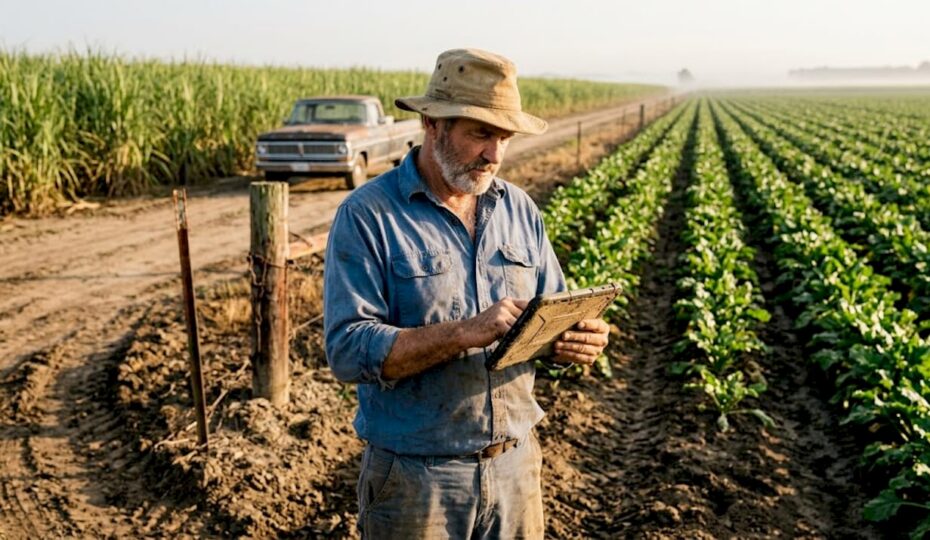
Most food manufacturers treat beet and cane sugar as a straight swap. Same sweetness, same solubility, same price tier. That assumption works often enough that it rarely gets challenged. But refined sugars differ in trace impurities, GMO status, and processing chemistry in ways that quietly affect caramelization, color development, labeling compliance, and supply chain reliability. At the volumes large-scale processors run, those quiet differences become real operational variables. Understanding them is not about being picky. It is about making smarter procurement and formulation decisions.
Table of Contents
- What makes beet and cane sugar different at the source?
- Processing and refining: Where the differences emerge
- Functional performance in large-scale food formulation
- Labeling, sourcing, and cost considerations for US processors
- A food processor’s perspective: What actually matters when choosing beet versus cane sugar?
- Get expert guidance and reliable bulk sugar supply
- Frequently asked questions
Key Takeaways
| Point | Details |
|---|---|
| Chemically similar base | Both beet and cane sugar deliver 99.95% sucrose, making them interchangeable for most food applications. |
| Impact of sourcing | Beet sugar offers supply stability and cost benefits, while GMO status and regional supply must be considered. |
| Functional formulation differences | Cane sugar excels in caramelization and soft textures, beet sugar in crunchy or cost-sensitive products. |
| Labeling and regulations | Most beet sugar in the US is GMO, impacting product labeling and consumer perception. |
What makes beet and cane sugar different at the source?
To understand why these sugars differ in products, start with how they are grown and sourced. Sugar beets and sugarcane are entirely different crops, cultivated in different climates, harvested on different schedules, and processed through distinct industrial pathways. The sugar source origins of each plant shape everything downstream, from raw juice composition to final crystal behavior.
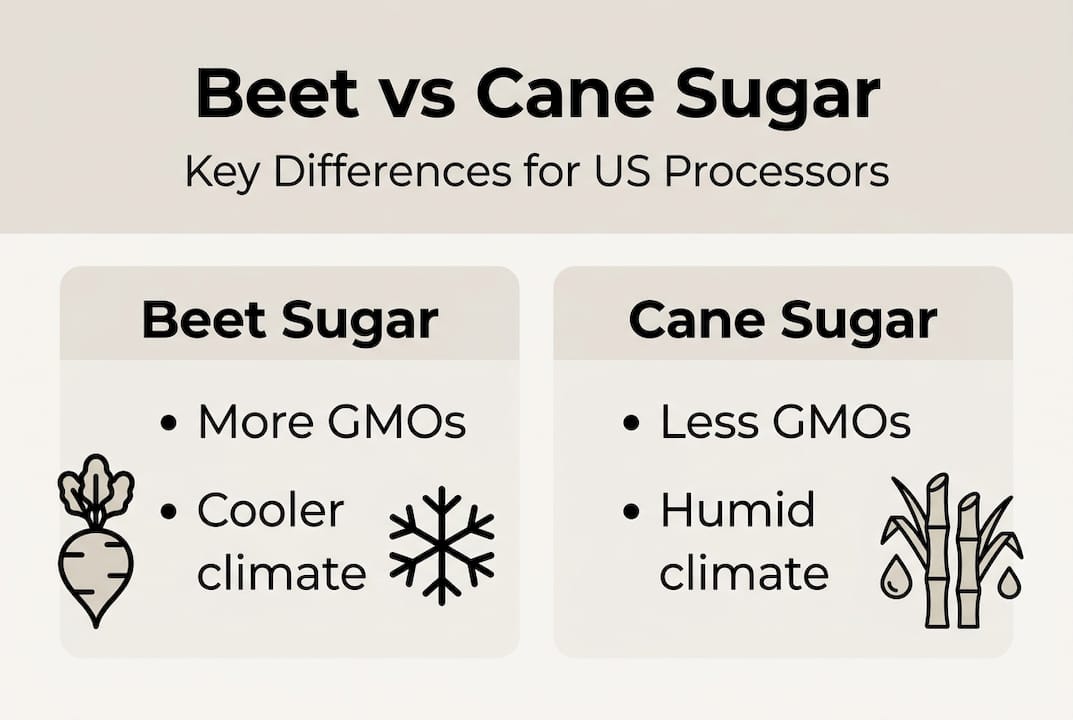
Sugarcane grows in warm, humid climates. In the US, that means Louisiana, Florida, Texas, and Hawaii. Sugar beets thrive in cooler, drier conditions and dominate production across the Upper Midwest, including Minnesota, North Dakota, and Michigan. That geographic split matters for regional procurement. A processor in the Midwest pulling from local beet sugar mills faces shorter lead times and lower freight costs than one sourcing cane from the Gulf Coast.
The GMO and non-GMO sugar distinction is where sourcing gets more complicated. The US sugar supply breaks down as follows:
| Sugar type | Share of US production | GMO status |
|---|---|---|
| Sugar beet | ~55 to 60% | >95% genetically modified |
| Sugarcane | ~40 to 45% | Generally non-GMO |
For processors selling into natural, organic, or non-GMO certified channels, this distinction is not academic. It directly affects ingredient sourcing requirements and label claims.
Key sourcing differences to keep in mind:
- Beet sugar is grown and processed domestically in the Midwest, offering regional supply advantages for processors in that footprint.
- Cane sugar is sourced from the South and from international mills, with a broader but sometimes less predictable supply chain.
- GMO status of beet sugar triggers disclosure requirements under the National Bioengineered Food Disclosure Standard.
- Seasonal availability differs: beets are harvested once annually in fall, while cane can be harvested over a longer season.
For details on sugar beet crop details, including harvest windows and regional production volumes, it helps to understand how that single annual harvest affects inventory planning for beet-derived supply.
Processing and refining: Where the differences emerge
Once harvested, what happens during processing sets these sugars apart for industrial uses. The refining steps for each are similar in goal but meaningfully different in chemistry.
Here is how both processes unfold:
- Extraction: Cane is crushed to extract juice. Beets are sliced into thin strips called cossettes and soaked in hot water to draw out sucrose through diffusion.
- Purification: Cane juice is treated with lime and filtered. Beet sugar processing uses lime and carbon dioxide in an alkaline environment, which results in higher pH processing conditions.
- Evaporation and crystallization: Both processes concentrate the juice and crystallize sucrose, but the impurity profiles entering crystallization differ.
- Refining: Raw cane sugar typically requires a separate refining step at a dedicated refinery. Beet sugar is often refined in a single integrated facility.
The impurity profiles are worth paying attention to. Beet sugar carries higher levels of nitrogen compounds, including amino acids and betaine. Cane sugar contains more phenolic compounds. These trace elements are present in tiny amounts, but they behave differently under heat and in certain reaction environments.

Raw juice composition also differs. Beet juice contains approximately 99% sucrose with very low invert sugar levels, while cane juice runs around 94% sucrose with roughly 3% each of glucose and fructose. That invert sugar difference matters in fermentation, candy making, and any application sensitive to reducing sugar ratios.
| Process factor | Beet sugar | Cane sugar |
|---|---|---|
| Extraction method | Hot water diffusion | Mechanical crushing |
| Processing pH | Alkaline (higher pH) | Near neutral |
| Invert sugar in raw juice | Very low | Moderate (~6% total) |
| Primary impurities | Nitrogen compounds | Phenolic compounds |
| Refining pathway | Integrated single facility | Often separate refinery |
Pro Tip: If your application involves fermentation or invert sugar sensitivity, ask your supplier for the invert sugar content specification. Beet and cane sugars can behave differently in fermentation tanks even when both are labeled “refined white sugar.”
For a deeper look at beet vs cane refining and how those steps translate into specification differences, it is worth reviewing the technical data before locking in a supplier for a sensitive application.
Functional performance in large-scale food formulation
Do these process and chemical differences translate into real-world functional outcomes? Here is where it matters in formulation.
For most large-scale applications, refined white beet and cane sugar perform identically. Bakery fillings, beverage bases, dairy products, sauces, and most confectionery lines will not register a measurable difference. The sucrose content is effectively the same, and dissolution, sweetness intensity, and preservative function are equivalent.
But the nuances surface in specific applications:
- Caramelization: Cane sugar is preferred for caramelization applications. The phenolic compounds and slightly different mineral profile contribute to color development and flavor complexity that processors targeting premium caramel notes rely on.
- Brown sugar and molasses-forward products: Cane is the standard choice here. Natural brown sugar is made by retaining or adding cane molasses. Beet molasses has a distinct, less desirable flavor profile that makes it unsuitable for most food-grade brown sugar production.
- Texture in baked goods: Beet sugar tends to produce slightly crunchier textures in cookies and crackers. Cane sugar, particularly in fine-crystal form, contributes to softer crumb structure.
- Color stability: At industrial scale, trace nitrogen compounds in beet sugar can contribute to slight color variation in heat-intensive processes. This is rarely a problem in standard applications but worth monitoring in light-colored confections or hard candies.
For processors working with sweeteners for caramelization, the sugar source choice is a direct formulation variable, not just a procurement detail.
Pro Tip: Run a side-by-side bake test at your standard batch size before switching sugar sources mid-season. Even when specifications look identical on paper, real-world color and texture results can shift enough to require formula adjustments.
Processors formulating with cane sugar versus brown sugar should also factor in that beet-derived brown sugar alternatives behave differently in moisture retention and flavor layering, particularly in products where molasses character is a defined sensory target.
For sweeteners for flavor enhancement, understanding which sugar type supports your flavor system is a formulation decision that pays off in consistency across production runs.
Labeling, sourcing, and cost considerations for US processors
Function in formulation is just one side. Sourcing and regulation shape procurement choices just as much.
The GMO labeling question is the most immediate compliance issue. Because beet sugar production in the US is predominantly genetically modified, processors using beet-derived sugar in products sold through retail channels may be subject to disclosure requirements under the National Bioengineered Food Disclosure Standard. Refined sugar is currently exempt from mandatory bioengineered disclosure because the refining process removes detectable DNA and protein. However, that exemption is subject to regulatory review, and consumer-facing brands operating in the natural and organic space often choose to source non-GMO cane sugar proactively.
Key considerations for procurement teams:
- Regional supply security: Beet sugar from Midwest mills offers shorter supply chains for processors in that region, reducing freight costs and lead times.
- Cost trends: Beet sugar often carries a modest cost advantage due to domestic production efficiency, though this varies with crop yields and energy costs.
- Consumer labeling pressure: Even where GMO disclosure is not legally required, brand owners in natural, organic, or clean-label channels frequently specify non-GMO cane sugar to meet retailer and consumer expectations.
- Supply diversification: Relying entirely on one sugar source creates vulnerability. A dual-source strategy using both beet and cane suppliers protects against regional crop failures and price spikes.
“Beet sugar offers regional supply stability and cost advantages for US processors, but GMO labeling considerations and functional limitations in molasses-forward applications make cane sugar the better fit for premium baking and confectionery.”
For processors building out their sugar sourcing strategies, the right answer is rarely one or the other. It is a sourcing mix calibrated to your product portfolio, your customer base, and your regional logistics reality. Ingredient manufacturers sweetener options vary widely, and having a supplier that can provide both beet and cane sugar in bulk gives you the flexibility to respond to formulation changes without switching vendors.
A food processor’s perspective: What actually matters when choosing beet versus cane sugar?
Here is the honest take after working with processors across bakery, confectionery, beverage, and dairy: the “sugar is sugar” argument is about 80% correct and 20% dangerously oversimplified.
For commodity applications at scale, beet and cane sugar are genuinely interchangeable. Chasing a cost advantage of a few dollars per hundredweight by switching sources makes sense when the application is neutral. But the 20% where it matters tends to involve your highest-margin products. Caramel coatings, artisan-style baked goods, premium confections, and any product where molasses character is part of the flavor story are all places where sugar source is a real formulation variable.
The GMO labeling question is also moving. What is currently exempt from mandatory disclosure may not stay exempt. Processors who build non-GMO cane sugar into their supply chain now are ahead of a potential compliance curve, not just responding to consumer preference.
Our view, backed by the in-depth beet vs cane analysis we have developed over years of working with large-scale manufacturers: let your end-product goals drive the sourcing decision. Not tradition, not habit, and not whichever supplier called last. Map your product portfolio against the functional and regulatory variables, then build a supply strategy that gives you flexibility.
Get expert guidance and reliable bulk sugar supply
Knowing the differences between beet and cane sugar is only useful if your supply chain can actually deliver on the right specification, at volume, on time.
US Sweeteners stocks both beet and cane sugar in bulk, sourced from domestic mills and international partners, with warehousing across multiple US locations for fast fulfillment. Whether you need a bulk sugar supplier for a single SKU or a flexible partner to support a multi-product portfolio, we can match supply to your formulation and compliance requirements. Explore sweetener options across our full catalog, or talk to our team about sweeteners for food formulation and sourcing strategy tailored to your operation.
Frequently asked questions
Are beet and cane sugar interchangeable in food manufacturing?
For most applications, refined beet and cane sugar perform identically, but cane is typically preferred for caramelization, natural brown sugar production, and applications requiring softer textures.
Does beet sugar always require GMO labeling?
Refined beet sugar is currently exempt from mandatory bioengineered disclosure because refining removes detectable DNA, but over 95% of US beets are genetically modified, so processors in non-GMO certified channels typically specify cane sugar instead.
How do trace impurities affect sugar choice for processors?
Trace impurities are minimal in refined sugars, but nitrogen compounds in beet and phenolics in cane can influence color development and slight process variation at industrial scale, particularly in heat-intensive or light-colored applications.
Which sugar offers more stable US supply for food manufacturers?
Beet sugar provides strong regional supply stability for Midwest processors due to domestic production concentration, while cane sugar offers access to both domestic and international supply networks for broader sourcing flexibility.