
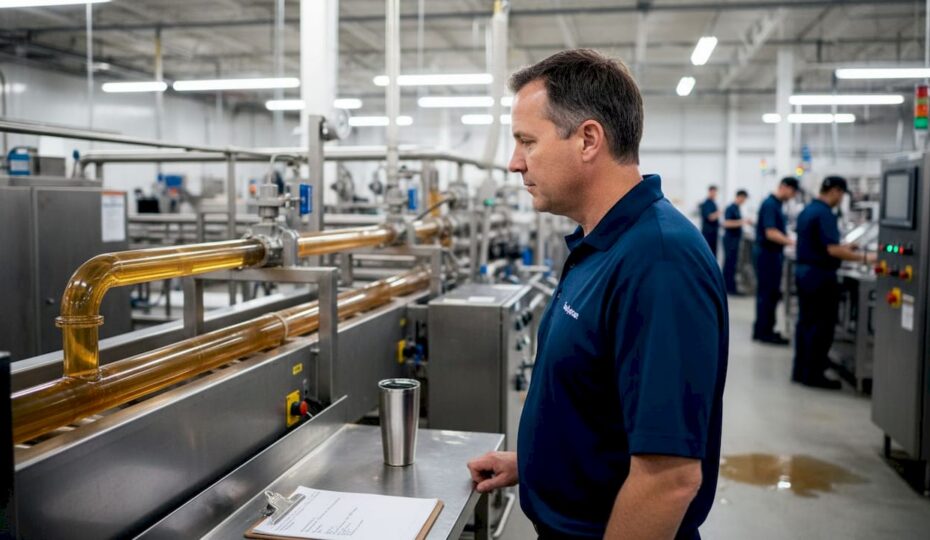
Large-scale food and beverage manufacturers know that sweetener selection is never just about sweetness. It touches every corner of your operation, from ingredient handling and dissolution time to final product clarity and shelf stability. Granulated sugar works well in many contexts, but as production volumes scale and formulation demands grow more complex, its limitations become harder to ignore. Liquid sugar has emerged as a practical, high-performance alternative that addresses those pain points directly. This article walks through the operational, formulation, economic, and strategic advantages of liquid sugar so you can make a well-informed sourcing decision.
Table of Contents
- Key operational advantages of liquid sugar
- Product quality and formulation benefits
- Cost-effectiveness and economic considerations
- Limitations and ideal applications
- Our take: Why liquid sugar is reshaping manufacturing strategy
- Unlock operational efficiency and quality with bulk liquid sugar
- Frequently asked questions
Key Takeaways
| Point | Details |
|---|---|
| Production efficiency | Liquid sugar streamlines processes and reduces labor costs for manufacturers. |
| Enhanced product quality | It ensures stable, clear products and prolongs shelf life in beverages and desserts. |
| Custom formulation | You can tailor liquid sugar types and concentrations for specific applications. |
| Cost savings | Despite a higher initial cost, overall savings are achieved through reduced waste and lower energy. |
| Baking limitations | Not always suitable for baked goods requiring sugar crystal structure; assess use case. |
Key operational advantages of liquid sugar
When you’re running a high-volume production line, every step you can eliminate is money saved and risk reduced. One of the most immediate operational wins with liquid sugar is that it eliminates the dissolution step, allowing direct pumping into your process stream. No mixing tanks, no wait time, no temperature management for dissolving crystals. That alone reduces cycle times and frees up equipment for other tasks.
The safety and cleanliness benefits are equally significant. Granulated sugar generates fine dust during handling, which creates both respiratory hazards and potential explosion risks in enclosed facilities. Liquid sugar systems reduce manual labor and dust, improving plant safety and reducing the burden on your housekeeping and compliance teams. Fewer manual handling steps also mean fewer opportunities for contamination or measurement error.
Here’s a quick look at the core operational advantages liquid sugar delivers at scale:
- Direct pipeline integration: Pumped directly into mixing vessels or processing tanks without pre-treatment
- Reduced labor: Fewer manual steps in weighing, dissolving, and transferring ingredients
- Improved safety: Virtually eliminates sugar dust, reducing fire and respiratory hazard exposure
- Faster throughput: No dissolution lag time means faster batch cycles
- Automated delivery: Compatible with flow meters and automated dosing systems for precise, repeatable results
These advantages compound at scale. A facility running hundreds of batches per week gains significant cumulative time and cost savings. The broader market has taken notice: the liquid sugar market grows at a 5.8% CAGR from 2025 to 2035, reflecting accelerating industrial adoption across food and beverage categories.
If you want a deeper look at how liquid sugar fits into specific production contexts, the liquid sugar applications overview covers a wide range of use cases. For teams evaluating infrastructure requirements, understanding the liquid sugar production process helps clarify what upstream handling your facility needs to support.
Pro Tip: If you’re transitioning from granulated to liquid sugar, pilot automated syrup delivery with flow-based dosing controls before full rollout. This locks in dosing accuracy and gives your QA team clean baseline data to validate consistency across batches.
Product quality and formulation benefits
Beyond production lines, liquid sugar impacts the product itself. Let’s see how it contributes to superior quality and custom formulation.
In beverages, syrups, and frozen desserts, product appearance matters as much as taste. Liquid sugar prevents sediment, cloudiness, and crystallization, ensuring clear, stable products with longer shelf life. That’s a direct formulation advantage for any manufacturer where visual clarity is a quality standard or a brand differentiator.
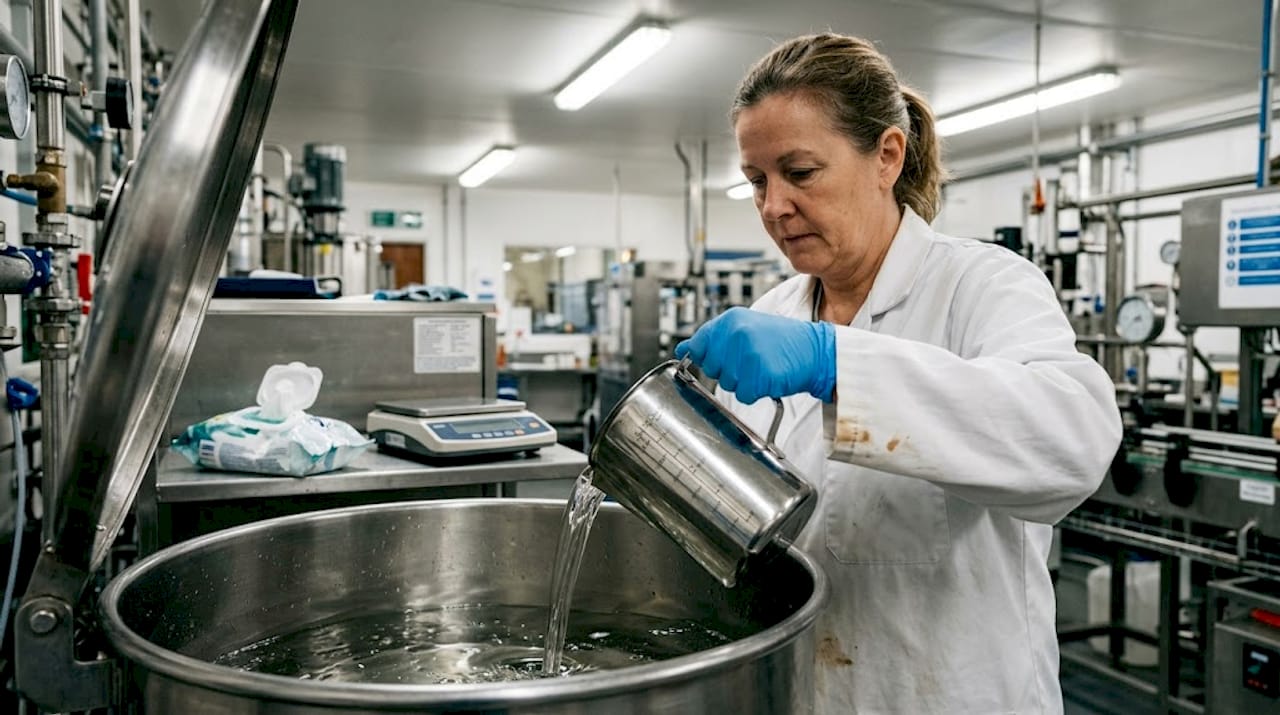
Crystallization is a persistent problem in confections and syrups. When granulated sugar isn’t fully dissolved or when temperature fluctuations occur during storage, crystal formation degrades texture and appearance. Liquid sugar enters the formulation already in solution, eliminating that risk from the start.
Formulation flexibility is another strong point. Liquid sugar is available in customizable concentrations like 67 to 70 Brix and in multiple types including refined white, invert, and organic varieties. That means you can match the sweetener precisely to your product’s technical requirements rather than adjusting the recipe around the ingredient.
Here’s how different liquid sugar types align with common applications:
| Liquid sugar type | Brix range | Best applications |
|---|---|---|
| Refined white liquid sugar | 67 to 68 Brix | Beverages, dairy, sauces |
| Invert liquid sugar | 70 to 72 Brix | Confections, baked goods, syrups |
| Organic liquid sugar | 67 to 70 Brix | Natural and clean-label products |
| High-fructose variants | Variable | Soft drinks, frozen desserts |
For manufacturers working on clean-label or specialty lines, the ability to source liquid sugar types that align with certifications and label claims is a real competitive advantage. Exploring the full range of types of liquid syrups helps procurement teams identify the right fit for each SKU. You can also review liquid syrups options for additional variety comparisons.
“For beverage manufacturers, stability isn’t optional. A product that clouds, settles, or crystallizes on shelf is a product that loses retail placement. Liquid sugar removes that variable entirely from the formulation equation.”
Cost-effectiveness and economic considerations
After product benefits, cost often drives large-scale decisions. Here’s how liquid sugar can actually save money over time.
The upfront cost per pound of liquid sugar is typically higher than granulated. That’s the number procurement teams see first, and it sometimes ends the conversation prematurely. But the full economic picture looks different when you account for total cost of ownership across your production operation.
Liquid sugar is long-term cost-effective despite higher upfront cost because it reduces processing time, energy consumption, product waste, and labor requirements. When you eliminate dissolving equipment, reduce batch cycle time, and cut manual handling steps, those savings accumulate quickly across high-volume production.
Here’s a side-by-side comparison of key cost factors:
| Cost factor | Granulated sugar | Liquid sugar |
|---|---|---|
| Ingredient cost per unit | Lower | Slightly higher |
| Dissolution equipment | Required | Not required |
| Labor per batch | Higher | Lower |
| Energy for dissolving | Required | Eliminated |
| Product waste from handling | Moderate | Minimal |
| Batch cycle time | Longer | Shorter |
| Overall throughput efficiency | Moderate | High |
To get a fair comparison for your facility, follow these steps:
- Calculate your current cost per batch including labor, energy, and equipment time for dissolving granulated sugar
- Request a delivered price quote for liquid sugar at your required volume and Brix specification
- Model batch cycle time savings and their impact on weekly throughput capacity
- Factor in reduced equipment maintenance costs from eliminating dissolution tanks
- Compare total annual cost, not just ingredient unit cost
For a detailed breakdown of how the two formats stack up across production scenarios, the liquid vs granulated sugar comparison is a useful reference for your internal cost modeling.
Pro Tip: Work with your ingredient supplier to negotiate volume-tiered pricing on liquid sugar. At scale, even a small reduction in delivered cost per gallon has a significant impact on annual ingredient spend.
Limitations and ideal applications
While liquid sugar shines in many ways, knowing its limits is essential for optimal application.
Liquid sugar is not a universal replacement for granulated sugar. In certain baking applications, granulated sugar’s crystal structure plays a functional role that liquid sugar simply cannot replicate. Specifically, liquid sugar lacks crystal structure needed for aeration, creaming, and browning in some baked goods. The mechanical action of sugar crystals cutting into fat during creaming creates the air pockets that give cakes and cookies their lift and texture.
Additionally, granulated sugar is preferred for dry mixes and baking applications needing texture or structure. Liquid sugar adds moisture, which can densify products without careful recipe adjustment. If your formulation team doesn’t account for the additional water content, you may end up with products that are denser, stickier, or have a shorter shelf life due to increased water activity.
Here’s a clear breakdown of where each format performs best:
- Liquid sugar excels in: Carbonated and still beverages, sauces, marinades, syrups, frozen desserts, dairy products, and confections where smooth texture and clarity matter
- Granulated sugar excels in: Dry baking mixes, cookies, cakes, and products requiring Maillard browning, aeration, or specific texture from crystal structure
- Both can work in: Certain bakery applications, jams, and preserves, depending on the specific formulation goals
For manufacturers producing across multiple categories, a dual-sourcing strategy makes the most sense. You can explore liquid sugar and baking applications in detail to understand where the boundaries lie. For texture-critical products, granulated sugar in industry remains the right call, and premium granulated sugar options are worth evaluating for those lines.
“The most efficient manufacturers don’t pick one sweetener format and force it everywhere. They match the ingredient to the application and build sourcing flexibility into their supply chain from the start.”
Our take: Why liquid sugar is reshaping manufacturing strategy
Most procurement conversations about liquid sugar start and end with cost per pound. That’s the wrong frame. The real strategic value is in process integration and the downstream quality improvements that follow.
We’ve seen manufacturers pilot liquid sugar on a single product line, measure the batch cycle time improvement, and then realize the same infrastructure change unlocks capacity across their entire facility. That’s not a tactical win. That’s a production strategy shift.
The adoption curve is real. Teams accustomed to granulated sugar handling need training on liquid sugar storage, temperature management, and microbial control. Those are solvable problems, but they require upfront investment in change management, not just equipment. Facilities that treat the transition as a process redesign rather than a simple ingredient swap get better results faster.
The innovative liquid sugar uses emerging across beverages, dairy, and functional foods signal that this isn’t a niche trend. It’s a structural shift in how large-scale manufacturers think about sweetener sourcing. The 5.8% CAGR growth projection reflects real demand, not speculation. Forward-thinking manufacturers are not asking whether to adopt liquid sugar. They’re asking how fast they can scale it.
Unlock operational efficiency and quality with bulk liquid sugar
If your facility is evaluating liquid sugar as part of a broader formulation or efficiency initiative, sourcing at bulk scale makes the economics work in your favor.
At US Sweeteners, we supply bulk liquid sugar to food and beverage manufacturers across the country, with flexible delivery options, multiple Brix specifications, and the volume capacity to support high-throughput operations. Our full range of bulk sweeteners gives procurement teams a single source for multiple ingredient needs. Whether you’re sourcing refined white, invert, or organic liquid sugar, our wholesale cane syrup options are ready to support your production requirements. Reach out to discuss volume pricing and logistics.
Frequently asked questions
How is liquid sugar made for food manufacturing?
Liquid sugar is produced by dissolving refined sugar in water, followed by filtration, clarification, and optional pasteurization to ensure microbial stability before delivery.
What applications benefit most from liquid sugar?
Beverages, sauces, syrups, and frozen desserts benefit most, particularly where clear, stable products with consistent texture and extended shelf life are formulation priorities.
Are there drawbacks to using liquid sugar in baking?
Yes. Liquid sugar lacks crystal structure for aeration, creaming, and browning, making it less suitable for certain baked goods without significant recipe reformulation.
Is liquid sugar more cost-effective than granulated sugar?
Over time, manufacturers save on labor, energy, and waste, making liquid sugar long-term cost-effective even when the upfront ingredient cost is slightly higher than granulated sugar.