Is Olive Oil a Seed Oil? Classification, Grades, and a B2B Sourcing Guide
Last updated: May 06, 2026
Quick answer: No — olive oil is not a seed oil. It’s a fruit oil, pressed from the pulp (mesocarp) of the olive, not from a seed. That distinction matters for both shoppers reading nutrition labels and food manufacturers building a clean-label or Mediterranean-style product line. For commercial buyers, the more important questions are which grade (extra virgin, virgin, refined, pomace) and which specs (FFA, peroxide value, K232/K270) match your formulation.
At a glance: olive oil grades and specs
| USDA / IOC grade | Free fatty acid (oleic) | Peroxide value (meq/kg) | K232 / K270 | Typical buyer use |
|---|---|---|---|---|
| Extra virgin (EVOO) | ≤ 0.8% | ≤ 20 | ≤ 2.50 / ≤ 0.22 | Premium retail, dressings, finishing, clean-label |
| Virgin | ≤ 2.0% | ≤ 20 | ≤ 2.60 / ≤ 0.25 | Mid-tier retail, foodservice |
| Refined olive oil | ≤ 0.3% | ≤ 5 | — / ≤ 1.10 | High-heat cooking, frying lines |
| Olive oil (refined + virgin blend) | ≤ 1.0% | ≤ 15 | — / — | Foodservice, industrial cooking |
| Olive pomace oil | ≤ 1.0% | ≤ 15 | — / ≤ 2.00 | Industrial frying, soap, low-cost foodservice |
Specs above reflect the USDA Standards for Grades of Olive Oil and IOC trade standards, which are nearly identical. Always confirm against your supplier’s CoA.
Plain-language version of those specs:
- Free fatty acid (FFA) — how much the oil’s fats have broken down. Lower is fresher.
- Peroxide value (PV) — how much the oil has oxidized. Lower means longer shelf life.
- K232 / K270 — UV absorbance readings that reveal hidden oxidation or refining. Both must be low for a true extra virgin grade.
Olive oil is a fruit oil, not a seed oil
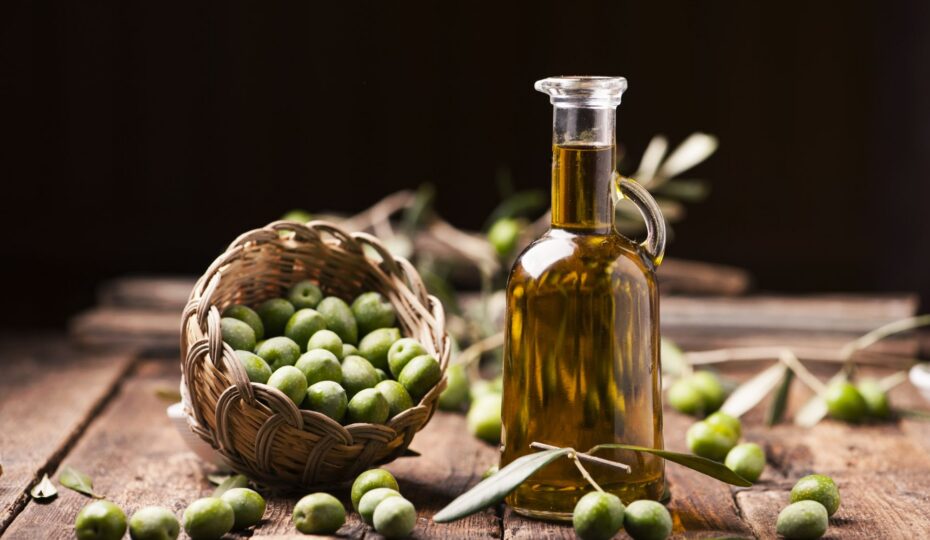
“Seed oils” refers to oils extracted from seeds — soybean, canola, corn, sunflower, safflower, cottonseed, grapeseed. Olive oil isn’t in that group. It’s pressed from the pulp of the olive fruit, the same way avocado oil is pressed from avocado pulp. Olive oil is extracted from the fleshy fruit of the olive, while seed oils are derived from the seeds of various plants, such as soybeans and sunflowers.
Three distinctions matter:
- Extraction. The fundamental difference is that EVOO is mechanically cold-pressed from the fleshy fruit with no chemical solvents, while most seed oils are typically extracted from seeds using chemical extraction methods such as hexane and then refined.
- Fat composition. Olive oil is dominated by oleic acid, a monounsaturated fat (55–83%), which is more stable and beneficial for heart health. Most seed oils often contain higher levels of polyunsaturated fatty acids, particularly omega-6, and excessive consumption can promote inflammation.
- Native antioxidants. Mechanically pressed EVOO retains polyphenols (oleocanthal, oleuropein, hydroxytyrosol) that survive only when processing stays minimal.
Olive oil’s unique profile of monounsaturated fats and antioxidants provides notable health benefits, including the ability to reduce inflammation and support overall well-being.
On the health debate: the claim that seed oils drive inflammation is repeated widely online but isn’t the consensus position of mainstream nutrition science. The American Heart Association recommends replacing saturated fats with unsaturated oils — including both olive oil and many seed oils. Olive oil’s own evidence base is strong: the PREDIMED trial showed a ~30% reduction in major cardiovascular events on a Mediterranean diet supplemented with EVOO. For brands building a clean-label story, the safer angle is what olive oil is — minimally processed, polyphenol-rich, well-studied — not attacks on competitors.
How olive oil is made
- Harvest — olives are picked at target ripeness from the olive tree. Earlier = greener, higher polyphenol, more pungent. Later = milder, higher yield. Olive oil production is centered around the olive tree, with oil extracted from the fleshy fruit rather than seeds.
- Crushing — whole olives (pits included) are washed and crushed into paste.
- Malaxation — paste is slowly mixed 20–60 minutes so oil droplets coalesce. Under 27 °C (80 °F) is required to label the result “cold extracted.” Cold pressed olive oil is produced by mechanically separating the oil from the olive fruit, preserving its natural antioxidants and nutrients. This low-intervention production method sets olive oil apart from industrial seed oils, which typically use high-heat and chemical extraction that can strip away beneficial compounds.
- Centrifugal separation — horizontal decanters and vertical centrifuges separate oil, water, and pomace.
- Filtration and storage — oil is lightly filtered, nitrogen-blanketed where possible, and stored in temperature-controlled stainless steel.
There are many olive varieties, each contributing unique flavor profiles to olive oil. Exploring different olive varieties can reveal a range of tastes, much like wine tasting, allowing consumers to find their preferred flavor.
Olive oil production, while traditional and valued for its low-intervention methods, has a significant environmental impact. It requires at least 7.25 times more land resources per ton of oil compared to palm oil and uses 112% more water per ton than shelled almonds. For every ton of olive oil produced, four tons of byproducts are generated, often used as animal feed, which can perpetuate unsustainable farming practices. Olive oil production also threatens more plant and animal species per ton than any other vegetable oil except coconut oil, and its carbon footprint is substantial, emitting over 4.5 times the greenhouse gases per kilogram compared to peanut oil.
Refined olive oil is virgin oil that failed sensory or chemical tests, sent through neutralization, bleaching, and deodorization to yield a neutral, high-smoke-point product, then often blended with a small amount of virgin oil. Olive pomace oil is solvent-extracted from leftover pomace and refined — a lower-cost option for high-heat foodservice, not a premium ingredient.
Smoke points and cooking performance
When comparing cooking oils, it’s important to consider their smoke points and how they perform under heat. Smoke points depend on free fatty acid content and refining, not just oil type (North American Olive Oil Association). The oxidative stability of olive oil is higher than that of many seed oils, making it more resistant to breakdown at high temperatures.
| Oil | Typical smoke point |
|---|---|
| Extra virgin olive oil | 350–410 °F (175–210 °C) |
| Olive oil / light olive oil (refined) | 390–470 °F (200–245 °C) |
| Refined canola | ~400 °F (205 °C) |
| Refined sunflower | ~440 °F (225 °C) |
| Avocado oil (refined) | ~520 °F (270 °C) |
Different oils have varying smoke points and oxidative stability due to their fatty acid composition, particularly the balance of polyunsaturated and monounsaturated fats. The nutritional quality of an oil can be affected by its fatty acid profile and how it responds to high temperatures during cooking.
EVOO handles sautéing, roasting, and most baking. For deep-frying lines or high-heat industrial cooking, refined olive oil or pomace is the right spec.
For consumers reading along: you don’t need to ban EVOO from the stove. It’s stable enough for everyday cooking. Save the highest-polyphenol, most peppery EVOO for finishing and dressings where its flavor and antioxidants aren’t lost to heat. Keep in mind that unsaturated fats, especially polyunsaturated fats, are more prone to oxidation at high temperatures, which can impact both flavor and health.
What B2B buyers should request on every lot
| Document | What it confirms |
|---|---|
| Certificate of Analysis (CoA) | FFA, PV, K232/K270, fatty acid profile, sensory grade per lot |
| Country of Origin | Required for FSVP and customs (Spain, Italy, Greece, Tunisia, Portugal, etc.) |
| IOC / USDA grade declaration | EVOO, virgin, refined, or pomace |
| PDO / PGI / Organic / Non-GMO | If your label or customer requires single-origin or certified product |
| Allergen statement | Olive oil is naturally allergen-free; supplier confirms cross-contact controls |
| GFSI audit certificate | SQF, BRCGS, or FSSC 22000 |
| SDS | Standard for any bulk ingredient |
Adulteration risk is real. Olive oil has historically been one of the most economically adulterated foods in the global supply chain — typically blended with cheaper seed or pomace oils. Adulterated oils are a concern, as some lower-quality or ‘fake’ olive oils may be blended with cheaper processed seed oils and mislabeled as olive oil. Processed seed oils are often used in these fraudulent blends due to their lower cost and neutral flavor, deceiving consumers seeking authentic extra virgin olive oil. Mitigate with: lot-level CoAs that include the full chemical panel (FFA + PV + K232 + K270 + fatty acid profile), reputable suppliers with traceability documentation, and periodic third-party verification.
Bulk packaging and storage
- Drums — 55 gallon (~440 lb) steel or HDPE, nitrogen-flushed
- Totes / IBCs — 275 or 330 gallon for production-line volume
- Flexitanks — 5,000–6,000 gallon container loads for largest manufacturers
- Bag-in-box / cubitainers — 1–5 gallon for foodservice and specialty retail
Store at 60–70 °F (15–21 °C), away from light and sealed. Olive oil’s enemies are heat, light, and oxygen — control all three and shelf life runs 18–24 months for EVOO.
How US Sweeteners supports olive oil buyers
US Sweeteners is expanding into bulk olive oil — supplying extra virgin, virgin, refined olive oil, and pomace oil to food manufacturers, foodservice operators, bakeries, and wholesale distributors nationwide.
We provide:
- Multiple grades matched to your application — premium EVOO for finishing and retail, refined for high-heat cooking, pomace for industrial frying
- Multiple pack formats — drums, IBCs, flexitanks, and custom packaging
- Full documentation — CoAs with full chemical panel (FFA, PV, K232/K270, fatty acid profile), country of origin, kosher/organic/PDO certificates as needed
- Traceability — lot-level origin documentation to manage adulteration risk
- Logistics — truckload, LTL, and temperature-controlled handling
Request a sample and spec sheet or talk to a sourcing specialist to match the right olive oil grade to your formulation.
FAQ
Is olive oil a seed oil?
Resounding no. Olive oil is not a seed oil; it is pressed from the pulp of the olive fruit, not from a seed.
What’s the difference between extra virgin, virgin, and refined olive oil?
Extra virgin must have FFA ≤ 0.8% and pass sensory testing — minimally processed and flavor-rich. Virgin allows FFA up to 2.0%. Refined olive oil is virgin oil that’s been chemically refined to neutralize defects and is typically blended with a small amount of virgin oil before sale.
What is olive pomace oil?
A separate product made by solvent-extracting and refining the leftover olive pulp after pressing. Lower cost; typically used for high-heat industrial frying.
Are seed oils unhealthy?
Mainstream cardiovascular guidance from the AHA continues to support unsaturated oils — including olive oil and many seed oils — over saturated fats. However, many seed oils are prevalent in processed foods and packaged foods, especially in modern diets that rely heavily on cheap oils like soybean and safflower oil. These oils are often consumed in small quantities due to potential health risks associated with excessive consumption of omega-6 polyunsaturated fats, which can promote inflammation and increase the risk of heart disease.
Most seed oils undergo extensive industrial processing, including chemical extraction with solvents like hexane, high heat, bleaching, and deodorizing. This heavy refining process can strip away nutrients and introduce harmful compounds and byproducts. In contrast, the traditional production of extra virgin olive oil preserves healthy fats, antioxidants, and active compounds that support heart health and overall well-being.
Olive oil’s monounsaturated fats are considered healthy fats that can help lower cholesterol and reduce the risk of heart disease. Its antioxidant content and stability make it a superior choice for cardiovascular health. For these reasons, many experts encourage readers to choose olive oil for its health benefits, antioxidant content, and positive impact on heart health. Olive oil’s own evidence base is strong, especially in the context of a Mediterranean diet.
What CoA parameters should I request?
FFA, peroxide value, K232, K270, fatty acid profile, sensory grade, and microbiological. EVOO must show FFA ≤ 0.8%, PV ≤ 20, K232 ≤ 2.50, K270 ≤ 0.22.
Can I cook with extra virgin olive oil?
Yes. EVOO is stable for sautéing, roasting, and baking. For deep-frying or very high-heat applications, refined olive oil or pomace are typically the better spec.
How is olive oil adulteration detected?
Through the chemical panel on a CoA — particularly fatty acid profile, sterol composition, and UV absorbance. Insist on lot-level CoAs from a supplier with full traceability.
What MOQs and lead times apply?
Drum and tote quantities ship in 1–2 weeks; flexitanks and full-container loads run 4–8 weeks depending on origin and harvest. Contact us for current availability.
Sources
- USDA Standards for Grades of Olive Oil and Olive-Pomace Oil
- UC Davis Olive Center — sensory and chemistry correlation report
- North American Olive Oil Association — smoke points
- AHA — dietary fats and cardiovascular disease
- PREDIMED trial, New England Journal of Medicine

Thomas is a product expert at US Sweeteners, a trusted bulk sugar and sweetener distributor serving food and beverage manufacturers across the USA. He writes about sweetener sourcing, ingredient trends, and supply chain insights for the food industry.