Bulk Sugar for Breweries and Distilleries: Fermentables, Adjuncts, and Supplier Considerations
Bulk sugar for breweries is used to raise ABV, adjust body, support predictable fermentation, and create style-specific flavor outcomes. Dextrose works best for clean attenuation, sucrose supports cost-efficient gravity increases, candi sugars add Belgian-style complexity, and invert sugars help brewers improve solubility and production consistency at scale. For craft breweries, distilleries, and beverage manufacturers, sugar selection affects not only flavor and alcohol content, but also brewhouse efficiency, cellar timing, and ingredient handling.
Brewing teams also face operational concerns outside recipe formulation. Delayed ingredient deliveries, inconsistent fermentability, moisture exposure, and incompatible packaging can disrupt production schedules and create avoidable recipe adjustments. US Sweeteners supplies breweries and beverage manufacturers with granulated, liquid, powdered, and specialty sugars supported by nationwide warehousing and commercial-scale distribution.
What Is Brewing Sugar?
Brewing sugar refers to fermentable sugar used during beer, distilled spirit, hard seltzer, or beverage production to increase alcohol content, improve attenuation, lighten body, or add flavor complexity. Commercial breweries choose different sugars depending on fermentation goals, brewhouse setup, yeast behavior, and finished beverage style.
Unlike household table sugar, brewing sugars are selected for predictable fermentation performance and production consistency. Brewing operations often monitor sugar additions carefully because sugar type can influence attenuation rates, residual body, yeast stress, and alcohol yield.
Breweries commonly use brewing sugars to:
- Increase ABV without increasing malt load
- Improve fermentation efficiency
- Reduce residual sweetness
- Dry out hop-forward beers
- Create style-specific flavor profiles
- Support high-gravity brewing programs
In many production breweries, sugar additions also help reduce mash tun load during larger brews. A brewery producing 30-barrel double IPAs, for example, may replace part of the grain bill with dextrose to maintain a lighter body while still reaching target alcohol levels.
Best Types of Bulk Sugar for Breweries
Different brewing sugars create different fermentation outcomes, handling requirements, and flavor impacts. Head brewers often evaluate sugars based on attenuation behavior, gravity contribution, solubility, mineral consistency, and how well the ingredient fits into existing brewhouse workflows.
Dextrose for Fermentation
Dextrose, commonly called corn sugar, remains one of the most widely used brewing adjunct sugars in commercial brewing. Because yeast can consume dextrose immediately, it ferments quickly and leaves very little residual body.
Breweries use dextrose for fermentation when they need:
- Faster attenuation
- Cleaner fermentation profiles
- Higher ABV without added sweetness
- Improved drinkability in hop-forward beers
- Neutral fermentables for hard seltzers
In high-attenuation styles such as double IPAs and hard seltzers, dextrose can increase alcohol while keeping the finished beverage noticeably drier than an all-malt formulation. Many breweries keep dextrose additions between 5% and 15% of total fermentables to avoid thinning the beer excessively or creating yeast stress during fermentation.
Sucrose (Cane or Beet Sugar)
Sucrose provides a cost-efficient option for breweries producing Belgian ales, strong ales, RTD beverages, and distilled products. Modern brewing practices have largely eliminated the old misconception that sucrose automatically creates “cidery” flavors.
Commercial brewers now use sucrose strategically for gravity boosts because it:
- Dissolves easily
- Increases ABV efficiently
- Costs less than some specialty adjuncts
- Works well in high-gravity brewing
However, excessive simple sugar additions can stress yeast if breweries fail to balance oxygenation, nutrient levels, and pitch rates properly. Production breweries typically monitor sugar percentages carefully in beers above 8% ABV because aggressive sugar additions can increase fermentation volatility.
Candi Sugars and Specialty Sugars
Belgian candi sugars provide both fermentability and flavor development. Light candi sugars mainly increase alcohol while preserving dryness, while darker varieties contribute notes of caramel, fig, raisin, burnt sugar, and dark fruit.
Breweries often use dark candi syrups in:
- Belgian quadrupels
- Belgian dark strong ales
- Barrel-aged ales
- Specialty winter releases
Honey, molasses, maple syrup, and other specialty sugars can also contribute unique flavor profiles, although brewers frequently add them later in fermentation to preserve aromatics that vigorous fermentation may strip away.
Invert Sugars
Invert sugars contain glucose and fructose created through sucrose hydrolysis. Many breweries use invert sugar because it dissolves rapidly and creates smooth fermentation behavior in high-gravity beer styles.
Invert sugars work especially well for:
- English ales
- Belgian ales
- Strong dark ales
- Barrel-aged beers
- Distilling applications
Some production breweries prefer invert sugars in colder brewhouse environments because they reduce crystallization and handling issues compared to certain dry sugars.
Brewing Sugar Comparison Table
| Sugar Type | Typical Usage Rate | Fermentation Impact | Flavor Contribution | Best Use Case |
| Dextrose | 5–15% | Fast attenuation, drier finish | Neutral | Double IPAs, hard seltzers |
| Sucrose | 5–20% | Efficient gravity boost | Light-neutral | Belgian ales, RTDs |
| Liquid Sugar | Varies | Consistent batching | Neutral | High-volume beverage plants |
| Candi Sugar | 5–15% | High attenuation | Caramel, dark fruit | Belgian strong ales |
| Invert Sugar | 5–15% | Smooth fermentation | Mild caramel | English ales |
| Molasses | 1–5% | Moderate fermentability | Rum-like richness | Porters, stouts |
Breweries using automated brewhouse systems often evaluate sugars not only on flavor and attenuation, but also on how quickly the ingredient dissolves, transfers, and integrates into production schedules.
Dextrose vs. Sucrose vs. Liquid Sugar
Dextrose, sucrose, and liquid sugar each serve different operational purposes inside commercial breweries. Production breweries usually compare them based on attenuation performance, handling efficiency, ingredient cost, storage requirements, and brewhouse compatibility.
Dextrose remains popular because it ferments cleanly and reduces residual body. Breweries producing hop-forward beers often use dextrose to improve drinkability while maintaining target ABV levels. Because yeast metabolizes dextrose rapidly, it works especially well in beers designed to finish dry.
Sucrose offers breweries a lower-cost fermentable option, particularly in high-gravity brewing. However, breweries using larger sucrose additions often monitor yeast nutrient levels more aggressively because simple sugars can increase fermentation stress if not balanced properly.
Liquid sugar supports operational efficiency at the production scale. Larger breweries and beverage facilities frequently prefer liquid sugar systems because they simplify ingredient handling and reduce manual labor inside the brewhouse. Facilities running multiple production turns daily often use liquid sugar to improve batching consistency and transfer speed.
| Sugar Type | Best For | Main Operational Advantage | Potential Tradeoff |
| Dextrose | IPAs, hard seltzers | Fast attenuation and dry finish | Higher ingredient cost |
| Sucrose | High-gravity brewing | Cost-efficient gravity increase | Requires careful yeast management |
| Liquid Sugar | Large-scale production | Faster batching and automation | Requires tank infrastructure |
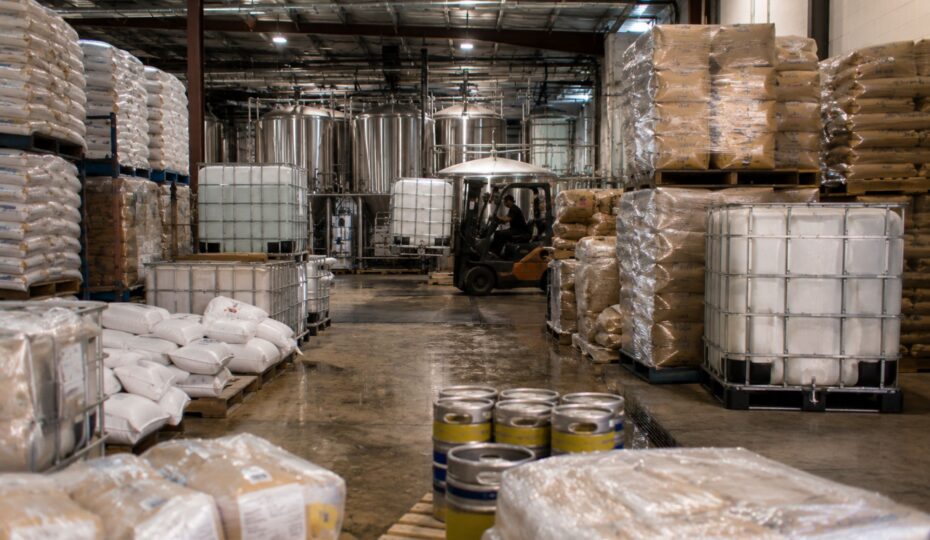
A 15-barrel craft brewery may prefer 50 lb bags for flexibility and lower storage requirements, while a 100-barrel beverage facility may move toward tanker-delivered liquid sugar systems to reduce labor and improve production speed.
Why Commercial Breweries Buy Sugar in Bulk
Commercial breweries purchase bulk sugar to improve production consistency, reduce ingredient costs, and support stable brewing schedules. Reliable sugar sourcing also helps breweries avoid cellar disruptions caused by delayed shipments or inconsistent fermentability between batches.
Production breweries often operate on strict brew schedules tied directly to fermentation tank availability and distributor timelines. A missed sugar delivery can delay brewing, fermentation turnover, packaging runs, and retail fulfillment.
Bulk purchasing helps breweries:
- Maintain consistent attenuation across batches
- Reduce ingredient cost volatility
- Improve inventory forecasting
- Simplify production planning
- Support seasonal production spikes
- Reduce emergency ingredient sourcing
Breweries expanding into hard seltzer or RTD production often increase sugar purchasing volumes significantly because highly fermentable sugar becomes the primary alcohol source. In many facilities, sugar procurement shifts from occasional ingredient purchasing to a critical production supply category.
US Sweeteners supports brewing operations with multi-warehouse distribution, scalable packaging options, and inventory support designed for commercial beverage production workflows.
What Breweries Should Look for in a Brewery Sugar Supplier
A brewery sugar supplier should be evaluated on batch-to-batch fermentability, documented product specs, low ash and mineral content, packaging compatibility, lead-time reliability, and emergency fulfillment capacity. For production breweries, cheaper sugar can become more expensive if inconsistent specs change attenuation, delay cellar schedules, or force recipe adjustments.
Fermentability consistency matters because even small specification changes can affect alcohol yield and fermentation timing. Breweries producing high-volume flagship beers usually want highly repeatable sugar specs to avoid production variability.
Low mineral content also matters, especially in lighter beer styles and hard seltzer production, where impurities become easier to detect. Excess minerals can influence yeast health, flavor stability, and finished product clarity.
Brewery Sugar Supplier Checklist
Before selecting a supplier, breweries should evaluate:
- Documented product specifications
- Batch consistency records
- Low ash/mineral content
- Food-grade compliance
- Packaging compatibility with brewhouse workflow
- Lead-time reliability
- Emergency fulfillment capability
- Multi-warehouse inventory access
- Liquid handling support
- Freight coordination experience
Packaging format also affects brewery efficiency more than many buyers initially expect.
| Brewery Size | Common Packaging Preference | Operational Reason |
| Nano brewery | 50 lb bags | Flexible storage |
| Regional craft brewery | Supersacks | Reduced labor |
| Beverage plant | Liquid totes/tankers | Faster batching |
| Distillery | Bulk dry sugar | Easy gravity adjustment |
Some breweries choose suppliers based purely on ingredient cost, then encounter production issues later when sugar quality, delivery reliability, or handling compatibility becomes inconsistent.
Bulk Sugar Storage and Handling Tips for Breweries
Proper sugar storage protects fermentability, prevents contamination, and improves ingredient consistency throughout production. Both dry and liquid sugars require controlled storage conditions to support reliable brewing performance.
Dry sugars should remain in low-humidity environments because moisture exposure can create clumping and inconsistent ingredient flow during brewing. Breweries handling supersacks or large-volume dry sugar additions often use dedicated ingredient staging areas to minimize contamination risks.
Liquid sugar systems require temperature management and sanitary transfer procedures. In colder warehouse environments, breweries may need temperature-controlled storage to reduce viscosity issues and maintain transfer efficiency.
Best Practices for Sugar Storage
- Store dry sugar below high-humidity zones
- Seal opened bags immediately after use
- Rotate inventory regularly
- Monitor liquid sugar tank temperatures
- Maintain sanitary transfer lines
- Prevent cross-contamination during ingredient handling
Breweries integrating automated ingredient systems often evaluate sugar suppliers partly on how well packaging formats integrate into existing brewhouse handling equipment.
How Bulk Sugar Supports Distilleries and Beverage Production
Distilleries, wineries, and beverage manufacturers also depend on bulk fermentable sugars for alcohol production and fermentation control. Distillers commonly use dextrose and sucrose because they produce predictable alcohol yields and efficient fermentation performance.
Hard seltzer production relies heavily on highly fermentable sugars because producers want clean alcohol bases with minimal residual flavor. Many beverage manufacturers select neutral fermentables specifically to preserve added fruit or flavor systems later in production.
Wineries may also use sugar additions during chaptalization, although regulations vary significantly by state and wine region. Production teams should always review local alcohol regulations before using fermentable sugar additions in wine production.
According to the U.S. Food and Drug Administration, ingredient consistency and sanitary handling remain critical in food and beverage manufacturing because contamination risks can affect both product quality and consumer safety. The FDA’s Current Good Manufacturing Practice regulations outline sanitation and ingredient handling standards for beverage manufacturing facilities.
Conclusion
Reliable sugar supply affects far more than ingredient inventory. Brewing operations depend on consistent fermentability, manageable lead times, compatible packaging formats, and dependable product specs to maintain stable production schedules and repeatable finished products. Production breweries also need suppliers that understand how ingredient handling affects brewhouse labor, cellar timing, and large-scale beverage manufacturing workflows.
US Sweeteners supports breweries, distilleries, and beverage manufacturers with granulated, powdered, liquid, and specialty sugars backed by nationwide warehouse distribution and flexible packaging options. We work with operations ranging from regional craft breweries to larger beverage production facilities that require stable ingredient availability and scalable logistics support. Contact us to discuss brewing adjunct sugars, liquid sweetener sourcing, and packaging solutions designed for commercial beverage production.
FAQs
What sugar do breweries use most often?
Most breweries use dextrose, sucrose, liquid sugar, or specialty brewing sugars, depending on the beer style and production goals. Dextrose remains especially common in IPAs and hard seltzers because it ferments cleanly and helps increase ABV without adding body. Belgian breweries often use candi sugars to add fermentability while creating signature dark fruit and caramel flavor notes.
Is dextrose better than table sugar for brewing beer?
Dextrose often performs better in brewing because yeast can metabolize it immediately without first breaking it down into simpler sugars. Brewers commonly use it to improve attenuation and maintain a drier finish in hop-forward beers. Sucrose can still work effectively in many brewing applications when breweries manage yeast health, oxygenation, and nutrient levels properly.
Why do commercial breweries use liquid sugar?
Commercial breweries use liquid sugar because it improves batching efficiency and reduces manual ingredient handling. High-volume facilities often integrate liquid sugar directly into automated brewing systems to improve transfer speed and production consistency. Liquid sugar also dissolves quickly, which helps reduce brewhouse downtime during repeated production cycles.
How should breweries store bulk sugar?
Breweries should store dry sugar in cool, low-humidity areas to prevent clumping, contamination, and inconsistent ingredient flow. Liquid sugar systems require sanitary transfer equipment and temperature monitoring to maintain stable viscosity and product consistency. Breweries handling large sugar volumes often dedicate separate ingredient staging areas to improve handling efficiency and sanitation control.
Can bulk sugar affect beer flavor?
Yes, brewing sugar can significantly affect flavor, body, and fermentation outcomes. Neutral fermentables like dextrose mainly increase alcohol content while helping beers finish drier, whereas candi sugars, molasses, and invert sugars contribute caramel, dark fruit, toffee, or rum-like flavor characteristics. Breweries usually select sugars based on both fermentation performance and target flavor profile.
What should breweries look for in a brewery sugar supplier?
Breweries should evaluate fermentability consistency, product specifications, low mineral content, packaging compatibility, lead-time reliability, and emergency fulfillment capability when selecting a supplier. Production breweries also benefit from suppliers that understand brewhouse workflows and scalable beverage manufacturing requirements. Multi-warehouse inventory support can help breweries maintain more stable long-term production planning during seasonal demand shifts or supply chain disruptions.

Thomas is a product expert at US Sweeteners, a trusted bulk sugar and sweetener distributor serving food and beverage manufacturers across the USA. He writes about sweetener sourcing, ingredient trends, and supply chain insights for the food industry.