
Bulk Dextrose Powder — Corn Sugar Supplier for Food, Beverage & Nutrition Manufacturers
US Sweeteners supplies bulk dextrose powder — also legally named corn sugar — in food grade monohydrate, anhydrous, non-GMO, and USDA NOP certified organic grades. Every order ships in commercial formats from 25 lb bags to 48,000 lb bulk tankers, with batch-specific Certificates of Analysis, kosher and halal certification, and 1 to 2 business day lead times nationwide from our Brooklyn, NY warehouse.
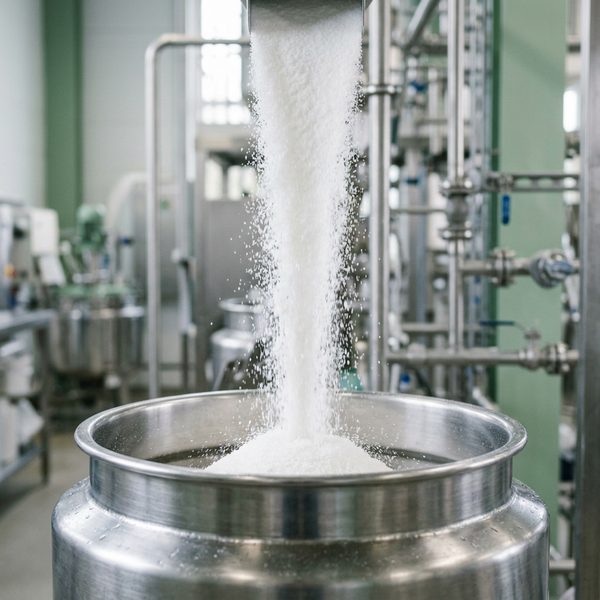
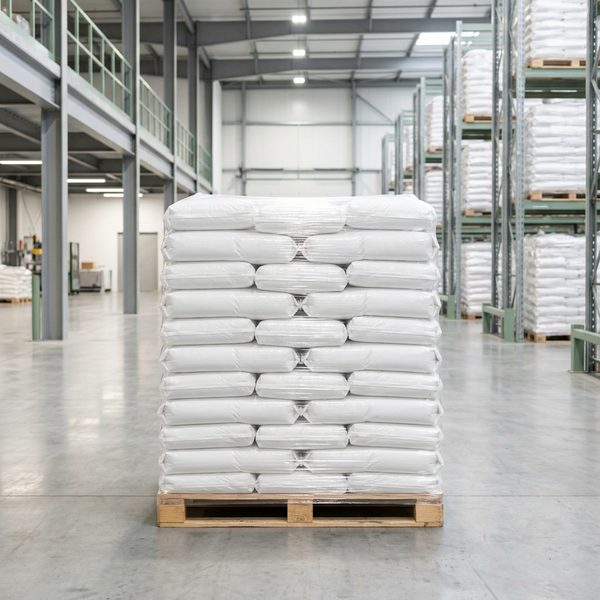
Available Packaging
- 25 lb Bags
- 50 lb Bags
- 100 lb Bags
- 2,000 lb Totes
- 48,000 lb Bulk Tanker
Every format ships nationwide with 1–2 business day lead times. Custom mesh, palletization, and delivery scheduling available on request.
What Is Dextrose?
Dextrose is purified, crystallized D-glucose produced by the enzymatic hydrolysis of corn starch. It is the same simple sugar the body uses for energy, which is why it absorbs faster than sucrose and is used in everything from sports nutrition to intravenous solutions. In food and beverage manufacturing, dextrose is valued less for sweetness — it is only about 70 to 80 percent as sweet as table sugar — and more for what it does functionally: it browns readily, depresses freezing point, feeds fermentation reliably, and dissolves fast and clean without aftertaste.
Dextrose and Corn Sugar Are the Same Product
You may also see dextrose sold as corn sugar. That is not a marketing synonym, it is a regulated alternate name. Under the U.S. standard of identity at 21 CFR §168.111(c), the legal name of the food is “Dextrose monohydrate,” “Dextrose,” or alternatively “corn sugar monohydrate” or “corn sugar,” with the blank filled by the food source. The anhydrous form carries the parallel names “Dextrose anhydrous,” “Anhydrous dextrose,” or “corn sugar anhydrous” under 21 CFR §168.110(b). If you are sourcing corn sugar for brewing, curing, or baking, you are sourcing dextrose — the specifications on this page apply.
For background on what dextrose is and how it is made, see our primer, and for how it sits alongside the other corn-derived sweeteners — corn syrup solids, glucose syrup solids, and maltodextrin — see our corn sweetener overview.
Dextrose Grades We Supply
Dextrose is not a single specification. The form you order changes moisture, water activity, dissolution rate, and cost per pound of actual sugar delivered. We supply the following grades and will help you match the right one to your formulation.
 The Workhorse
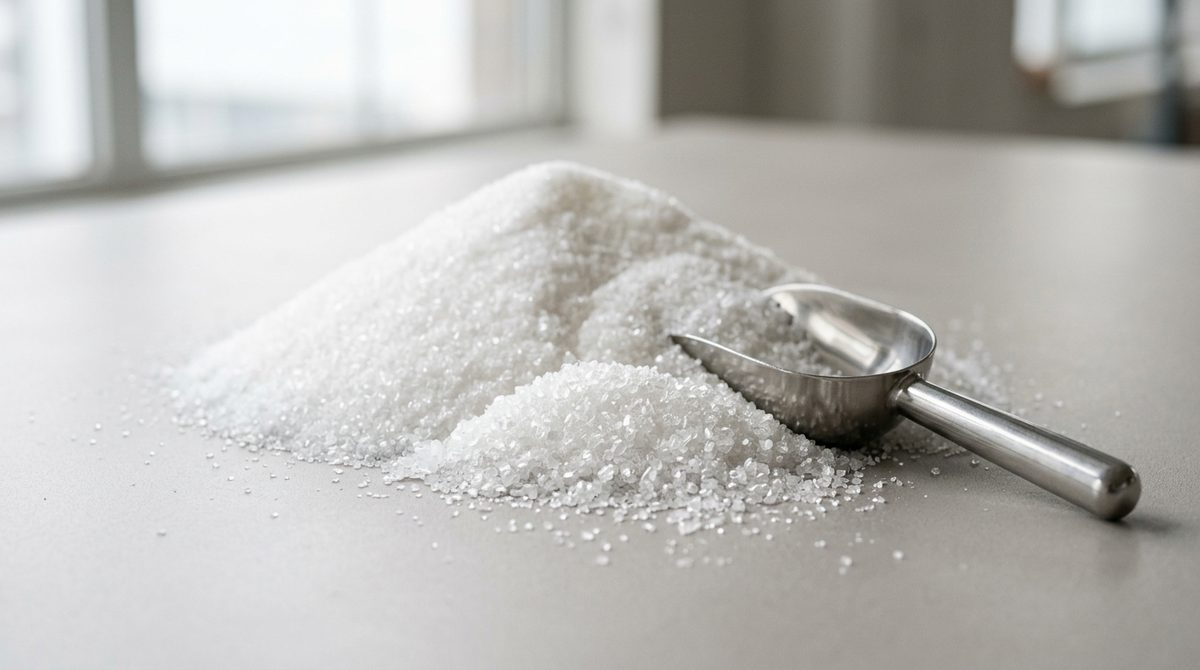
Dextrose Monohydrate (Food Grade)
The most widely specified form. Each glucose molecule carries one molecule of water of crystallization, putting typical moisture between 7.0 and 9.5 percent. Free-flowing, stable in normal warehouse conditions, and the standard choice for baking, confectionery, beverages, dry mixes, and fermentation.
If your spec sheet just says “dextrose,” this is almost certainly what it means. Supplied in 25 lb, 50 lb, and 100 lb bags, 2,000 lb totes, and bulk tanker.
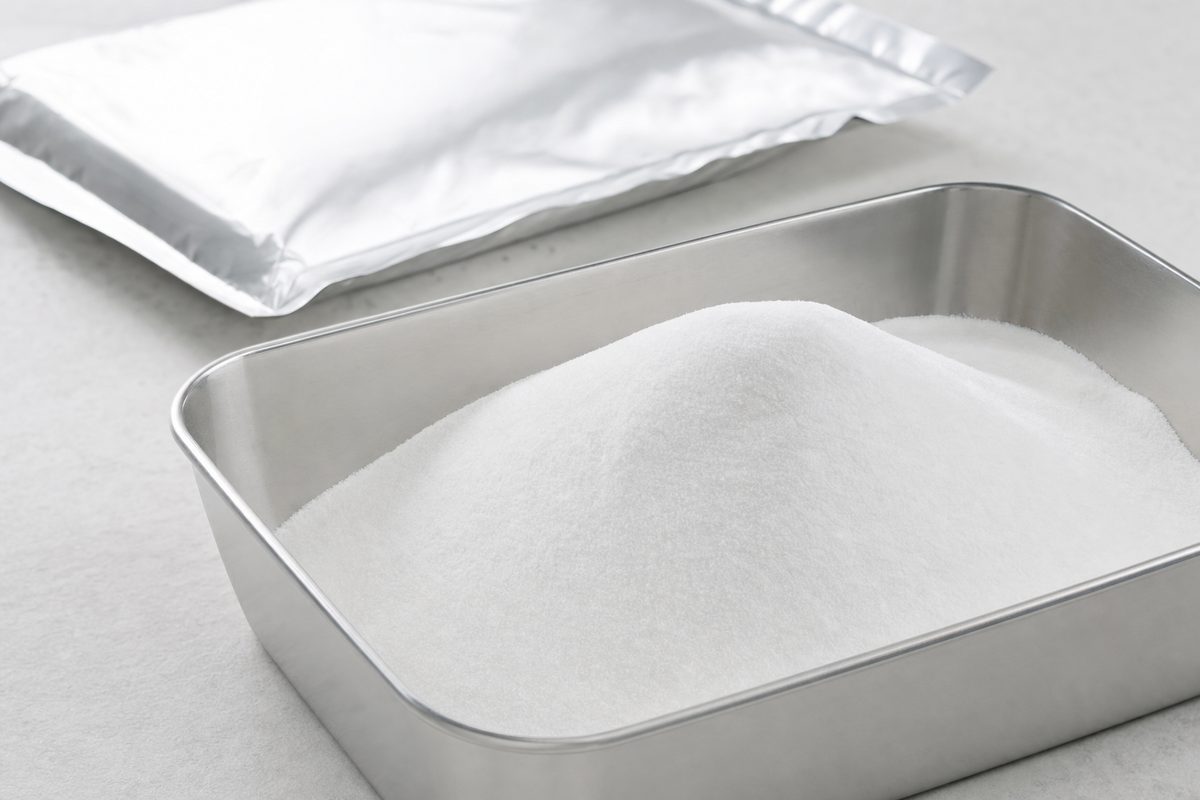 Moisture Control
Anhydrous Dextrose
Fully dehydrated dextrose with moisture at or below 0.5 percent. Because there is no bound water, you get more sugar per pound and tighter control over water activity — critical in tableting, effervescent and dry-blend supplements, seasoning systems, and any low-moisture matrix where migrating water shortens shelf life.
Anhydrous dextrose is hygroscopic, so it requires sealed storage and disciplined handling once opened.
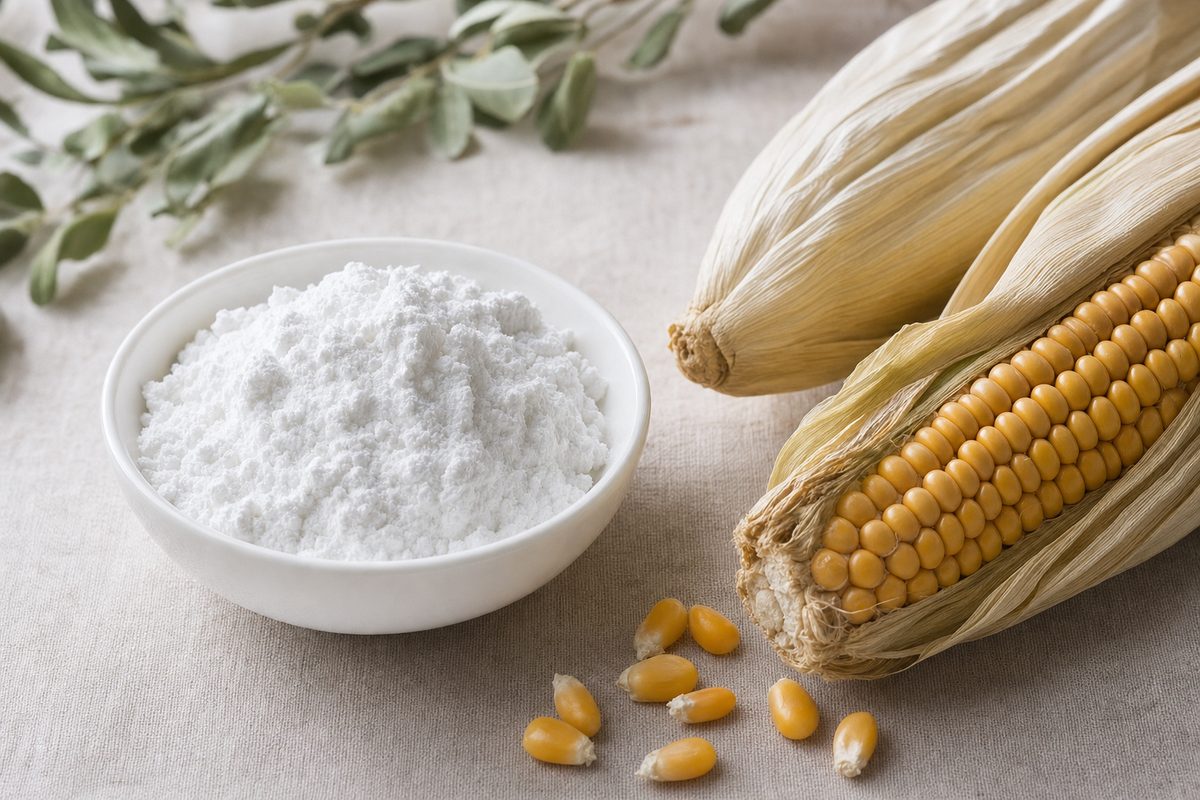 Certified
Certified Organic Dextrose
USDA NOP certified organic dextrose produced from certified organic starch, available in monohydrate and anhydrous forms with an organic certificate and a per-lot transaction certificate supplied on every shipment.
Suited to organic beverage, supplement, and bakery programs where the sweetener has to carry through to a certified finished product. Full detail below, or see our bulk organic sugar if you need sucrose alongside it.
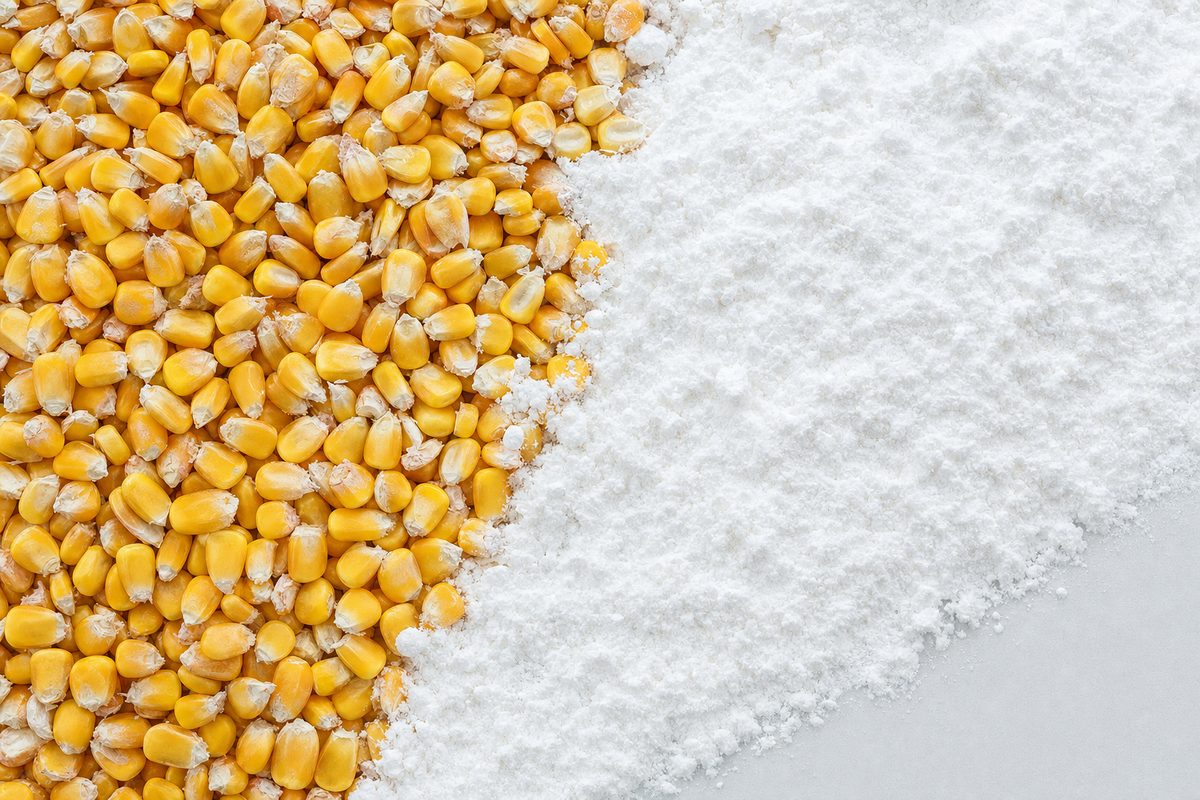 Identity Preserved
Non-GMO Dextrose
Produced from identity-preserved corn with supporting documentation available for your own claim substantiation. Available in both monohydrate and anhydrous forms.
Supply is allocated rather than open, so non-GMO programs are best set up on a forecast or contract basis rather than spot. See our full non-GMO and kosher sweetener program.
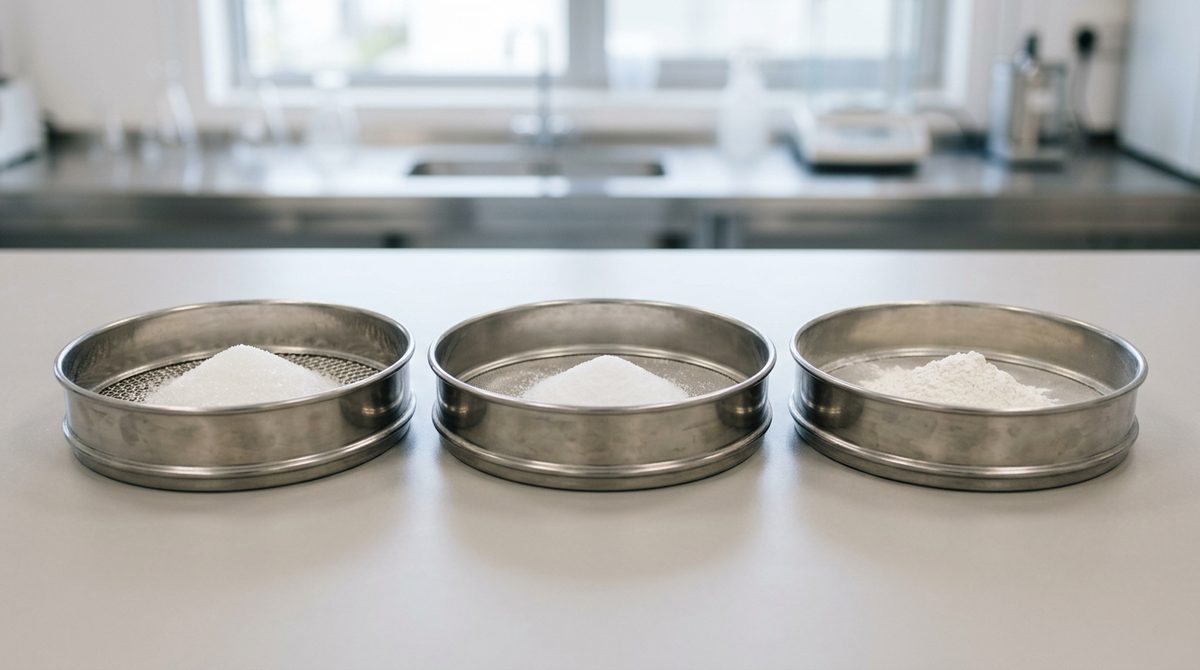 Made to Spec
Custom Mesh Dextrose Powders
Standard dextrose passes 20 to 24 mesh. When your process needs finer or more tightly distributed particle size — for dry-blend uniformity, dissolution rate, compaction behavior, or dust control — we can source to a specified mesh profile.
Send us your particle size requirement with your quote request and we will confirm availability and pricing. Private label and custom pack programs are also available.
Monohydrate vs. Anhydrous Dextrose: Which Do You Need?
The difference is water, not purity. Both forms are held to the same purity requirement — at least 99.5 percent reducing sugar expressed as D-glucose on a dry basis, per 21 CFR §168.111. What separates them is water of crystallization: monohydrate carries one water molecule per glucose molecule, so it runs 7.0 to 9.5 percent moisture and about 91 percent actual dextrose by weight. Anhydrous has none, so it runs at or below 0.5 percent moisture and delivers close to 100 percent dextrose by weight. Choose monohydrate unless your formulation is moisture-sensitive or you need the extra sugar density per pound.
| Dextrose Monohydrate | Anhydrous Dextrose | |
|---|---|---|
| Formula | C6H12O6·H2O | C6H12O6 |
| Moisture | 7.0 – 9.5% | ≤ 0.5% |
| Total solids (min., 21 CFR) | ≥ 90.0% | ≥ 98.0% |
| DE, dry basis | ≥ 99.5 | ≥ 99.5 |
| Actual dextrose per lb | ~91% | ~99.5% |
| Bulk density, loose | 0.55 – 0.85 g/cm³ | 0.50 – 0.70 g/cm³ |
| Dissolution | Fast | Faster |
| Hygroscopicity | Moderate | High — requires sealed storage |
| Relative cost per lb | Lower | Higher |
| Cost per lb of sugar delivered | Comparable | Comparable |
| Best for | Baking, beverages, confectionery, fermentation, curing, dry mixes | Tableting, effervescent blends, low-moisture systems, pharma, precision water-activity control |
One practical note on cost. Anhydrous carries a higher price per pound, but you are also buying roughly nine percent less water. On a dry-solids basis the two are much closer than the quoted prices suggest, so compare on cost per pound of dextrose delivered rather than cost per pound of material. If you tell us your target dry-solids contribution, we will quote both ways. See also how dextrose compares to maltodextrin and to sucrose.
If neither dry form is the right fit, we also supply bulk liquid dextrose blends for high-throughput liquid dosing, plus bulk maltodextrin, corn syrup solids, and glucose syrup solids when you need lower DE or different viscosity and hygroscopicity behavior.
Certified Organic Dextrose
We supply USDA NOP certified organic dextrose in both monohydrate and anhydrous forms, produced from certified organic starch by enzymatic hydrolysis with no synthetic processing aids. Every shipment ships with a current organic certificate naming dextrose specifically and a per-lot transaction certificate, so the organic status of the exact material you received is documented rather than implied. Because organic dextrose supply is allocated rather than open-market, we recommend setting these programs up against a forecast instead of buying spot.
What USDA Organic Certification Covers
Organic claims in the United States are governed by the USDA National Organic Program under 7 CFR Part 205. For dextrose to carry the organic claim, three things have to be true at once.
The Crop
The starch source must be grown on land certified organic — no synthetic pesticides, herbicides, or fertilizers for at least three years before harvest.
The Facility
The processing plant must be certified by a USDA-accredited certifying agent, with documented segregation of organic and conventional material and dedicated or verified-clean equipment between runs.
The Lot
Each shipment carries a transaction certificate tying that specific lot back to the certified chain of custody.
Because dextrose is a single-ingredient product, certified organic dextrose qualifies for the “100 percent organic” labeling category under NOP rules rather than the 95 percent “organic” category. Ask for the certificate that names organic dextrose specifically — a general “organic ingredients” certificate, or a certificate covering only the upstream starch, is not sufficient for your own claim substantiation.
Organic vs. Non-GMO: They Are Not the Same Claim
This trips up a lot of sourcing specs, so it is worth being precise. Organic certification prohibits genetically modified inputs by definition, so certified organic dextrose is inherently non-GMO. The reverse is not true — non-GMO dextrose is not organic, because non-GMO says nothing about pesticides, fertilizers, or land management. Our non-GMO sugar guide and organic vs. conventional guide for manufacturers walk through both claims in detail.
The two claims also verify differently. Organic is verified by audit and chain-of-custody documentation. Non-GMO Project Verified adds PCR-based testing against action thresholds that organic certification alone does not require. If your finished product needs to carry a consumer-facing Non-GMO Project seal, you need that verification specifically even if your dextrose is already organic. We can supply both sets of documentation.
| Certified Organic | Non-GMO (conventional) | |
|---|---|---|
| GMO inputs | Prohibited | Prohibited |
| Synthetic pesticides & fertilizers | Prohibited | Not restricted |
| Land management requirement | 3-year transition minimum | None |
| Facility certification | Required, USDA-accredited agent | Not required |
| Per-lot documentation | Transaction certificate | Identity-preserved documentation |
| Verification method | Audit + chain of custody | PCR testing (if Project Verified) |
| Relative cost | Premium | Modest premium over conventional |
| Supply | Allocated | Broader, forecast recommended |
Organic Dextrose Specifications
Organic dextrose meets the same functional and purity specifications as our conventional grades — organic certification governs how it is grown and handled, not what it tests at. Refer to the specification table below for full parameters. Both organic monohydrate and organic anhydrous are available, in the same packaging formats as conventional, subject to allocation.
- Organic certificate naming dextrose, from a USDA-accredited certifying agent
- Per-lot organic transaction certificate
- Batch-specific Certificate of Analysis
- Non-GMO documentation
- Kosher and halal certificates
- Allergen, gluten-free, and vegan statements
Running certified organic across more than one sweetener? We also supply bulk organic sugar and a full non-GMO and kosher sweetener program, so organic dextrose and organic sucrose can ship against the same forecast and the same paperwork.
Tell us your grade, volume, and whether you need EU Organic alongside USDA NOP, and we will confirm current allocation and delivered pricing. Organic programs price and lead-time differently from conventional, so ask for both if you are still deciding.
Applications by Industry
Dextrose does different jobs in different processes. Here is where our customers use it most, and what they are buying it for.
Baking
A reducing sugar, so it drives Maillard browning and crust color at lower temperatures than sucrose. It also feeds yeast directly without needing to be inverted. See bakery ingredient supply
Beverage
Fast, complete dissolution with no haze and no lingering aftertaste — useful for bulking and mouthfeel in sports drinks and powdered beverage mixes. See beverage ingredient supply
Confectionery
Controls crystallization and delivers a cooling, clean sweetness in fondants, tablets, chews, and compressed candies. See sweeteners for candy manufacturing
Sports Nutrition
A fast-absorbing carbohydrate for post-workout glycogen replenishment, and a carrier or bulking agent in powders, gels, and effervescent blends. See sweeteners for supplements
Fermentation & Brewing
A clean, fully fermentable sugar with no unfermentable solids. This is the market that still calls it corn sugar — the specifications are identical. See brewery and distillery supply
Meat Curing
Feeds starter cultures in fermented sausage, offsets the harshness of curing salts, and supports color development in cured and smoked products. See sweeteners for meat processing
Frozen Desserts
Depresses freezing point and controls ice crystal size, improving scoop texture and body while contributing less sweetness per unit of solids than sucrose. See sweeteners for ice cream
Clinical Nutrition
The carbohydrate source in oral rehydration salts and clinical nutrition formulations, and a direct-compression filler in tablets. Requires documented grade and batch traceability. See sweeteners for pharmaceuticals
Not sure which grade or mesh fits your process? Send us your application and target specification and we will quote the right form rather than the cheapest one. If you also buy sucrose, our bulk granulated sugar ships on the same programs.
Bulk Dextrose Technical Specifications
Typical specifications for food grade dextrose. Batch-specific values are confirmed on the Certificate of Analysis supplied with every shipment. Request a current COA and full spec sheet with your quote.
Ingredient Statement
- Derived from enzymatically hydrolyzed corn starch, typically U.S.-grown
- Contains not less than 99.5 percent dextrose expressed as D-glucose on a dry basis
- Available in monohydrate and anhydrous forms
- Available in conventional, non-GMO, and USDA NOP organic programs
- Naturally gluten-free, allergen-free, and vegan
- No additives, anti-caking agents, or processing aids unless specified
Typical Technical Values
| Parameter | Monohydrate | Anhydrous |
|---|---|---|
| Appearance | White crystalline powder | Fine white crystalline powder |
| Reducing sugar / DE, as D-glucose, dry basis | ≥ 99.5% | ≥ 99.5% |
| Total solids | ≥ 90.0% | ≥ 98.0% |
| Moisture / loss on drying | 7.0 – 9.5% | ≤ 0.5% |
| Sulfated ash, dry basis | ≤ 0.25% | ≤ 0.25% |
| Sulfur dioxide | < 10 ppm typical (≤ 20 mg/kg regulatory) | Same |
| pH, aqueous solution | 4.0 – 6.5 | 4.0 – 6.5 |
| Specific rotation | +52.0° to +53.5° | +52.0° to +53.5° |
| Bulk density, loose | 0.55 – 0.85 g/cm³ (≈34 – 53 lb/ft³) | 0.50 – 0.70 g/cm³ |
| Bulk density, compacted | 0.60 – 0.875 g/cm³ | — |
| Particle size | 100% through 20 – 24 mesh; custom mesh available | Finer crystal; custom mesh available |
| Solubility | Fully water-soluble | Fully water-soluble, faster |
| Relative sweetness vs. sucrose | 70 – 80% | 70 – 80% |
| Heavy metals | ≤ 5 ppm | ≤ 5 ppm |
| Arsenic | ≤ 0.5 ppm | ≤ 0.5 ppm |
| Lead | ≤ 0.5 ppm | ≤ 0.5 ppm |
| Total plate count | ≤ 1,000 cfu/g | ≤ 1,000 cfu/g |
| Yeast and mold | ≤ 50 cfu/g | ≤ 50 cfu/g |
| E. coli | Negative | Negative |
| Salmonella | Negative | Negative |
Dextrose equivalent is measured on a dry basis, which is why monohydrate and anhydrous carry the same DE despite very different moisture. The federal standard of identity for dextrose monohydrate is set at 21 CFR §168.111; anhydrous conforms to the same specifications with a higher total-solids minimum under 21 CFR §168.110.
Typical Nutritional Values
| Per 100 g (monohydrate) | Typical value |
|---|---|
| Energy | ~365 kcal |
| Protein | 0.0 g |
| Total fat | 0.0 g |
| Carbohydrate | ~91.3 g |
| Sugars (dextrose) | ~91.3 g |
| Dietary fiber | 0.0 g |
| Water | ~9 g |
| Sodium | ~1 mg |
| Calcium | ~1 mg |
| Potassium | ~2 mg |
| Iron | < 0.1 mg |
Storage & Shelf Life
Shelf Life
Up to 24 months in sealed packaging under dry conditions.
Storage Conditions
Store dry and off the floor, below 90°F (32°C), away from strong odors and direct sunlight. See our guide to storing bulk sugar.
Anhydrous Handling
Anhydrous dextrose is highly hygroscopic and must be kept sealed until use. Reseal partial bags immediately — see how to keep sugar from clumping.
Packaging, Lead Times & Freight
We ship bulk dextrose in 25 lb, 50 lb, and 100 lb food-grade bags, 2,000 lb totes, and 48,000 lb bulk tankers, with 1 to 2 business day lead times on standard formats to anywhere in the continental United States.
| Format | Typical use | Freight |
|---|---|---|
| 25 lb bags | Trial runs, R&D, small-batch and craft production | LTL, palletized |
| 50 lb bags | Standard production format across most industries | LTL or full truckload |
| 100 lb bags | Higher-throughput lines with bag-handling equipment | LTL or full truckload |
| 2,000 lb totes | Continuous or high-volume batching | Full truckload |
| 48,000 lb bulk tanker | Dedicated high-volume programs | Bulk tanker |
Custom palletization, stretch-wrap and slip-sheet configurations, mixed-format pallets, and private label packing are all available, as is scheduled release delivery. If you run a scheduled production calendar, we can hold stock against a forecast so you are not exposed to spot lead times — most of our volume ships against standing programs rather than one-off orders. Minimums vary by grade and format; see how bulk sweetener supplier MOQs typically work.
Documentation & Certifications
Technical buyers and QA teams need paperwork before they need a price. We supply the following with every bulk dextrose program.
Quality & Analysis
Batch-specific Certificate of Analysis, Safety Data Sheet, and product specification sheet.
Organic
USDA NOP organic certificate and per-lot organic transaction certificate on organic grades.
Certifications
Kosher, halal, and non-GMO documentation for claim substantiation.
Statements
Allergen, gluten-free, vegan, BSE/TSE, continuing guarantee, and certificate of origin.
Facility & Traceability
FDA facility registration, HACCP documentation, process flow diagram, and traceability records.
Need documentation before you can open a vendor file? Request the full dextrose document package and we will send it over — no purchase required. If you are still building your approved vendor list, our checklist for qualifying a bulk sugar supplier covers what to ask for and why.
How Bulk Dextrose Pricing Works
Bulk dextrose is priced per pound or per hundredweight and moves with the corn and refined starch markets, so there is no single list price that stays accurate. What we can tell you is exactly which variables move your number, so you know what to ask for when you request a quote.
Grade
Anhydrous costs more per pound than monohydrate because you are buying less water. Non-GMO and certified organic programs carry a premium over conventional.
Volume Tier
Pricing steps down at bag-quantity breaks, then again at pallet, truckload, and tanker volumes. The gap between a few bags and a full truckload is substantial.
Packaging Format
Cost per pound falls as package size rises. Totes and bulk tankers price below bagged product for the same material.
Freight Lane
Your distance from the shipping point, and whether you can accept full truckload rather than LTL, often moves delivered cost more than the material price does.
Contract vs. Spot
Committed volume on a forecast prices better than one-off spot purchases, and insulates you from short-term corn market movement.
Custom Specification
Custom mesh, specific certifications, or tightened parameters add cost.
Two things make quotes come back faster and cleaner: knowing how bulk sugar pricing is actually built, and sending a complete RFQ. You can start from our bulk sugar RFQ template and adapt it to dextrose.
Tell us the grade, annual or monthly volume, packaging format, and destination ZIP, and we will come back with delivered pricing and volume breakpoints rather than a range. If you are comparing monohydrate against anhydrous, ask for both on a dry-solids basis so you are comparing cost per pound of dextrose rather than cost per pound of material.
Request a Bulk Dextrose Quote
Send us your grade, volume, packaging format, and destination and we will come back with delivered pricing, current lead times, and the full document package.
Or use the inquiry and information form and we will route it to the right desk.
FAQs About Bulk Dextrose Powder
What is the difference between dextrose and glucose?
They are the same sugar. Glucose is the general chemical name; dextrose specifically means D-glucose, the naturally occurring right-handed form, which is what is produced commercially from corn starch. If a formula calls for glucose in dry powder form, dextrose is what you order.
Is dextrose the same as corn sugar?
Yes. Corn sugar is a legally recognized alternate name for dextrose in the United States. The standard of identity at 21 CFR §168.111(c) permits “corn sugar monohydrate” or “corn sugar” as names for the same food, and 21 CFR §168.110(b) permits “corn sugar anhydrous.” Brewers, distillers, and meat processors commonly use the corn sugar term; the product and its specifications are identical. See our overview of corn sweeteners for how it relates to corn syrup solids and maltodextrin.
Should I order dextrose monohydrate or anhydrous dextrose?
Order monohydrate unless you have a specific reason not to. It is the standard grade for baking, beverages, confectionery, fermentation, and dry mixes. Choose anhydrous when your formulation is moisture-sensitive, when you are tableting or compressing, or when you need tight water-activity control — it runs at or below 0.5 percent moisture versus 7.0 to 9.5 percent for monohydrate. If you dose liquid rather than dry, look at our bulk liquid dextrose blends instead.
Do you supply certified organic dextrose?
Yes. We supply USDA NOP certified organic dextrose in both monohydrate and anhydrous forms, produced from certified organic starch. Every shipment includes a current organic certificate naming dextrose specifically plus a per-lot transaction certificate, so you can substantiate your own organic claim. Organic supply is allocated rather than open-market, so we recommend running these programs against a forecast rather than buying spot. Our organic vs. conventional guide covers what changes downstream.
Is organic dextrose the same as non-GMO dextrose?
No, and the distinction matters for your label. Organic certification prohibits GMO inputs by definition, so certified organic dextrose is always non-GMO. But non-GMO dextrose is not organic — non-GMO addresses genetic modification only and says nothing about synthetic pesticides, fertilizers, or land management, which organic certification does regulate. If you need a consumer-facing Non-GMO Project Verified seal, that requires separate PCR-based verification even when the material is already organic. We supply documentation for both.
Is dextrose sweeter than sugar?
No. Dextrose is roughly 70 to 80 percent as sweet as sucrose, so you need more of it to hit the same sweetness level. Manufacturers usually choose dextrose for its functional properties — browning, fermentability, freezing-point depression, fast dissolution — rather than for sweetening power, and often pair it with a high-intensity sweetener. We break the comparison down in sucrose vs. dextrose, and if you need sucrose itself we supply bulk granulated sugar.
Is dextrose gluten-free?
Yes. Dextrose is produced from corn starch, not from wheat, barley, or rye, and the hydrolysis and crystallization process removes protein regardless of source. We supply gluten-free statements and batch documentation on request. See our guide to dextrose and gluten.
How should I store bulk dextrose?
Store sealed, dry, and off the floor, below 90°F (32°C), away from strong odors and direct sunlight. Shelf life is up to 24 months in unopened packaging under those conditions. Anhydrous dextrose is highly hygroscopic and will pick up ambient moisture quickly once opened, so reseal partial bags immediately and keep them out of humid areas. See our full guides to storing bulk sugar and preventing clumping.