What Is Dextrose? A B2B Buyer’s Guide to Specs, Sources, and Sourcing
Last updated: May 4, 2026
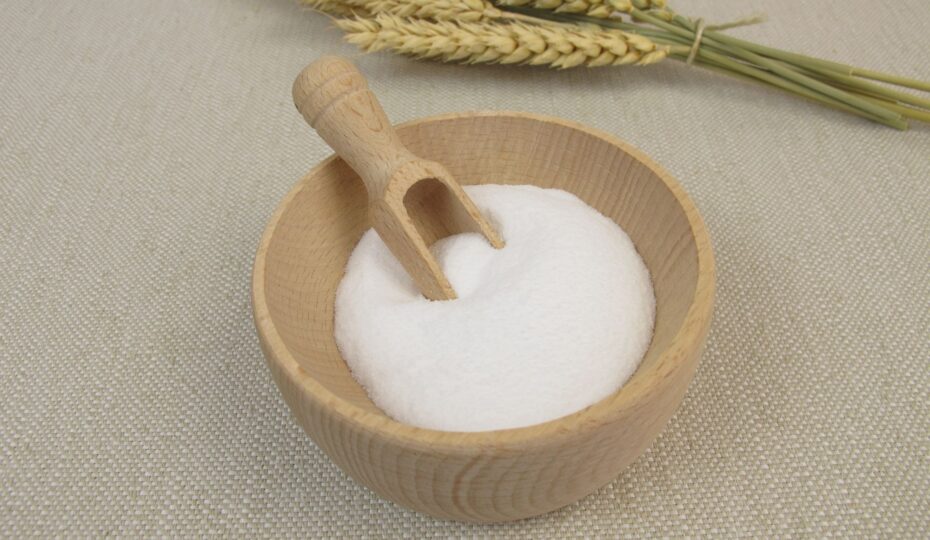
Quick answer: Dextrose is D-glucose, produced industrially by the enzymatic hydrolysis of starch (most often corn). Dextrose is a type of simple sugar derived from corn starch and is widely used as a sweetener in foods and beverages. It is about 70% as sweet as sucrose (table sugar). For B2B buyers, the specs that matter are: DE ≈ 100, two crystalline forms (monohydrate, ~9% water and anhydrous, < 1% water), and a liquid form at 70–80% solids (Brix). It functions as a sweetener, fermentable, humectant, browning agent, and freezing-point depressant across bakery, brewing, sports nutrition, confectionery, dairy, pharma, and pet food.
At-a-glance specifications
| Spec | Typical value |
|---|---|
| Dextrose Equivalent (DE) | ~100 (vs. glucose syrups 20–95, maltodextrins 3–20) |
| Monohydrate | C₆H₁₂O₆·H₂O, MW 198.17, ~9% water (USP allows 7.5–9.5%) |
| Anhydrous | C₆H₁₂O₆, MW 180.16, < 1% water |
| Liquid | 70–80% solids (Brix), pH 4.0–5.5 |
| Assay (dried basis) | ≥ 99.5% reducing sugars as D-glucose (FCC) |
| Specific rotation | +52.6° to +53.2° |
| Heavy metals | ≤ 5 ppm; Lead ≤ 0.1 mg/kg; Arsenic ≤ 1 mg/kg |
| Common starch sources | Corn (primary), rice, tapioca, potato |
| CAS | 50-99-7 (anhydrous), 5996-10-1 (monohydrate) |
What dextrose actually is: a simple sugar
Dextrose is the commercial name for D-glucose, a simple sugar that is chemically identical to glucose, the six-carbon monosaccharide (C₆H₁₂O₆) that human metabolism and most fermenting microorganisms run on. As previously mentioned, dextrose and glucose share the same molecular structure and are interchangeable in biological processes. In industrial supply, the term refers specifically to high-purity glucose (DE ≈ 100) produced from starch hydrolysis — distinguishing it from glucose syrups (DE 20–95, mixtures of glucose, maltose, and longer chains) and maltodextrins (DE 3–20, predominantly oligosaccharides).
Compared to other simple sugars like fructose and table sugar (sucrose), dextrose is less sweet, even though it provides the same 4 calories per gram as sucrose. Dextrose also has a high glycaemic index (GI), meaning it raises blood sugar levels more quickly than fructose or sucrose, which are broken down more slowly by the body.
DE is the spec that tells your formulation team whether dextrose, a glucose syrup, or maltodextrin is
How it’s produced
Industrial dextrose is the output of three enzymatic steps applied to starch — a complex carbohydrate found most commonly in corn starch in the U.S., though rice, tapioca, and potato are also used. During digestion, the body breaks complex carbohydrates like starch into simple sugars such as dextrose, which can then be used for energy:
- Liquefaction. Starch slurry is gelatinized and treated with α-amylase, breaking long starch chains into shorter dextrins (output: ~10–15 DE).
- Saccharification. Glucoamylase converts dextrins into glucose over 24–72 hours at 30–65 °C, pH 4.5–5.5, until DE reaches ≥ 95 (Wang et al., Industrial Crops and Products).
- Refining and crystallization. The glucose liquor is decolorized (activated carbon), demineralized (ion exchange), evaporated, and either supplied as liquid dextrose (70–80% solids) or crystallized into monohydrate or anhydrous form.
Lot-to-lot variation in purity, color, and ash traces back to how rigorous each supplier’s refining and crystallization steps are.
Forms: monohydrate, anhydrous, and liquid
Choosing the form is the most consequential spec decision a formulator makes:
| Attribute | Monohydrate | Anhydrous | Liquid |
|---|---|---|---|
| Water content | ~9% | < 1% | 20–30% (70–80% solids) |
| Glucose per lb | ~91% | ~99%+ | 70–80% |
| Hygroscopicity | Moderate | High — prone to caking | N/A |
| Best for | Bakery, confectionery, fermentation, sports nutrition, general food | Pharma, IV, dry beverage mixes, precise formulations | Beverages, sauces, pharma compounding, large-scale production |
| Packaging | 50 lb bags, super sacks | 50 lb bags, super sacks, drums | Totes (275 gal), tankers (4,000–6,000 gal) |
| Shelf life | 24+ months | 24+ months (sealed) | 6–12 months |
Two practical notes:
- For nutrition labels, account for the ~9% water in monohydrate. Delivering 10 g of glucose requires ~11 g of monohydrate.
- Anhydrous is hygroscopic — it pulls moisture aggressively. Store sealed and monitor RH in your facility.
Mesh size matters too. Fine grade (60–100 mesh) for beverages and dry mixes; medium (40–80) for general food and bakery; coarse (20–40) for confectionery and dust-sensitive blending. Specify mesh on your spec sheet — it affects flowability, dissolution, and final texture.
Starch sources: why corn starch matters even though glucose is glucose
The finished molecule is identical regardless of source, but upstream sourcing affects allergens, certifications, supply chain risk, and label claims:
- Corn — lowest cost, widest U.S. supply, supports gluten-free, kosher, halal, and Non-GMO Project Verified claims.
- Rice — preferred for corn-free, paleo, or APAC-market formulations.
- Tapioca — clean-label and allergen-friendly positioning, common in sports nutrition and clinical products.
- Potato — common in European supply; useful for non-GMO and corn-free formulations.
- Wheat — uncommon in U.S. supply; finished products labeled gluten-free require a 21 CFR 101.91 disclosure statement. (See: Is Dextrose Gluten-Free? A B2B Sourcing Guide.)
Industry applications
Dextrose isn’t just a sweetener — its functional role shifts by category:
- Bakery — used as a sweetener in processed foods, including ketchup, breakfast cereals, and baked goods; fermentation accelerator, Maillard browning agent, humectant for shelf-life, sweetness modulator (~70% of sucrose).
- Brewing, distilling, fermentation — priming sugar, fully fermentable adjunct, yeast nutrient base; key input for gluten-reduced and gluten-free brewing.
- Sports nutrition — fast-absorbing carbohydrate and common energy source in sports drinks, gels, and tablets; dextrose supplements are used for rapid energy replenishment and to maintain energy levels during and after exercise. Dextrose is especially effective when taken during or immediately after exercise to replenish glycogen stores, making it a popular post workout supplement among athletes and bodybuilders. Bodybuilders add dextrose tablets after intense workouts to quickly replenish stored glycogen, aiding the muscle repair process, muscle repair, and recovery, and supporting muscle growth and strength.
- Confectionery — bulking agent, crystallization control, cooling sensation in mints and lozenges (anhydrous has stronger negative heat of solution).
- Dairy and frozen desserts — freezing point depression for ice cream scoopability; mouthfeel in yogurts and cultured products.
- Processed meats — cure accelerator (supports nitrite reduction), fermentation substrate in dry-cured sausages.
- Pharmaceutical and IV — USP-grade carrier; IV solutions (5/10/50%) require strict adherence to the USP Dextrose Monograph.
- Pet food — palatability enhancer, fermentation substrate in probiotic formulations.
Documentation a B2B buyer should require
The biggest differentiator between commodity and qualified dextrose supply is documentation. Before issuing a PO, confirm your supplier delivers:
| Document | What to look for |
|---|---|
| CoA, per lot | DE, assay %, moisture, ash, color, micro, gluten ppm, heavy metals, lot #, manufacture date |
| Spec sheet | Form, mesh size, packaging, shelf life, storage |
| Allergen statement | Starch source, Top 9 allergens in facility, cross-contact controls |
| Country of origin | Required for FSMA Foreign Supplier Verification Programs |
| Facility certifications | SQF, FSSC 22000, BRCGS, or other GFSI-recognized scheme |
| Religious / market certs | Kosher, Halal, Non-GMO Project Verified, USDA Organic |
| USP/FCC compliance letter | For pharma, supplement, or monograph-driven applications |
| FSMA registration + SDS | FDA registration number; OSHA HazCom |
If a supplier can’t produce these on request, that’s a sourcing risk worth flagging to your QA director.
How US Sweeteners supports B2B dextrose buyers
US Sweeteners is a U.S.-based bulk sugar and sweetener distributor supplying large distributors, wholesalers, bakeries, breweries, wineries, and food manufacturers nationwide. For dextrose:
- Forms: monohydrate (standard), anhydrous on request, liquid for tanker/tote orders
- Starch sources: corn (standard), rice available for corn-free formulations
- Documentation per shipment: lot-specific CoA, allergen statement, kosher letter, country-of-origin, SDS
- Packaging: 50 lb bags, super sacks, bulk tanker; custom configurations available
- Private labeling for distributors and co-packers
- Lead time / MOQ: [Insert standard lead time and MOQ — varies by form and package size]
Frequently asked questions
What is the DE of dextrose?
Approximately 100 — distinguishing it from glucose syrups (DE 20–95) and maltodextrins (DE 3–20).
Monohydrate vs. anhydrous?
Monohydrate carries ~9% water (USP 7.5–9.5%); anhydrous is dried to < 1% water and delivers more glucose per pound at a 5–15% price premium. Anhydrous is typically spec’d for pharma; monohydrate is the workhorse for food.
When should I use liquid dextrose?
When dust-free handling and rapid dissolution matter — beverages, sauces, large-scale food, and pharmaceutical compounding. Supplied at 70–80% solids in totes or tankers; shorter shelf life than dry forms.
Is dextrose the same as glucose?
Functionally yes — “dextrose” is the commercial name for D-glucose at high purity (DE ≈ 100).
Is dextrose gluten-free?
Yes when sourced from corn, rice, tapioca, or potato; also under FDA rules from properly processed wheat starch with < 20 ppm gluten. Full B2B breakdown: Is Dextrose Gluten-Free?
Typical food-grade purity?
FCC and USP require ≥ 99.5% reducing sugar content on a dried basis.
Shelf life?
Dry: 24+ months sealed. Liquid: 6–12 months, refrigeration recommended.
Can I get USP/FCC-grade for pharma?
Yes — specify USP, NF, or FCC on the PO and confirm the supplier provides a compliance letter aligned to the current USP monograph.
How is dextrose used to raise blood sugar levels?
Dextrose is commonly used to quickly raise blood sugar levels in cases of low blood sugar (hypoglycemia). Dextrose tablets are a fast-acting remedy, especially in emergency or sports settings, to restore a person’s blood sugar to healthy levels.
How much dextrose should be used for low blood sugar?
The amount of dextrose needed to treat low blood sugar depends on the severity of hypoglycemia and individual health needs. It is important to consult a medical professional to determine how much dextrose is appropriate and to carefully monitor blood glucose during treatment.
Who should avoid dextrose?
People with high blood sugar levels, a history of high blood sugar, or conditions like diabetes should avoid dextrose unless directed by a medical professional. Excessive intake can cause adverse effects such as insulin resistance, weight gain, and high blood sugar. Always consult a healthcare provider before using dextrose for blood sugar management, especially if you are taking other drugs or have underlying health conditions.
What are the health risks of too much dextrose?
Consuming too much dextrose can lead to adverse effects including weight gain, insulin resistance, and high blood sugar. The body stores excess sugar as fat, increasing the risk of obesity and type II diabetes. Regular intake may also cause fluctuations in energy levels—an initial energy rush followed by fatigue—and has been linked to negative mood changes, such as depressive symptoms. Blood glucose and a person’s blood sugar should be carefully monitored when using dextrose, particularly in medical settings or when combined with other drugs.
Next step
If you’re sourcing bulk dextrose for a new formulation, replacing a supplier, or qualifying a second source — request a sample, a redacted CoA, and a spec sheet for the exact form and mesh you need.
Request a Sample + Spec Sheet | Talk to a Sourcing Specialist
Sources
- USP-NF Dextrose Monograph
- FCC Dextrose Specifications
- FDA — Gluten-Free Food Labeling Final Rule (21 CFR 101.91)
- Wang et al., “Two-step saccharification of high-concentration corn starch,” Industrial Crops and Products
- GFCO Certification Mark Standards

Thomas is a product expert at US Sweeteners, a trusted bulk sugar and sweetener distributor serving food and beverage manufacturers across the USA. He writes about sweetener sourcing, ingredient trends, and supply chain insights for the food industry.