
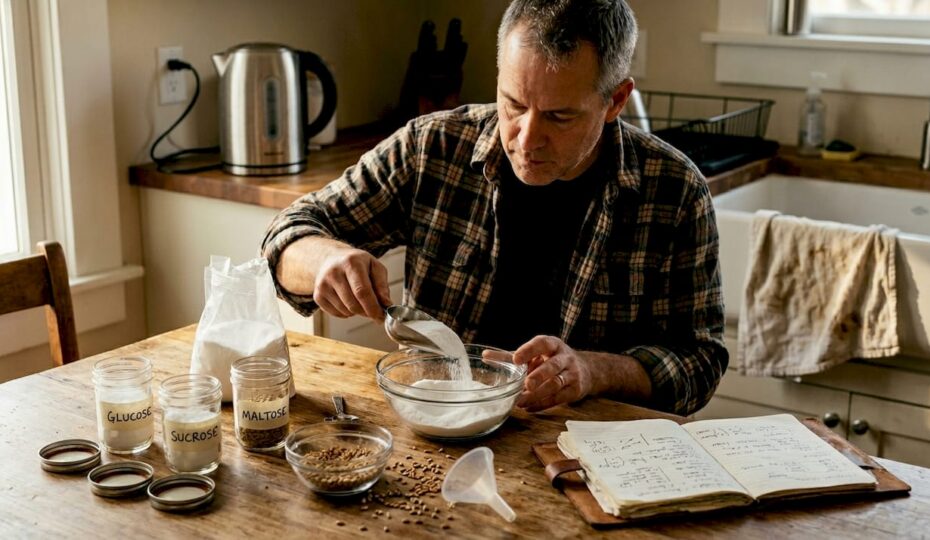
Selecting the right brewing sugar is one of the most consequential decisions in large-scale beer and wine production. Get it right, and you gain precise control over alcohol content, body, flavor complexity, and batch consistency. Get it wrong, and you risk thin mouthfeel, off flavors, yeast stress, or a product that simply does not differentiate itself on the shelf. With so many options available, from refined dextrose to unrefined panela and everything in between, manufacturers need a clear framework for evaluating each sugar type against real production goals. This guide breaks down the major brewing sugars, their functional properties, and how to match them to your formulation strategy.
Table of Contents
- Key criteria for selecting brewing sugars
- Core brewing sugars: Glucose, sucrose, and maltose
- Specialty brewing sugars: Belgian candi, brown sugars, honey, and unrefined options
- How sugar choice impacts beer and wine formulation
- Quick comparison: Brewing sugars at a glance
- A practical perspective: Why one-size-fits-all doesn’t work in brewing sugars
- Explore high-quality brewing sugars for your operation
- Frequently asked questions
Key Takeaways
| Point | Details |
|---|---|
| Fermentability matters | Choose sugars based on desired alcohol yield and body, as not all are equally fermentable. |
| Flavor impact varies | Neutral sugars maintain clarity, while specialty options add flavor and complexity. |
| Blending sugars is strategic | Mixing types can enhance quality but requires attention to balance and process timing. |
| Operational efficiency | Solid sugars dissolve easily; syrups and honey add water weight and impact fermentation yield. |
Key criteria for selecting brewing sugars
Before diving into the various sugar types, let’s clarify the key criteria that guide sugar selection at scale.
Choosing a brewing sugar is not just about sweetness. Every sugar you add to a batch influences multiple production variables simultaneously. Understanding those variables upfront saves time, reduces waste, and protects product quality across large runs.
Here are the core criteria to evaluate:
- Fermentability and yield: How much of the sugar converts to alcohol? Highly fermentable sugars like dextrose boost ABV and lighten body for drinkability in high-gravity beers, while less fermentable options leave residual sweetness and body.
- Flavor impact: Some sugars are neutral and let the malt and hops speak. Others, like muscovado or dark candi, actively contribute caramel, molasses, or dried fruit notes. Know which role you need before you source.
- Body and mouthfeel: Fermentable sugars thin the beer; non-fermentable ones like dextrins add fullness. Your target style dictates the balance.
- Process compatibility: Solubility, addition timing, and handling requirements vary. Liquid sugars dissolve instantly; granular sugars need more attention during addition.
- Yeast health: Some unrefined sugars contain fatty acids and trace minerals that support yeast vitality. Others, added in excess, stress the yeast and produce off flavors.
- Regulatory and labeling needs: Source origin, refinement level, and whether a sugar qualifies as “natural” can all affect your label claims and compliance obligations.
For manufacturers exploring the best sugar for brewing at scale, these criteria form the decision matrix. Research into brewing sugars in wine also confirms that sugar type directly affects fermentation kinetics and final product profile, making upfront selection critical rather than an afterthought.
Pro Tip: Map each sugar candidate against all six criteria before trialing it in production. A sugar that scores well on fermentability but poorly on flavor neutrality may undermine your core recipe.
Core brewing sugars: Glucose, sucrose, and maltose
With the criteria in mind, let’s break down the foundation sugars at the heart of most recipes.
Primary sugars in wort include glucose, fructose, sucrose, maltose, maltotriose, and dextrins, each with distinct fermentability and functional roles. In wine production, glucose and fructose from grapes dominate, with sucrose and dextrose added for chaptalization or backsweetening.
Here is how the core sugars compare:
| Sugar | Fermentability | Flavor impact | Typical use |
|---|---|---|---|
| Glucose (dextrose) | ~100% | Neutral | ABV boost, adjunct brewing |
| Sucrose | ~100% | Neutral | Chaptalization, priming |
| Maltose | High | Mild malt sweetness | Primary wort sugar |
| Maltotriose | Moderate | Slight body | Secondary wort sugar |
| Dextrins | Very low | Body, mouthfeel | Residual fullness |
Glucose (dextrose) is the workhorse of adjunct brewing. It is highly soluble, nearly 100% fermentable, and flavor neutral, making it ideal when you want to raise ABV without altering the taste profile. Its clean fermentation also makes it a go-to for liquid brewing sugar applications where fast dissolution matters.
Sucrose is equally fermentable and widely used for both beer priming and wine chaptalization. Yeast quickly inverts sucrose into glucose and fructose before consuming it. This means sucrose behaves almost identically to dextrose in the fermenter, though some brewers prefer dextrose to avoid any residual invert sugar character.
Maltose is the dominant sugar in standard wort, making up roughly 40 to 50 percent of fermentable extract. Yeast metabolizes it after glucose, so it plays a central role in fermentation timing and attenuation. Understanding sugar concentrations in beer helps manufacturers fine-tune mash parameters to hit target gravity consistently.
For wineries looking at how to sweeten wine post-fermentation, dextrose remains the preferred option because it integrates cleanly without altering the varietal character.
Specialty brewing sugars: Belgian candi, brown sugars, honey, and unrefined options
Beyond the basics, specialty sugars deliver the signature flavors and marketing edge many brewers seek.
Belgian candi sugars, brown sugars, unrefined sugars, honey, and molasses all offer distinct flavors and functional benefits that go well beyond simple fermentability. These are the sugars that define style categories and set craft products apart.
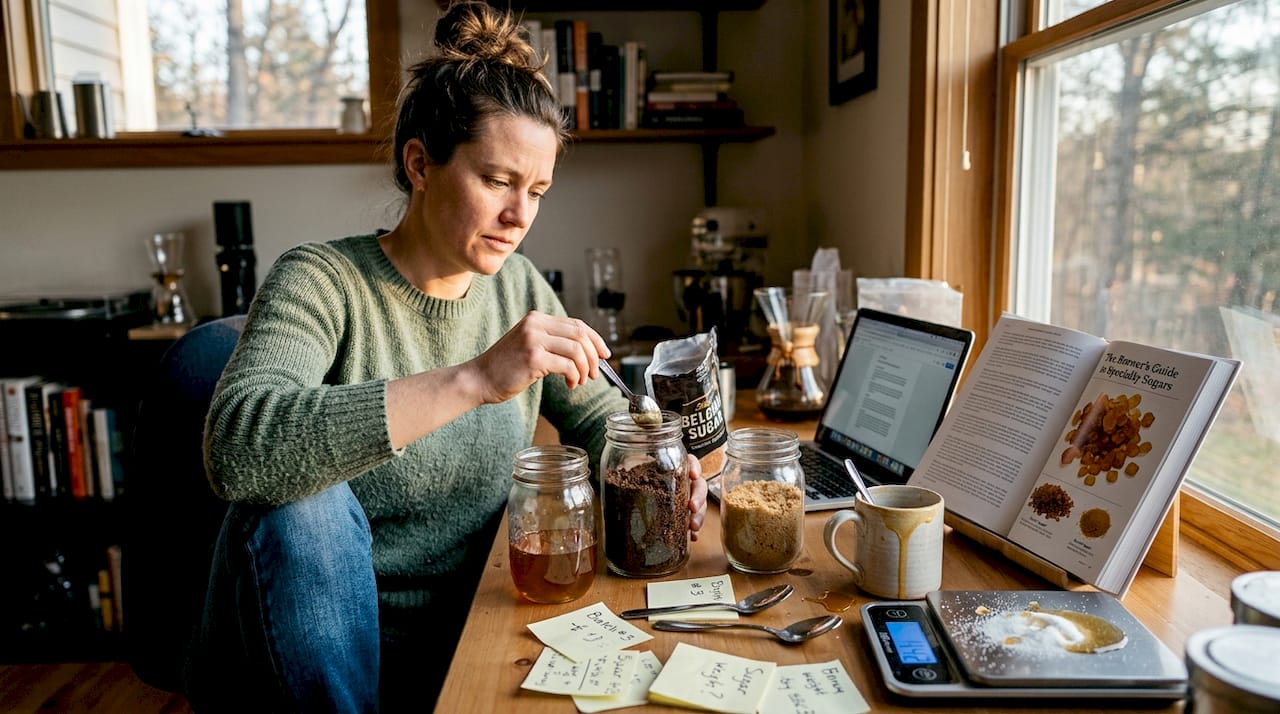
Belgian candi sugar is made by heating and inverting sucrose, which generates color compounds and deep flavor precursors. Clear candi is nearly neutral. Amber adds stone fruit and light caramel. Dark candi brings chocolate, dark fruit, and molasses complexity. Add it late in the boil or after primary fermentation to preserve aroma.
Brown sugars (demerara, muscovado, turbinado) retain varying levels of molasses. Bulk muscovado sugar delivers the richest, most complex molasses character and works well in stouts, porters, and winter ales. Demerara and turbinado are lighter and suit amber ales or session beers needing subtle warmth.
Unrefined sugars like panela and jaggery bring trace minerals, amino acids, and complex flavor compounds that refined sugars simply cannot replicate. For traditional styles or artisan positioning, they are worth the handling complexity.
Honey and syrups ferment at roughly 70 to 75 percent yield, leaving behind aromatic compounds that contribute floral or fruity notes. The trade-off is lower alcohol contribution per pound compared to refined sugars. Timing matters: add honey late in the boil or post-primary to preserve volatile aromatics. For a direct comparison of liquid sweetener options, the agave syrup vs honey breakdown is a useful reference.
Here is a quick specialty sugar comparison:
| Sugar | Flavor profile | Fermentability | Best use |
|---|---|---|---|
| Clear candi | Neutral | ~100% | Belgian tripels, golden ales |
| Dark candi | Chocolate, dark fruit | ~95% | Dubbels, quads |
| Muscovado | Deep molasses | ~95% | Stouts, porters |
| Honey | Floral, fruity | 70-75% | Meads, honey ales |
| Panela/jaggery | Earthy, complex | ~90% | Traditional/artisan styles |
Pro Tip: Brown sugar syrup offers the flavor benefits of brown sugar with faster dissolution, which reduces handling time in high-volume production runs.
How sugar choice impacts beer and wine formulation
After examining the characteristics of common and specialty sugars, consider how these choices play out in real production.
Sugar selection is not just a flavor decision. It affects fermentation performance, final ABV, product clarity, and long-term stability. Sugars can lighten body, boost ABV, or provide caramel and fruit notes up to 20 percent of total fermentables. Exceed that threshold and you risk thin, cidery beer that fails quality checks.
Here are the key formulation scenarios manufacturers face:
- Boosting ABV without adding body: Use highly fermentable sugars like dextrose or sucrose. Keep additions under 20 percent of total fermentables to avoid yeast stress and off flavors.
- Adding body without raising ABV: Incorporate maltodextrin for brewing as a non-fermentable additive. It contributes mouthfeel and fullness without contributing to alcohol yield.
- Creating flavor complexity: Use specialty sugars at controlled rates. Dark candi or muscovado at 5 to 10 percent of fermentables adds character without overwhelming the base malt profile.
- Backsweetening wine: Add dextrose or sucrose post-fermentation with a stabilizer to prevent refermentation. Precision dosing at this stage directly affects final sweetness perception.
- Managing yeast health: Avoid large additions of refined simple sugars in a single dose. Staggered additions reduce osmotic stress and improve attenuation consistency.
For manufacturers working across fermentation categories, the sweeteners for fermentation resource covers how sugar type interacts with yeast metabolism at a process level, which is especially relevant when scaling up new recipes.
The key takeaway: treat sugar not as a passive ingredient but as an active formulation lever. Every gram you add shifts the product in a measurable direction.
Quick comparison: Brewing sugars at a glance
To wrap up your options, here is a summary table so you can quickly compare and decide based on your specific priorities.
Solid and granular sugars are 100% fermentable at 100% yield, while honey and syrups provide 70 to 75 percent yield, which directly affects cost-per-ABV calculations at scale.
| Sugar | Yield | Flavor impact | Fermentability | Process ease | Best for |
|---|---|---|---|---|---|
| Dextrose | 100% | Neutral | Very high | Easy | ABV boost, adjuncts |
| Sucrose | 100% | Neutral | Very high | Easy | Priming, chaptalization |
| Maltose | 100% | Mild malt | High | Moderate | Base wort fermentation |
| Clear candi | ~100% | Neutral to light | Very high | Easy | Belgian ales |
| Dark candi | ~95% | Deep, complex | High | Moderate | Dubbels, stouts |
| Muscovado | ~95% | Molasses, rich | High | Moderate | Dark ales, porters |
| Honey | 70-75% | Floral, fruity | Moderate | Requires care | Meads, specialty ales |
| Dextrins | Non-fermentable | Body, fullness | None | Easy | Mouthfeel correction |
| Panela/jaggery | ~90% | Earthy, complex | High | Moderate | Artisan, traditional styles |
This matrix gives your formulation team a fast reference point. Cross-reference it against your target style, yeast strain, and process constraints before finalizing your ingredient sourcing.
A practical perspective: Why one-size-fits-all doesn’t work in brewing sugars
Putting comparison aside, here is what decades in the industry reveal that most guides overlook.
Every few years, a sugar gets labeled the “best” for brewing. Right now, that label tends to land on dextrose. Before that, it was Belgian candi. The truth is that no single sugar wins across all styles, scales, and production environments. What works in a 10-barrel craft setup may create consistency nightmares in a 500-barrel facility.
The manufacturers who get this right do not chase trends. They build a clear understanding of how each sugar behaves relative to their specific yeast strains, water chemistry, and process temperatures. Then they test iteratively and let production data guide refinement. Marketing claims about “premium” or “natural” sugars matter far less than measurable fermentation performance and repeatable batch outcomes.
We also see manufacturers underestimate the operational side. A sugar that performs beautifully in the lab can create handling, solubility, or consistency problems at volume. Sourcing from a reliable best sugar for brewing supplier with consistent specifications is just as important as the sugar type itself. Batch-to-batch variation in raw ingredients is one of the most overlooked sources of product inconsistency in large-scale brewing.
Explore high-quality brewing sugars for your operation
If you are ready to put the right sugars to work for your products, here is how to source consistent, food-grade ingredients.
US Sweeteners supplies breweries and wineries with bulk brewing sugars that meet the consistency and volume demands of large-scale production. Whether you need a reliable bulk sugar supplier for dextrose and sucrose, or specialty options like muscovado and candi sugars, we maintain deep inventory across our warehousing network for fast fulfillment.
For liquid applications, our bulk liquid sugar options offer fast dissolution and easy integration into continuous production lines. We also carry bulk brown sugar in multiple grades suited for dark ales, stouts, and specialty craft styles. Contact our team to discuss specifications, packaging formats, and delivery schedules tailored to your operation.
Frequently asked questions
Which brewing sugar produces the most alcohol?
Glucose, sucrose, and dextrose are nearly 100% fermentable and convert almost entirely to alcohol, making them the most efficient options for boosting ABV in beer or wine.
What sugar is best for backsweetening wine?
Dextrose is preferred for a clean, neutral finish, while sucrose is also widely used. Both are common in chaptalization and backsweetening applications across commercial wineries.
Can I use more than one type of sugar in the same batch?
Yes, blending sugars lets you tailor body, ABV, and flavor simultaneously. Just keep total simple sugar additions under 20 percent of fermentables, since excess sugar risks thin body and cidery off flavors.
How does brown sugar affect beer?
Brown sugars add caramel and molasses character along with color, and they ferment similarly to white sugar, making them a straightforward way to add flavor complexity without significantly changing attenuation.
When should honey or syrup be added during the brewing process?
Add honey or syrups late in the boil or after primary fermentation. Late addition preserves volatile aromatics and reduces the risk of yeast stress from high osmotic pressure early in fermentation.