What Makes Vegan Sugar Different From Regular Sugar
Sugar is one of the most common ingredients in food manufacturing and home kitchens. While it seems simple, not all sugar is made the same way. Many people today ask if sugar is vegan or not. The truth is that vegan sugar depends on how it’s made and processed. Although all sugar starts from plants like sugarcane or sugar beets, the refining process can determine whether it remains plant-based or becomes non-vegan.
At US Sweeteners, we supply bulk sweeteners and food ingredients to distributors, bakeries, beverage producers, and food manufacturers across the United States. With over 30 years of experience in logistics and nationwide distribution, we provide reliable delivery of bulk sugar, organic sugar, and specialty sweeteners. Our goal is to make it simple for businesses to source consistent, high-quality ingredients from a trusted wholesale partner.
Sugar Basics From Field to Crystal
Sugar begins its life in plants such as sugar cane or sugar beets. Both contain natural sucrose that can be extracted and crystallized into what we know as table sugar or granulated sugar. During extraction, the plant stalks are crushed to release juice, which is then clarified and boiled to form crystals. These raw crystals are called raw sugar.
In the next stage, raw sugar is refined to remove impurities and color. This refining process creates white sugar or refined white sugar. The difference between cane sugar and beet sugar lies mostly in how it is refined. Cane sugar often passes through bone char filtering, while beet sugar does not require this step because it is naturally white after processing. This distinction is one of the main reasons why not all regular sugar is vegan.
Why Some Sugars Are Not Vegan
Bone char plays a key role in the difference between vegan sugar and regular sugar. Bone char, also called natural carbon or natural charcoal, is made from charred bones of animals, usually cattle. It is used in some sugar refineries to remove the brownish hue from cane sugar. Although the final product contains no animal products, the process itself involves animal bones, which is why it is not considered vegan.
Many vegans avoid sugar that has been processed with bone char for ethical reasons. The process does not affect taste or texture but does raise ethical questions about how refined sugar is produced. The good news is that modern sugar manufacturers are moving toward alternative filtration systems, making it easier to find vegan-friendly sugars that are still affordable and widely available.
When Sugar Is Considered Vegan
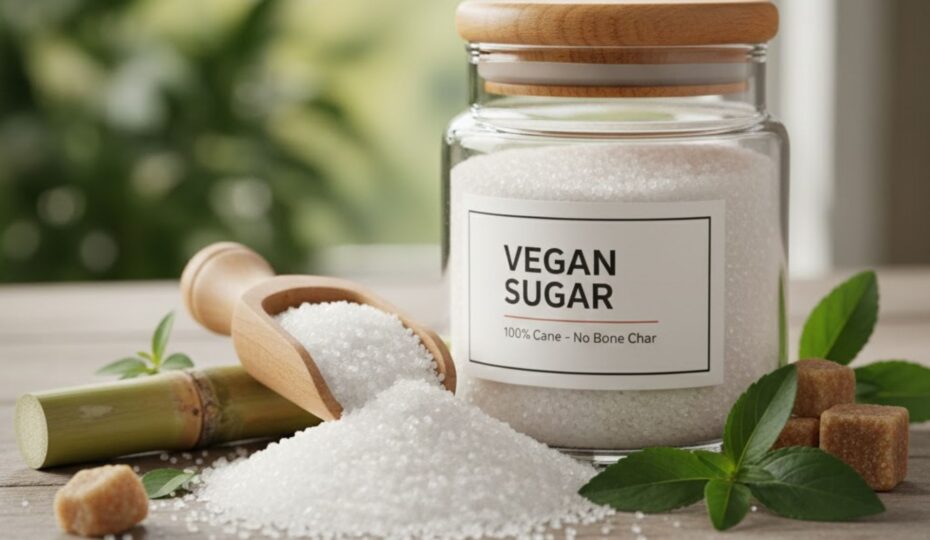
Beet sugar is always vegan because it is made from sugar beets and not processed with bone char. Organic cane sugar and organic sugar are also vegan because the USDA organic standards prohibit the use of bone char in production. Labels like certified vegan, non-GMO, and fair trade certified are reliable signs of vegan-friendly sugar.
White sugar made from sugar cane can sometimes be vegan if the producer uses alternative filtration materials. However, regular sugar and refined sugar that come from large industrial facilities often still use bone char filtering. Reading labels or checking a supplier’s process documentation is the best way to confirm if sugar is vegan or non-vegan.
According to Vegan.org, for a product to be approved for Vegan Certification, it must not contain meat, fish, fowl, animal by-products, eggs or egg products, milk or milk products, honey or honey bee products, insects or insect-based materials such as silk or dyes, or sugar filtered with bone char, nor can it be processed with any animal products or by-products.
Less Refined and Alternative Sugars
Raw sugar is less processed and may retain a light brown color from its natural molasses. Types such as turbinado sugar and demerara sugar are produced through minimal refining and are often plant-based and vegan-friendly. These sugars are popular for hot beverages and baked goods because they provide a mild caramel flavor.
Coconut sugar, made from the sap of coconut palm trees, is another vegan sugar alternative. It has a lower glycemic index and a mild sweetness, making it ideal for baking and sweetening beverages or coffee. Date sugar, made by grinding dried dates, and agave nectar, extracted from the agave plant, are also vegan options. These sweeteners are used by many vegans who prefer natural plant-based products.
How to Identify Vegan-Friendly Sugar
To identify vegan sugar, read labels carefully. Look for words like organic, raw, unrefined, or natural. Organic products and certified vegan sugars are less likely to use bone char filtering. Fair trade or fair trade certified labels also often indicate ethical and environmentally responsible practices.
For home bakers or procurement teams in food manufacturing, supplier transparency matters. Choose suppliers that specify whether their sugar is processed with bone char or not. Many vegan sugars are about the same price as regular sugar, especially when purchased in bulk from reliable distributors.
Baking and Performance Differences
Vegan sugar behaves much like regular sugar in recipes. The main difference lies in color and flavor. Brown sugar with molasses retains more moisture, while white sugar provides a clean, neutral sweetness. Beet sugar and coconut sugar can be used in most baked goods, though they may slightly affect color or texture.
For hot beverages or coffee, turbinado sugar, demerara sugar, and agave nectar work well as natural sweeteners. Powdered sugar or confectioner’s sugar made from organic cane sugar or beet sugar can be used for frostings and icings. All of these sugars are gluten-free and safe for general food use.
Ethical and Environmental Impact
Choosing vegan sugar supports both animal welfare and environmental responsibility. Using sugar that is not processed with animal bones aligns with plant-based lifestyle values. Many vegans care about how food is made as much as what it contains, and sugar made without bone char supports the ethical treatment of animals.
Organic sugar and fair-trade certified options also reduce environmental impact by using sustainable farming and refining methods. These practices lower chemical use, improve soil health, and support fair labor in the sugar industry. Buying organic cane sugar or beet sugar helps create a more sustainable food supply chain.
Cost and Sourcing for Businesses
Vegan sugars are widely available and cost about the same price as conventional sugars. Bulk beet sugar, organic sugar, and organic cane sugar can be sourced from domestic or imported suppliers, depending on production schedules.
For food manufacturers, maintaining consistent inventory and quality requires working with a reliable supplier. Sugar refineries that produce certified vegan and fair trade sugar provide detailed documentation for business buyers. This makes it easier to confirm vegan compliance while meeting production standards for baked goods, sweeteners, and beverage mixes.
At US Sweeteners, we offer Bulk Organic Sugar that meets strict vegan and organic standards for food and beverage production. If you’re looking to source reliable, high-quality organic sugar in bulk, our team can help you find the right solution for your formulation needs. We provide consistent supply, transparent documentation, and nationwide delivery to keep your operations running smoothly.
Common Types of Sugar and Their Vegan Status
White sugar and granulated sugar are the most common forms of refined sugar. Their vegan status depends on the production process. Table sugar and refined white sugar made from cane sugar may not be vegan, while beet sugar versions usually are.
Brown sugar, whether light brown sugar or dark brown sugar, is often made by adding molasses back to refined white sugar. Because the base sugar may have been processed with bone char, brown sugar is not always vegan. For guaranteed vegan brown sugar, choose organic sugar or certified vegan options.
Vegan Sugar Comparison
- Cane Sugar: Made from sugar cane and sometimes processed with bone char. Always check the label to confirm if it’s vegan. Commonly used for general baking.
- Beet Sugar: Derived from sugar beets and never processed with bone char. Always vegan and suitable for all uses in food production.
- Brown Sugar: Produced from cane or beet sugar and often made by adding molasses. Vegan status varies depending on whether bone char was used. Commonly used in baking.
- Turbinado Sugar: Made from sugar cane with minimal refining and no bone char. Vegan-friendly and often used in hot beverages.
- Demerara Sugar: Made from sugar cane and not processed with bone char. Vegan and typically used as a crunchy topping for baking.
- Raw Sugar: Made from sugar cane and retains natural molasses. Not processed with bone char and vegan. Popular for sweetening coffee.
- Coconut Sugar: Made from the sap of coconut palm trees. Never processed with bone char and vegan. Commonly used in baking for a mild caramel flavor.
- Date Sugar: Made by grinding dried dates. No bone char is used; completely vegan and often used as a natural sweetener.
- Agave Nectar: Extracted from the agave plant and never processed with bone char. Vegan and used for drinks, sauces, and desserts.
Conclusion
Vegan sugar offers the same sweetness as regular sugar without animal involvement. Whether you are a consumer seeking plant-based options or a business focusing on ethical sourcing, understanding how sugar is refined helps you make better decisions. By selecting sugars that are processed without bone char and choosing organic or fair trade options, you support a more sustainable and transparent food industry.
At US Sweeteners, we supply bulk organic sugar, vegan sugar, and specialty sweeteners that meet strict quality and sourcing standards. Our nationwide logistics network helps businesses stay stocked with consistent ingredients for food and beverage production. Contact us today to learn more about our bulk sugar and sweetener solutions.
FAQs
Why do vegans not use sugar?
Many vegans avoid sugar that has been processed with bone char made from animal bones. Even though the final product does not contain animal products, the refining process does not align with vegan values.
What’s the best vegan sugar?
Beet sugar and organic cane sugar are the best vegan options because they are never processed with bone char. They are also widely available and perform well in baking and sweetening beverages.
Is muscovado sugar vegan?
Yes. Muscovado sugar is unrefined and does not go through bone char filtering, making it vegan-friendly.
What is the healthiest type of sugar?
No sugar is truly healthy in large amounts, but less refined options like coconut sugar, date sugar, and agave nectar have more nutrients and a lower glycemic index compared to refined sugar.

Thomas is a product expert at US Sweeteners, a trusted bulk sugar and sweetener distributor serving food and beverage manufacturers across the USA. He writes about sweetener sourcing, ingredient trends, and supply chain insights for the food industry.