Raw cane sugar is a popular choice for bakeries, beverage companies, and food manufacturers that need consistent performance and a clean-label ingredient. It has the same sweetness as white granulated sugar but keeps a light layer of natural molasses, giving it a mild flavor that works well in coffee, tea, sauces, and baked goods. Because it is minimally processed, vegan, and familiar to consumers, raw cane sugar is valued for both quality and taste.
This guide covers what raw cane sugar is, how it is made from sugar cane, how it compares with refined sugar and brown sugar, and where it works best in recipes. It also includes tips for bulk buyers on quality, storage, and packaging so you can use it effectively in baking, cooking, and other production needs.
Understanding Raw Cane Sugar
Raw cane sugar is cane sugar made directly from freshly harvested sugarcane juice that has been clarified, concentrated into syrup, crystallized once, and centrifuged to remove most but not all molasses. Because it is minimally processed, raw cane sugar keeps light blond to light brown crystals with a gentle molasses note. It delivers the same sweetness as white sugar because the main carbohydrate is sucrose.
The term raw sugar is often used for the same ingredient. According to research, raw sugar, commonly made from sugar cane, is light brown crystallized sugar with a small amount of molasses (about 1–4%). It is primarily sucrose and has nearly the same calories per teaspoon as refined sugar. While raw sugar may have a slight flavor difference from its molasses content, the research notes that it is not healthier than other sugars and has similar nutritional value to more processed sweeteners.
How Raw Cane Sugar Is Made
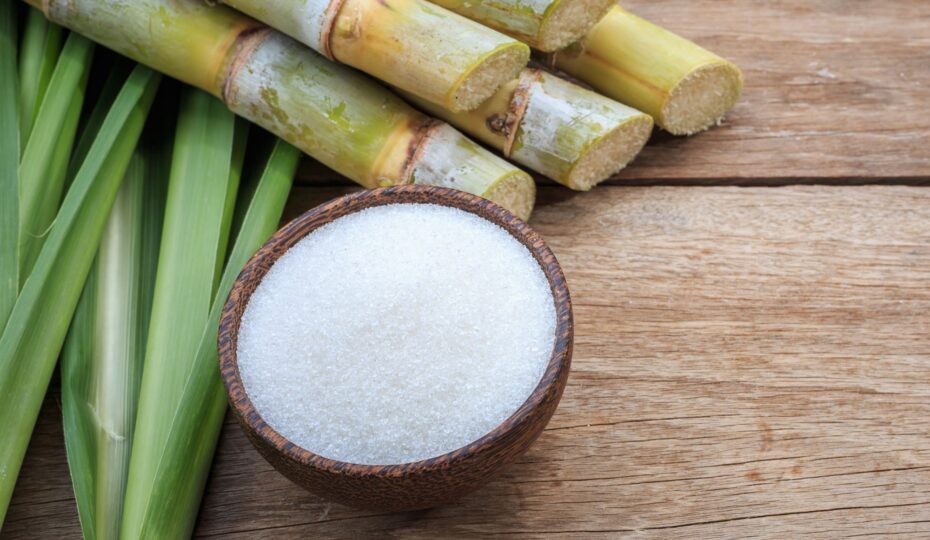
The refining process for raw cane sugar starts in a sugar mill close to cane fields. Stalks are crushed, and the juice is extracted, filtered, and clarified. The juice is then boiled to remove water and become a concentrated syrup. The syrup is seeded so that sucrose can form crystals. Those crystals are centrifuged to shed most molasses, leaving a light coating that carries aroma and color. The crystals are then dried, screened by size, and packaged for industrial or retail use.
This single-crystallization flow means raw cane sugar is processed fewer times than white granulated sugar. It remains minimally processed but still purified enough to be stable, free-flowing, and easy to incorporate in a recipe. Because the molasses layer is thin, raw cane sugar dissolves a little slower than white sugar in cold liquids, which is expected and manageable in production with proper mixing.
Nutritional Value and Composition
Raw cane sugar is mostly sucrose, with small amounts of glucose and fructose. The light coating of natural molasses may carry trace nutrients like minerals, antioxidants, and vitamins, but the nutritional value per teaspoon or cup is similar to white sugar. One teaspoon has about 15–16 calories. From a macronutrient view, raw cane sugar is a simple sugar and water at low moisture levels, which is why it flows and stores well in a sealed container.
Compared with refined sugar and brown sugar, the differences are mainly flavor and texture. Brown sugar in most markets is refined white sugar with molasses added back. Whole cane sugar carries more molasses and tastes darker. For menu claims, raw cane sugar helps brands highlight natural and minimally processed sourcing, but it is not a good source of micronutrients in typical serving sizes.
Flavor, Texture, and Culinary Applications
Raw cane sugar offers great taste for teams that want mild molasses flavor without a dark profile. The crystals bring a clean crunch and a light hint of caramel. In beverages like tea and coffee, the taste is familiar and balanced. In baked goods, the texture helps retain moisture while keeping structure. Many bakeries use raw cane sugar to finish muffins or cookies because the crystals hold shape and add a polite sparkle.
In cooking, raw cane sugar works well in barbecue sauces, marinades, and syrups where a hint of molasses supports spices. In baking, you can use it in cookies, banana bread, and cakes that do not require a super-fine crumb. Because the crystals dissolve a bit slower than white granulated sugar, the dissolve steps may need an extra minute in cold mixes. In hot processes, it dissolves quickly and performs like standard cane sugar.
Using Raw Cane Sugar in Recipes
As a rule of thumb, raw cane sugar is a 1:1 substitute for white granulated sugar by weight or volume in most home and industrial recipes. If you use a cup or a teaspoon measure, expect similar sweetness because sucrose provides the same sweetness across cane formats. For delicate cakes that need very fine crystals, some teams blend raw cane sugar with granulated sugar or use finer screens to meet dissolution targets.
When making a syrup, bring the liquid to a simmer and stir until the crystals dissolve. In cold beverage applications, mix longer or use a small hot water pre-slurry for faster dissolution. If you want more flavor, switch a portion of the formula to whole cane sugar for a darker taste, or add a small amount of molasses. For a crunchy finish, sprinkle raw crystals on muffins before baking to keep the top texture.
Benefits of Raw Cane Sugar for Bulk Buyers
Raw cane sugar supports clean labels. It is vegan because no bone char is used, and it is minimally processed while still purified for safety and consistency. Buyers get the same sweetness as white sugar, with a mild aroma that pairs well with coffee, tea, chocolate, vanilla, cinnamon, and citrus. For brands that want simple ingredients without off-notes, the flavor profile is friendly and predictable.
For plant teams, raw cane sugar brings production benefits. The crystals are dry, free-flowing, and easy to meter. With correct storage, caking is low. The ingredient blends into bakery mixes, dairy bases, sauces, and ready-to-drink formulations. It supports expected color targets in light brown profiles without the stronger dark tones of whole cane sugar. This balance of quality and performance is why many customers purchase raw cane sugar as their primary cane sugar.
Storage, Packaging, and Shelf Life
Bulk raw cane sugar ships in food-grade packaging such as 25 kg bags, supersacks, and lined bins. Keep bags in a blocked container or sealed bin to control moisture. Store in a cool, dry area away from odors and water. Good airflow and pallets help protect packaging from floor dampness. Under correct storage, raw cane sugar has a long shelf life and maintains stable flavor and texture.
If caking occurs due to high humidity, break up the mass and blend before batching. Prevent cross-contamination by keeping sugar away from strong aromas and reactive ingredients. Because raw cane sugar absorbs moisture through the molasses layer, stable warehouse conditions reduce clumps and keep crystals free-flowing. Label lots and record harvest or production dates to support traceability and expected quality checks.
Buying Considerations for Bulk Supply
Start with specifications. Verify crystal size range, color target, ash, moisture, and microbiological limits. Ask about the harvest region, whether the juice was extracted and clarified at mills with documented quality systems, and how the product was purified. If you require organic, kosher, or fair trade options, request certificates. For lines that handle both refined and raw, plan a simple cleaning step when switching.
A short vendor checklist helps cut risk and protect quality:
- Consistent crystals and color in every lot
- Documented quality program, COA with each shipment, and packaging that protects against moisture
- Clear guidance on storage, handling, and how to incorporate into your recipe
Conclusion
Raw cane sugar is a reliable ingredient for both flavor and function. It is harvested from sugar cane, processed minimally to keep a hint of natural molasses, and crystallized to produce free-flowing sugar with consistent quality. It offers the same sweetness as white sugar, works across baking, cooking, beverage, and dairy applications, and can be a direct substitute for granulated sugar in most recipes. Its balanced flavor, stable performance, and broad consumer appeal make it a preferred choice for many bulk buyers looking for both great taste and dependable supply.
US Sweeteners supplies raw cane sugar in standard industrial packaging with clear specifications and dependable delivery options. We help buyers select the right products and provide support to meet their production requirements. Contact us today to learn more about our raw cane sugar supply options.
FAQs
What is raw cane sugar?
Raw cane sugar is a minimally processed sugar made from crystallized sugarcane juice, retaining a light coating of natural molasses for mild flavor.
Is raw cane sugar healthier than white sugar?
No. Raw cane sugar and white sugar have similar calories and sugar content, though raw cane sugar contains trace minerals from molasses.
Can you substitute raw cane sugar for white sugar?
Yes. Raw cane sugar can be used as a 1:1 replacement for white granulated sugar in most recipes, either by weight or volume.
Does raw cane sugar dissolve easily?
Yes, raw cane sugar dissolves well in hot liquids, but it may take longer to dissolve in cold drinks compared to white sugar.
What is the difference between raw cane sugar and brown sugar?
Brown sugar is refined white sugar with molasses added back, while raw cane sugar naturally retains molasses from the original sugarcane juice.