
Kosher for Passover confectioners sugar is a specialized ingredient used in baking and food production during Passover. While sugar seems simple, confectioners sugar raises specific Passover concerns due to added ingredients and how it is processed. For buyers sourcing ingredients for Passover production, understanding these details helps prevent compliance issues, rejected audits, and last-minute reformulations.
At US Sweeteners, we supply bulk sweeteners to distributors, bakeries, and food manufacturers across the United States. Our role focuses on consistent inventory, clear specifications, and documentation support for customers producing seasonal and specialty products, including Passover-approved formulations.
What Kosher for Passover Means in Manufacturing
Kosher for Passover rules are stricter than standard kosher requirements. During Passover, foods must be free from chametz, which refers to fermented products derived from wheat, barley, rye, oats, or spelt. Even trace amounts are unacceptable. This makes processed ingredients a higher risk than raw foods.
According to guidance published by an organization, foods that are acceptable year-round under kosher law often require additional supervision or preparation to qualify as kosher for Passover. The organization explains that Passover restrictions prohibit both the consumption and possession of chametz, which makes processed ingredients higher risk due to shared equipment, additives, and production methods. For this reason, the organization states that most processed foods and beverages must carry specific Passover supervision, and that labeling alone is not sufficient without verification from a recognized certifying authority.
In manufacturing, kosher for Passover also applies to equipment, storage, and production flow. Ingredients processed on shared equipment with chametz products may be rejected, even if the ingredient itself does not contain chametz. This is why Passover certification and production documentation matter at the supplier level.
Difference Between Chametz and Kitniyot
Chametz refers to fermented grain-based substances forbidden during Passover. Kitniyot is a separate category that includes corn, rice, legumes, and similar crops. Many Ashkenazi markets avoid kitniyot entirely during Passover, while other communities permit it.
For confectioners sugar, kitniyot matters because corn-based ingredients are widely used in food manufacturing. Even when chametz is not present, kitniyot can still disqualify a product for certain Passover programs. Buyers must align ingredient selection with the requirements of their target market.
What Confectioners Sugar Is and How It Is Made
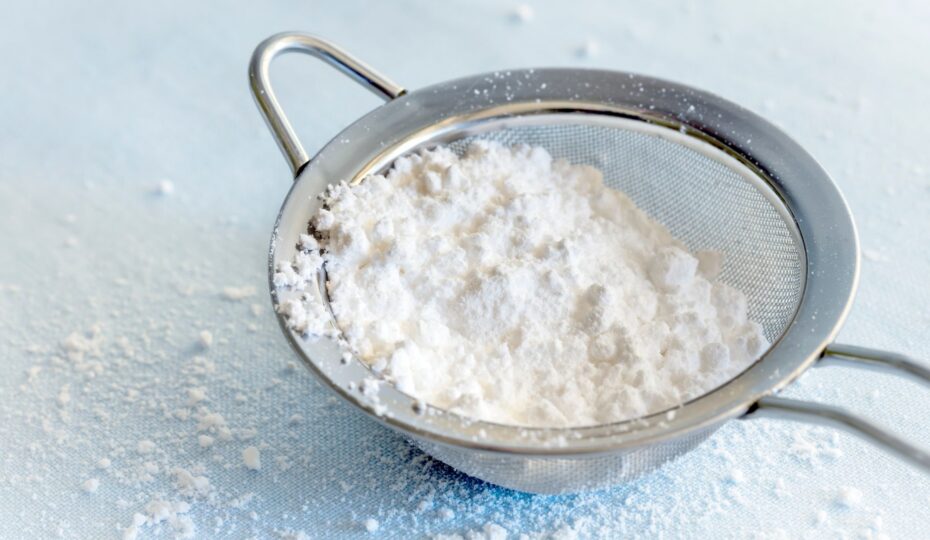
Confectioners sugar, also called powdered sugar, is refined sugar milled into a fine powder. It is commonly used in icings, dusting applications, fillings, and baked goods where a smooth texture matters. In industrial settings, consistent flow and shelf stability are required.
To maintain flow, confectioners sugar includes an anti-caking agent. This added ingredient is the main reason confectioners sugar differs from granulated sugar during Passover. The anti-caking agent prevents moisture absorption and clumping but introduces Passover risk depending on its source.
The Anti-Caking Agent Issue
Most standard confectioners sugar contains about three percent cornstarch as an anti-caking agent. Corn is classified as kitniyot, which makes this formulation unsuitable for many Passover uses. Some suppliers outside the United States may use wheat starch, which introduces chametz risk.
Kosher for Passover confectioners sugar uses alternative flow agents that meet Passover standards. These may include tapioca starch or mineral-based agents that do not derive from chametz or kitniyot. Each option requires proper Passover supervision and documentation.
Why Regular Confectioners Sugar Is Usually Not Passover Approved
Standard confectioners sugar is designed for year-round use and is rarely produced with Passover restrictions in mind. Cornstarch is widely accepted for regular kosher production, but creates problems during Passover. Wheat starch creates an even higher level of risk.
Ingredient labels alone do not resolve these issues. Anti-caking agents may be listed generically, and processing details are not visible on the packaging. For manufacturers, relying on assumptions creates compliance gaps that often surface during audits or customer reviews.
Rework Practices and Passover Risk
Rework refers to an off-spec product that is reintroduced into the production process. In sugar manufacturing, confectioners sugar that does not meet particle size or moisture targets may be reprocessed rather than discarded. This is a common efficiency practice.
For Passover production, rework becomes a concern when starch-containing powdered sugar is mixed back into standard sugar streams. Even if the starch is later removed, some buyers require written confirmation that rework containing chametz or kitniyot is not used in Passover-designated lots.
Shared Equipment and Cross-Contact
Shared equipment presents another challenge for kosher for Passover sugar ingredients. Facilities that produce both standard and Passover products must follow strict cleaning and scheduling procedures. Some buyers require dedicated Passover runs or written statements confirming equipment status.
Cross-contact concerns apply not only to processing equipment but also to storage silos, conveyors, and packaging lines. Bulk buyers often request documentation that outlines how Passover production is separated from year-round production.
What Makes Confectioners Sugar Kosher for Passover
Kosher for Passover confectioners sugar meets strict formulation and processing standards. The product must be free from chametz-derived ingredients and, in many cases, kitniyot. Anti-caking agents must be approved for Passover use.
In addition to formulation, the product must be produced under Passover supervision. This includes controlled production runs, verified equipment cleaning, and traceable lot numbers. Certification is issued only when all requirements are met.
Required Certification and Documentation
Kosher for Passover confectioners sugar typically carries a Passover designation from a recognized kosher authority. This is often shown as a Passover-specific mark on documentation rather than packaging for bulk shipments.
Buyers commonly request the following documents:
- Kosher for Passover certification letter
- Ingredient and processing statement
- Anti-caking agent source confirmation
- Rework policy statement
- Allergen and cross-contact disclosure
- Lot traceability records
These documents support internal QA review and downstream customer requirements.
Common Misconceptions About Passover Sugar
A frequent misunderstanding is that white sugar is always acceptable for Passover. While this may apply to some granulated sugars, it does not apply to confectioners’ sugar due to the added ingredients.
Another common assumption is that gluten-free products are automatically Passover-safe. Gluten-free labeling does not address chametz, kitniyot, fermentation processes, or shared equipment. Passover compliance requires supplier-level verification.
Who Needs Kosher for Passover Confectioners Sugar
Kosher for Passover confectioners sugar is used by commercial bakeries producing Passover-certified goods. It is also required by food manufacturers supplying Passover seasonal products to retail, foodservice, and institutional markets.
Private label brands and co-packers often require Passover-approved powdered sugar to meet contract specifications. These buyers typically operate on fixed production schedules and need ingredient availability confirmed well before the holiday.
Sourcing Kosher for Passover Confectioners Sugar at Scale
Passover production runs are limited and planned. Buyers sourcing kosher for Passover confectioners sugar must account for lead times, certification review, and packaging requirements. Availability is often seasonal.
Working with a supplier that understands Passover ingredient requirements helps reduce risk. Clear specifications, documentation support, and nationwide logistics simplify procurement and production planning for Passover programs.
If you are looking for bulk kosher sugar for Passover or year-round production, we offer reliable supply options designed for commercial baking and food manufacturing. Our bulk kosher sugar solutions support consistent quality, clear specifications, and the documentation buyers need for kosher and Passover-approved production. We offer flexible packaging options and nationwide logistics to support seasonal demand and large-volume ingredient sourcing.
Conclusion
Kosher for Passover confectioners sugar is not interchangeable with standard powdered sugar. Anti-caking agents, rework practices, shared equipment, and certification all affect Passover suitability. Buyers sourcing ingredients for Passover production need clear information and verified documentation to avoid compliance issues and production delays.
At US Sweeteners, we supply bulk kosher for Passover confectioners sugar and other specialty sweeteners with the documentation and logistics support manufacturers require. If you are sourcing Passover-approved ingredients for seasonal production, contact us to discuss specifications, availability, and delivery options aligned with your production needs.
FAQs
Is confectioners sugar kosher for Passover?
Confectioners sugar is only kosher for Passover when it uses Passover-approved anti-caking agents and is produced under Passover supervision. Standard powdered sugar usually does not qualify.
Why does powdered sugar need Passover certification?
Powdered sugar contains added anti-caking agents, often cornstarch or wheat starch. These ingredients create kitniyot or chametz concerns during Passover.
Can gluten-free confectioners sugar be used for Passover?
Gluten-free labeling does not guarantee Passover compliance. The product must still be free from chametz, kitniyot, and cross-contact risks and carry Passover certification.
What anti-caking agents are used in Passover confectioners sugar?
Passover-approved confectioners sugar may use tapioca starch or mineral-based flow agents that meet Passover requirements and are verified through certification.