Does Sweetened Condensed Milk Spoil? The Ultimate Guide to Shelf Life & Storage
Last updated: January 9, 2026
Have you ever discovered an old can of sweetened condensed milk tucked away in the back of your pantry and wondered if it’s still good to use? It’s a common kitchen dilemma that leaves many bakers and home cooks uncertain. So, does sweetened condensed milk spoil? The simple answer is yes, sweetened condensed milk can spoil eventually, but its shelf life is impressively long compared to other dairy products. An unopened can of sweetened condensed milk can last for years beyond its printed date when stored properly.
This remarkable shelf stability is what makes condensed milk such a practical pantry staple. Whether you’re whipping up a quick dessert or need a sweet addition to your coffee, understanding how long this ingredient lasts and how to store it properly can save you time, money, and prevent unnecessary food waste.
Our clients in food production often store large quantities of sweetened condensed milk for extended periods. Through that experience, US Sweeteners has seen how temperature control, container integrity, and proper handling directly affect shelf life and product quality. These same storage principles apply whether condensed milk is used in manufacturing or home kitchens.
What is Sweetened Condensed Milk?
Sweetened condensed milk is made by combining milk and sugar, then removing water through a vacuum process. This creates a thick, creamy, and very sweet dairy product that differs from evaporated milk, which has no added sugar. The high sugar content acts as a preservative, while heat treatment ensures safety and shelf stability.
Invented by Gail Borden in the 1800s as a solution to preserving milk without refrigeration, sweetened condensed milk became a staple in many dessert recipes. Its rich texture and built-in sweetness eliminate the need for added sugar, making it ideal for key lime pie, fudge, and caramel sauce.
The Science Behind Condensed Milk’s Long Shelf Life
The long shelf life of canned condensed milk is due to a combination of high sugar content, reduced water, and sterilization through canning. The sugar, about 40 to 45 percent, prevents bacterial growth by drawing moisture out of cells, much like how honey stays shelf-stable.
Additionally, removing around 60 percent of the milk’s water limits the moisture bacteria need to survive. The final step, ultra-high temperature treatment and airtight sealing, ensures the product is sterile and protected from contamination. Together, these factors make condensed milk remarkably resistant to spoilage.
Shelf Life of Sweetened Condensed Milk
Unopened Cans
Unopened canned sweetened condensed milk has an impressive shelf life, often lasting well beyond the “best by” date printed on the label. While most brands mark it for about two years from production, it can maintain peak quality for another one to two years if stored in a cool, dry place. In fact, it can remain safe to consume for many more years as long as the can stays sealed and undamaged.
This long shelf life makes it a smart pantry staple and emergency food item. To preserve its quality, store the cans in a temperature-controlled area away from direct sunlight, heat, and humidity.
Opened Condensed Milk
Once opened, sweetened condensed milk is more prone to spoilage without the protection of its sealed can. While the high sugar content still helps slow bacterial growth, it should be transferred to an airtight container and refrigerated right away. In this condition, it typically stays fresh for 2 to 3 weeks.
Storing it in the original can, even if covered, is not recommended, as it only lasts 3 to 4 days. The exposed metal can affect flavor, and the loose covering doesn’t offer proper protection from contamination or odors.
Proper Storage Methods
Unopened Cans
Storage Conditions and Expected Shelf Life
| Storage Condition | Expected Shelf Life |
| Unopened, pantry stored | 2–4 years |
| Unopened, exposed to heat | Reduced quality |
| Opened, refrigerated (airtight) | 2–3 weeks |
| Opened, stored in original can | 3–4 days |
| Frozen (airtight container) | Up to 3 months |
Storing unopened cans of sweetened condensed milk properly is straightforward but crucial for maximizing shelf life. The ideal storage environment shares many characteristics with what you’d want for other canned goods:
- Cool environment: Keep cans in a location where the temperature stays relatively constant, ideally between 50-70°F (10-21°C). Avoid areas near ovens, stoves, or heating vents where temperature fluctuations occur.
- Dry area: Humidity is the enemy of canned goods as it can promote rust on the exterior of the can. Choose a pantry or cabinet away from sinks, dishwashers, or areas with high moisture.
- Away from direct sunlight: UV exposure can gradually affect quality over time, so a dark or dimly lit storage location is preferable.
- Elevated position: If possible, store cans slightly elevated from the floor, especially in areas prone to flooding or excessive moisture.
Following these storage guidelines helps ensure that your unopened condensed milk maintains both safety and optimal flavor for its extended shelf life. The stability of your storage environment directly impacts how long the product will maintain peak quality.
Opened Condensed Milk
Once opened, proper storage becomes even more critical to maintain quality and prevent spoilage. The most important step is transferring the sweetened condensed milk from its original can to an appropriate storage container:
- Airtight container options: Glass jars with tight-sealing lids, plastic food storage containers with secure seals, or specialized dairy storage containers all work well.
- Temporary solutions: If you don’t have a suitable container immediately available, you can create a temporary seal using plastic wrap secured with a rubber band. This works for short-term storage (1-3 days) but isn’t ideal for longer periods.
- Refrigeration placement: Store the container on an interior shelf rather than the door, where temperature fluctuations occur each time the refrigerator opens.
- Cross-contamination prevention: Keep condensed milk containers away from strong-smelling foods. Despite being in a container, condensed milk can still absorb odors from items like onions, garlic, or strong cheeses if stored nearby for extended periods.
- Labeling: Mark the container with the opening date to track freshness more accurately.
Proper transfer and storage dramatically extend the usable life of opened condensed milk. If you notice condensed milk absorbing refrigerator odors despite being in a container, your storage container may not be truly airtight.
Can You Freeze Sweetened Condensed Milk?
Freezing sweetened condensed milk is a practical way to extend its shelf life for up to three months, especially for baking or cooking. However, freezing can slightly change the texture, sometimes making it grainy due to the high sugar content. This texture change is usually not noticeable once the milk is heated or mixed into recipes.
For best results, transfer sweetened condensed milk to airtight, freezer-safe containers such as plastic containers with tight-fitting lids or heavy-duty freezer bags, leaving space for expansion. Freezing in small portions or ice cube trays makes thawing and portion control easier for future use. Always thaw frozen condensed milk in the refrigerator and stir well after thawing to restore consistency. Avoid freezing unopened cans, as the contents can expand and cause the can to burst.
How to Tell if Sweetened Condensed Milk Has Spoiled
Visual Indicators
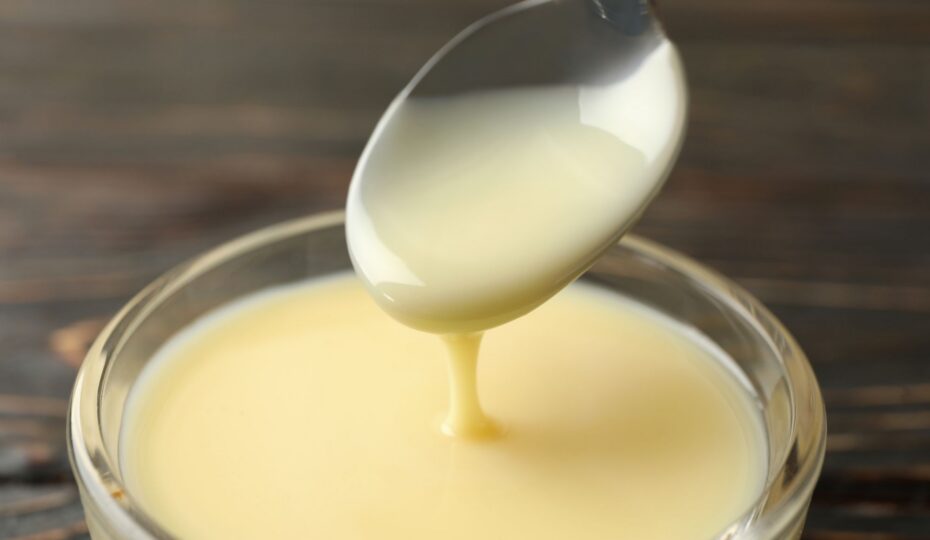
Identifying spoiled condensed milk begins with visual inspection. Fresh, sweetened condensed milk has a consistent light cream color and flows like thick honey. As it ages or begins to spoil, several visual changes may occur:
- Color changes: A shift from light cream to a distinctly yellowish or brownish hue often indicates age-related changes. Slight yellowing alone isn’t necessarily a sign of spoilage but rather oxidation.
- Texture alterations: Properly preserved condensed milk should pour slowly but consistently. If you notice unusual lumpiness, separation into layers, or a texture that’s dramatically thicker than normal, these could be signs of spoilage.
- Surface growth: Any visible mold, whether white, green, or black, is a definitive sign that the condensed milk should be discarded immediately.
For unopened cans, visual inspection of the can itself is crucial:
- Rust or damage: Extensive rust, deep dents, or any compromise to the can’s integrity could allow bacteria to enter.
- Bulging: Bulging can indicate gas-producing bacterial growth inside and should never be consumed.
- Leakage: Any evidence that the contents have leaked out suggests seal failure and potential contamination.
Common Visual Signs of Spoilage
| Indicator | What It Means |
| Light cream color | Normal and safe |
| Slight yellowing | Age-related change |
| Dark yellow or brown | Likely spoilage |
| Thick but smooth texture | Normal |
| Lumpy or separated texture | Quality breakdown |
| Mold or surface growth | Discard immediately |
| Bulging or leaking can | Unsafe to consume |
Sensory Indicators
If visual inspection doesn’t reveal clear signs of spoilage, sensory evaluation provides additional clues:
- Smell: Fresh condensed milk has a sweet, milky aroma. Any sour, fermented, or off odor indicates spoilage. Trust your nose, if it smells unpleasant, it’s better to discard it.
- Taste: If the appearance and smell seem normal, a small taste can confirm quality. Spoiled condensed milk often develops a sour or unpleasant flavor that contrasts with its normal sweet, creamy taste.
- Texture in mouth: Fresh condensed milk feels smooth and creamy. Any grittiness, sliminess, or unusual mouthfeel suggests quality degradation.
When in doubt about the safety of condensed milk, follow the food safety principle: “When in doubt, throw it out.” The risk of foodborne illness isn’t worth using questionable ingredients, especially when they’ve shown multiple signs of potential spoilage.
Health and Safety Considerations
Food safety should always be the priority when determining whether to use stored sweetened condensed milk. While this product has remarkable stability, certain conditions can compromise its safety.
The most significant risks associated with spoiled condensed milk include:
- Bacterial contamination: Though the high sugar content inhibits most bacterial growth, certain bacteria can still thrive if the product is improperly stored or the can is damaged.
- Mold growth: Once opened and exposed to air, condensed milk can develop mold, especially if stored in humid conditions or contaminated during handling.
- Chemical changes: Long-term storage in damaged cans may result in metallic taste from the container leaching into the product.
To minimize health risks:
- Practice good hygiene: Always use clean utensils when scooping condensed milk from its container.
- Prevent cross-contamination: Never return unused portions to the original container after they’ve been in contact with other foods or surfaces.
- Follow proper refrigeration: Keep opened condensed milk at 40°F (4°C) or below at all times.
- Observe time limits: Even with proper refrigeration, opened condensed milk should be used within the recommended 2-3 week timeframe.
Remember that while the “best by” date refers to quality rather than safety for unopened cans, this distinction becomes less clear once the can is opened. After opening, both quality and safety decline progressively, making adherence to storage guidelines essential.
Creative Ways to Use Leftover Condensed Milk
Don’t let that half-used can of sweetened condensed milk go to waste! Here are some delicious ways to use up leftover condensed milk before it reaches the end of its refrigerated shelf life:
- Quick Desserts: Use condensed milk to make quick fudge, dulce de leche, or no-churn ice cream.
- Beverage Enhancements: Add to coffee, tea, or hot chocolate for a sweet, creamy boost.
- Practical Applications: Use in coffee, French toast, or yogurt for added sweetness and flavor.
- Baking Projects: Enhance your baked goods with condensed milk—drizzle it over cookies, mix into pie fillings for smoothness, or use in cakes for added moisture and richness.
These versatile applications make it easy to use up condensed milk before it spoils, reducing food waste while creating delicious treats.
Conclusion
Sweetened condensed milk is a remarkably durable and versatile ingredient, but like any food product, it can spoil if not stored or handled properly. Thanks to its high sugar content, reduced moisture, and canning process, unopened cans can last years beyond their printed date. Once opened, however, it needs refrigeration and should be used within a few weeks. Whether you’re storing it, freezing it, or checking for signs of spoilage, understanding proper handling ensures safety, preserves flavor, and reduces waste.
Looking to stock up on sweetened condensed milk for your food business or manufacturing needs? At US Sweeteners, we offer bulk sweeteners and ingredients trusted by professionals nationwide. With fast shipping, top-quality products, and decades of industry experience, we’re your reliable partner in food production. Contact us today to request a quote or place your order.
FAQs
Can sweetened condensed milk go bad?
Yes, sweetened condensed milk can go bad over time. Unopened cans typically last 1–2 years past the printed date when stored properly, while opened condensed milk should be refrigerated in an airtight container and used within 2–3 weeks.
Is sweetened condensed milk okay if it turns brown?
Slight yellowing is a normal age-related change and does not automatically mean the milk has spoiled. However, a deep brown color combined with off smells, separation, or unusual texture is a sign of spoilage and the product should be discarded.
How do you know if sweetened condensed milk has gone bad?
Spoiled sweetened condensed milk may show signs such as mold growth, sour or fermented odors, separation, or a gritty or overly thick texture. Fresh condensed milk should smell sweet and have a smooth, creamy consistency.
How long is sweetened condensed milk good for after opening?
After opening, sweetened condensed milk is usually good for 2–3 weeks when transferred to an airtight container and refrigerated. Storing it in the original can is not recommended, as it shortens freshness and can affect flavor.