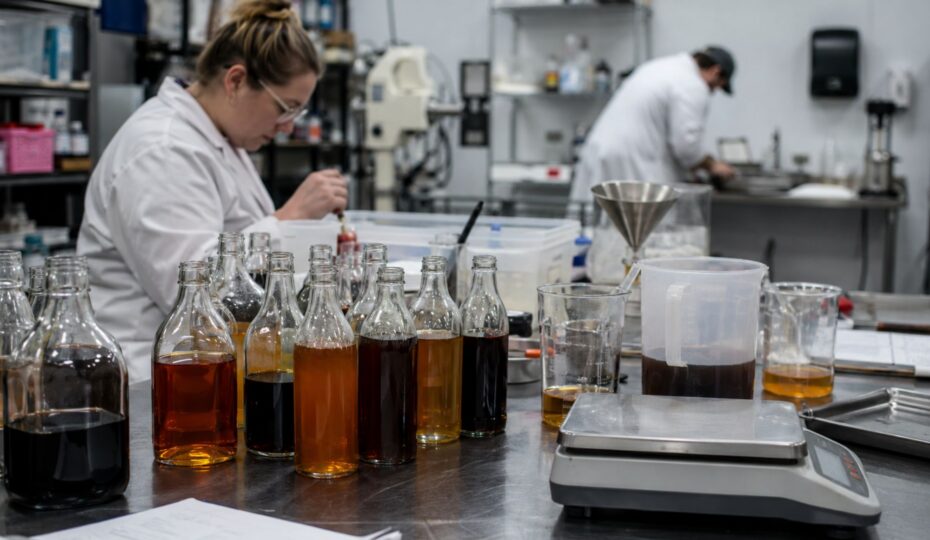
Coffee syrup manufacturers need more than sweetness from their ingredients. They need consistent flavor, reliable shelf stability, predictable production performance, and a supply chain that can keep pace with growth. Whether you’re producing flavored latte syrups, cocktail mixers, functional beverage concentrates, or specialty coffee products, choosing the right bulk sweeteners for coffee syrups directly affects product quality, operating costs, and customer satisfaction.
As specialty beverages continue to grow, manufacturers are reevaluating sweetener strategies to improve flavor, reduce production challenges, and support larger manufacturing runs. US Sweeteners helps beverage producers, distributors, and food manufacturers source bulk sweeteners that align with their formulation and production goals. Understanding how different sweeteners perform can help brands make smarter purchasing and production decisions as they scale.
What Are Bulk Sweeteners for Coffee Syrups?
Bulk sweeteners for coffee syrups are commercial-grade ingredients used to create sweetness, texture, viscosity, and shelf stability in beverage formulations. Manufacturers purchase these ingredients in large quantities to support consistent production, maintain quality standards, and improve operational efficiency. Unlike retail sweeteners, industrial ingredients must perform consistently across thousands of bottles and production batches while preserving flavor throughout a product’s shelf life.
Coffee syrup manufacturers commonly use cane sugar, invert syrup, corn syrup, monk fruit, erythritol, allulose, honey, and maple syrup. However, many successful formulations use sweetener blends rather than a single ingredient. Premium syrup brands often combine cane sugar with invert syrup to improve crystallization resistance, while reduced-sugar products frequently pair allulose with monk fruit to create a more sugar-like sweetness profile.
What Is the Best Sweetener for Coffee Syrup Manufacturing?
The best sweetener depends on flavor goals, production requirements, shelf-life expectations, and target consumers. Premium beverage brands often prioritize flavor quality and label appeal, while larger manufacturers focus on consistency, operational efficiency, and cost control. Selecting the wrong sweetener can lead to crystallization, shortened shelf life, inconsistent sweetness, or undesirable aftertaste.
| Sweetener | Best For | Advantages | Considerations |
| Liquid Cane Sugar | Premium flavored syrups | Clean flavor, easy mixing | Higher ingredient cost |
| Invert Syrup | High-Brix syrups | Prevents crystallization | Slight flavor impact |
| Cane Sugar | Traditional syrups | Widely accepted | Requires dissolving |
| Corn Syrup | Caramel syrups | Improves texture | Consumer perception |
| Monk Fruit | Sugar-free beverages | High sweetness intensity | Often blended |
| Erythritol | Reduced-calorie syrups | Similar to sugar | Can recrystallize |
Why Cane Sugar Remains the Industry Standard
Pure cane sugar remains the benchmark for flavored syrup manufacturing because it delivers clean sweetness without overpowering flavor ingredients such as vanilla, caramel, chocolate, and fruit extracts. Unlike many alternative sweeteners, it produces little to no aftertaste and performs predictably across a wide range of beverage applications.
According to research on coffee consumption and mortality, it is important to consider everything added to coffee beverages, including sugar and flavored syrups. Nutrition experts noted that sweetened coffee products can contribute additional calories and should be evaluated as part of the overall beverage formulation rather than focusing on coffee alone. For coffee syrup manufacturers, this reinforces the importance of balancing flavor, sweetness, and consumer expectations when developing beverage products.
Many syrup manufacturers continue using cane sugar even while developing reduced-sugar products. A common strategy is establishing a flavor benchmark with traditional sucrose formulations before testing alternative sweetener systems. This allows product developers to compare performance against a known standard and identify changes in flavor, texture, and sweetness perception more accurately.
Pure Cane Sucrose vs. Invert Syrups
For coffee syrup manufacturers, the choice between pure cane sucrose and invert syrup often comes down to flavor preference, production requirements, and shelf-life goals. Pure cane sucrose provides clean, neutral sweetness, while invert syrup improves solubility and reduces crystallization. Many commercial formulations use both ingredients to balance flavor and functionality.
One of the most common quality-control issues in syrup production is crystallization during storage. Manufacturers often discover that a syrup performs well immediately after production but develops crystal formation weeks or months later. Invert syrup helps reduce this risk because glucose and fructose remain more soluble in solution, making it particularly valuable for products intended for extended storage or nationwide distribution.
High-Brix Syrup Production Considerations
High-Brix syrups contain a higher concentration of dissolved solids and are often used to create richer sweetness, improve shelf stability, and reduce transportation costs. However, higher sugar concentrations also increase the risk of crystallization, viscosity issues, and inconsistent texture if formulations are not properly balanced.
Manufacturers producing high-Brix coffee syrups frequently address these challenges by adjusting sweetener blends, optimizing mixing temperatures, and incorporating invert syrup to improve stability. Experience shows that resolving these issues during product development is far less costly than troubleshooting product failures after distribution.
How Does Sweetener Choice Affect Flavor and Texture?
The sweetener used in a coffee syrup affects more than sweetness. It influences mouthfeel, viscosity, flavor release, shelf stability, and the overall drinking experience. Vanilla syrup, for example, often benefits from the clean sweetness of cane sugar, while caramel and dessert-inspired syrups may use invert syrup or corn syrup to create a richer texture and fuller body.
In commercial production, manufacturers frequently discover that flavor adjustments alone cannot solve customer complaints. A syrup may taste excellent but still feel thin in a finished beverage. This is why successful formulations balance sweetness and texture together, creating a consistent experience across hot coffee, iced coffee, tea, and specialty drinks.
Is Liquid Sugar Better Than Dry Sugar for Coffee Syrup Production?
Both liquid sugar and dry sugar can produce high-quality coffee syrups, but they serve different production environments. Dry sugar offers flexibility and lower startup costs for smaller operations, while liquid sugar often improves efficiency for manufacturers producing multiple batches per day.
| Factor | Liquid Sugar | Dry Sugar |
| Mixing Speed | Fast | Moderate |
| Labor Requirements | Lower | Higher |
| Batch Consistency | Excellent | Good |
| Production Scale | Medium to Large | Small to Medium |
| Storage Format | Totes, drums, tanks | Bags and pallets |
Many manufacturers begin evaluating liquid sugar when ingredient handling starts slowing production. At that stage, reducing labor and improving batch consistency often creates greater value than the difference in ingredient cost alone.
Liquid Sugar Tote Handling Best Practices
Once syrup manufacturers outgrow 5-gallon containers, liquid sugar totes often become the next logical step. Totes simplify ingredient handling, reduce packaging waste, and improve inventory control. Proper storage, FIFO inventory rotation, and regular equipment cleaning help maintain ingredient quality and food safety standards.
A common growth milestone occurs when manufacturers realize that labor efficiency has become a larger operational challenge than ingredient cost. Many growing beverage brands adopt tote systems because reducing handling time often delivers greater productivity gains than reducing raw material expenses.
What Should Buyers Ask a Sweetener Supplier?
A coffee syrup sugar supplier should offer more than ingredients. Reliable inventory, logistics support, technical expertise, and consistent product quality often have a greater impact on long-term success than price alone. Manufacturers that ask the right questions early can avoid sourcing disruptions and production delays later.
When evaluating suppliers, buyers should assess product availability, packaging options, recurring order support, documentation, lead times, and multi-location delivery capabilities. The goal is to identify a partner that can support future growth as effectively as current production needs.
Cost Factors That Affect Bulk Sweetener Quotes
Bulk sweetener pricing depends on several variables beyond the ingredient itself. While many buyers focus on cost per pound or gallon, packaging, freight, order volume, and inventory availability frequently have an equal or greater impact on final pricing.
| Cost Factor | Potential Impact on Final Quote |
| Packaging Format | Low to High |
| Freight Distance | Medium to Very High |
| Sweetener Type | Medium |
| Contract Volume | High |
| Delivery Frequency | Medium |
| Inventory Availability | Medium |
| Seasonal Demand | Medium |
| Custom Packaging | Medium to High |
Among these factors, freight and packaging often create larger pricing differences than expected. Evaluating total delivered cost rather than ingredient cost alone usually leads to more accurate purchasing decisions and stronger long-term sourcing strategies.
Common Sweetener Mistakes We See in Coffee Syrup Manufacturing
Many formulation and sourcing challenges are avoidable, yet manufacturers frequently encounter the same issues as production scales. One of the most common mistakes is selecting sweeteners based solely on ingredient cost. Lower-cost ingredients may create operational inefficiencies, quality issues, or customer complaints that outweigh any initial savings.
Another recurring issue is underestimating crystallization risk. Products that perform well immediately after production can develop stability problems weeks or months later if testing is limited. Manufacturers also sometimes delay transitioning to liquid sugar systems until labor inefficiencies become severe, making scaling more disruptive than necessary.
What We See in Today’s Coffee Syrup Market
Several trends continue to shape sweetener purchasing decisions among coffee syrup manufacturers. Premium brands increasingly favor clean-label ingredients such as cane sugar and monk fruit, while larger beverage producers often focus on operational efficiency, shelf-life performance, and supply-chain reliability.
Another notable trend is the growing use of blended sweetener systems that balance flavor, cost, and functionality rather than relying on a single ingredient. Manufacturers are also paying closer attention to packaging and logistics, recognizing that handling, storage, and freight costs can have a significant impact on profitability as production volumes increase.
Why US Sweeteners Is a Strong Supplier for Coffee Syrup Manufacturers
Coffee syrup manufacturers need a supply partner that can support production growth, maintain inventory availability, and deliver ingredients consistently. Ingredient shortages and delayed shipments can disrupt manufacturing schedules, create inventory gaps, and impact customer relationships.
With more than 30 years of supply-chain experience and a multi-warehouse distribution network, US Sweeteners helps beverage producers, distributors, coffee roasters, and specialty beverage brands source bulk cane sugar, liquid sugar, invert syrup, corn syrup, monk fruit sweeteners, erythritol, honey, maple syrup, and custom packaging solutions nationwide.
Conclusion
The best coffee syrup formulations balance sweetness, flavor, texture, stability, and operational efficiency. While ingredient selection remains important, successful manufacturers also evaluate packaging, logistics, shelf-life performance, and production scalability when making sourcing decisions.
As coffee syrup brands continue to grow, many are moving toward blended sweetener systems, liquid ingredient handling, and long-term supplier relationships that support both product quality and operational efficiency. US Sweeteners helps manufacturers navigate these decisions with a broad portfolio of sweetener solutions, nationwide distribution, and decades of sourcing expertise. If you’re evaluating sweetener options, packaging formats, or supply strategies for your next product launch, contact us to discuss ingredient solutions tailored to your production goals.
FAQs
What is the best sweetener for coffee syrups?
The best sweetener depends on the desired flavor profile, shelf-life goals, production process, and target customer. Pure cane sugar remains the industry standard because it provides clean sweetness and broad consumer acceptance. Many manufacturers also use invert syrup, monk fruit, allulose, honey, or erythritol to achieve specific formulation objectives.
Why do coffee syrup manufacturers use invert syrup?
Invert syrup helps reduce crystallization and improves stability in high-Brix syrup formulations. Because it contains glucose and fructose, it remains more soluble than standard sucrose under many storage conditions. This makes it especially useful for flavored syrups that require long shelf life and consistent texture.
Is liquid sugar better than dry sugar for coffee syrup production?
Neither option is universally better. Liquid sugar often improves efficiency for medium- and large-scale manufacturers because it reduces handling and mixing time. Dry sugar remains a practical choice for smaller operations because it offers flexibility and requires less specialized equipment.
What sweeteners work best for sugar-free coffee syrups?
Monk fruit, allulose, erythritol, and stevia are among the most common ingredients used in sugar-free syrups. Many beverage brands blend multiple sweeteners to improve flavor and reduce aftertaste. Proper formulation is important because some ingredients can affect texture, sweetness perception, and stability.
What should beverage brands look for in a coffee syrup sugar supplier?
Manufacturers should evaluate product quality, inventory reliability, packaging options, logistics support, technical expertise, and customer service. A supplier’s ability to support long-term growth is often just as important as ingredient pricing. Working with an experienced partner can help reduce sourcing risks and improve production planning.

Thomas is a product expert at US Sweeteners, a trusted bulk sugar and sweetener distributor serving food and beverage manufacturers across the USA. He writes about sweetener sourcing, ingredient trends, and supply chain insights for the food industry.