

Manufacturers entering 2026 face a genuinely difficult balancing act: consumer health demands are accelerating, global sugar markets remain in flux, and regulatory signals from the FDA are shifting the rules of engagement. The U.S. sugar supply remains ample heading into 2026, yet demand is bifurcating fast between traditional sweeteners and a new generation of alternatives. Getting your sweetener strategy wrong means cost overruns, reformulation delays, or products that miss the mark with consumers. This guide walks through evaluation criteria, emerging alternatives, reduction strategies, and direct trade-off comparisons so your team can make confident, evidence-backed decisions.
Table of Contents
- Evaluating the 2026 sugar landscape: Key criteria for decision-makers
- Emerging sweetener alternatives: Rare sugars and next-generation solutions
- Sugar reduction strategies: Reformulation, labeling, and regulatory dynamics
- Comparing traditional sugars and next-gen sweeteners: Practical trade-offs
- The truth about future sugar strategy: Why one-size-fits-all fails
- Next steps: Secure your supply chain and innovate with the right partners
- Frequently asked questions
Key Takeaways
| Point | Details |
|---|---|
| Layered strategy wins | Blending rare sugars, fibers, and natural sweeteners in tailored systems meets both regulatory and consumer demands. |
| Monitor evolving regulations | Ongoing regulatory and labeling shifts mean manufacturers must stay agile and proactively adjust formulations. |
| Rare sugars gaining ground | Allulose and tagatose adoption is rising due to strong consumer health preferences and scalable production innovations. |
| Global supply impacts | Stable global sugar supply contrasts with declining demand as reformulation accelerates in mature markets. |
Evaluating the 2026 sugar landscape: Key criteria for decision-makers
Before you can choose the right sweetener mix, you need a clear framework. The 2026 market is not a single story. It is several competing stories running simultaneously, and manufacturers who treat it as one are the ones who get caught off guard.
The sugar reduction and substitute markets are projected to reach $9.92 billion and $26.88 billion respectively in 2026, signaling that this is no longer a niche trend. These are mainstream budget line items for large food processors. At the same time, traditional sugar supply from domestic beet and cane producers remains robust, which means cost pressure is not coming from scarcity but from formulation complexity.
Here are the five criteria every procurement and R&D team should evaluate before committing to a sweetener strategy:
- Cost and contract flexibility: Can you lock in pricing for 12 to 24 months, and does your supplier offer volume tiers?
- Consumer trend alignment: Does the ingredient support clean label, low-calorie, or functional nutrition claims?
- Functional performance: Does it behave correctly in your specific application (browning, texture, solubility, freeze-thaw stability)?
- Regulatory environment: Is the ingredient approved across your target markets, including the U.S., EU, and key export regions?
- Scalability: Can your current equipment and process handle the transition without capital expenditure?
| Market segment | 2026 projected value | Growth driver |
|---|---|---|
| Sugar reduction ingredients | $9.92 billion | Health-conscious reformulation |
| Sugar substitute market | $26.88 billion | Functional and low-calorie demand |
| U.S. domestic sugar supply | Ample | Stable beet and cane output |
| Beverage sweetener sector | High growth | Modern beverage sweetener strategies |
Pro Tip: Single-ingredient sweetener strategies are increasingly fragile. Layered sweetener systems, combining a bulk sweetener with a high-intensity option and a fiber or polyol, improve both product resilience and your ability to adapt to regulatory changes without full reformulation.
Emerging sweetener alternatives: Rare sugars and next-generation solutions
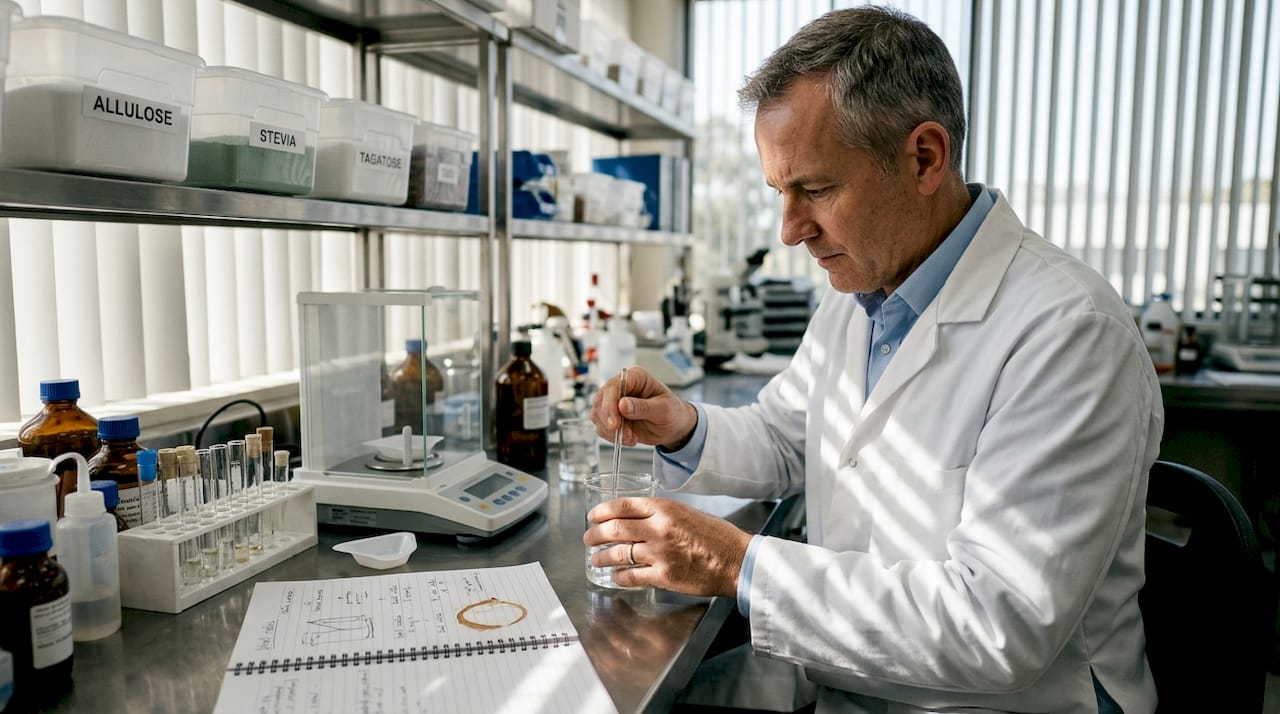
Rare sugars are the category getting the most attention in 2026, and for good reason. These are monosaccharides that exist in small quantities in nature but are now produced at commercial scale through enzymatic bioconversion and precision fermentation. The two most relevant for large-scale manufacturing are allulose and tagatose.
Allulose provides about 70% of sucrose’s sweetness with roughly 0.4 calories per gram. Tagatose delivers a similar sweetness profile with prebiotic properties and a lower glycemic index. Both behave more like sugar in baking and confectionery applications than high-intensity sweeteners like stevia or sucralose, which means fewer formulation headaches around texture, mouthfeel, and browning.
“FMCG giants are shifting to rare sugars like allulose and tagatose, driven by 66% of consumers prioritizing health in their purchasing decisions.”
Brands like Hershey, Chobani, and Kroger have already integrated these ingredients into product lines, validating both consumer acceptance and supply chain viability at scale. The key driver behind broader adoption is not just consumer demand but production economics. Enzymatic bioconversion has brought allulose production costs down significantly over the past three years, making it competitive for mid-to-large volume applications.
For ingredient manufacturers building blends and compound systems, rare sugars offer a meaningful functional upgrade over older alternatives. Here is how they stack up:
| Sweetener type | Sweetness vs. sucrose | Calories/gram | Baking performance | Regulatory status (U.S.) |
|---|---|---|---|---|
| Sucrose (traditional) | 100% | 4.0 | Excellent | Approved |
| Allulose | ~70% | 0.4 | Very good | GRAS, excluded from added sugars |
| Tagatose | ~92% | 1.5 | Good | GRAS |
| Stevia (Reb A) | 200-300x | 0 | Poor (bulking needed) | GRAS |
| Sucralose | 600x | 0 | Moderate | FDA approved |
The limitations of older high-intensity sweeteners, particularly the bitter aftertaste of stevia and the heat instability of some polyols, have pushed innovative reformulation methods toward rare sugars as the functional bridge between taste and health. For confectionery and dairy applications especially, this shift is not theoretical. It is already in production.
Sugar reduction strategies: Reformulation, labeling, and regulatory dynamics
Knowing which ingredients exist is only half the equation. The harder part is executing reduction at scale without compromising product quality or running into compliance problems. Here is a practical, stepwise approach that works in real manufacturing environments.
- Audit your current sweetener load by SKU and application type. Identify which products have the highest sugar content relative to category benchmarks.
- Select your reduction architecture: Will you replace sugar volume with a bulk rare sugar, blend in fibers (inulin, chicory root), or use a high-intensity sweetener to maintain sweetness at lower sugar concentrations?
- Phase the reduction gradually over a 12 to 24 month window. This is not just about consumer palate adaptation. It is about giving your supply chain, QA team, and packaging processes time to align.
- Update labeling proactively. The FDA’s 2026 agenda promotes voluntary sugar reduction and enhanced labeling for low- and no-calorie sweeteners, and manufacturers who get ahead of this avoid costly label revisions later.
- Monitor regional regulations continuously. EU rules on sweetener labeling and approved ingredient lists differ meaningfully from U.S. standards, and multinationals need separate compliance tracks.
The 12 to 24 month timeline for palate adaptation is well-established in the industry. Consumers do not notice gradual reductions of 5 to 10% per phase, but they do notice abrupt changes. This is one area where patience genuinely pays off in retained volume.
Pro Tip: Build dual-track contracts when reformulating. Keep your traditional sugar supply stable while piloting rare sugar or fiber blends in parallel. This protects you from supply disruptions during the transition and gives your sweeteners for baking mixes program room to iterate without production risk.
The regulatory picture is also evolving beyond voluntary guidance. Fiscal measures like sugar taxes in the UK and parts of Latin America are influencing multinational product architecture. Even if your primary market is the U.S., designing for lower sugar density now gives you export optionality later.
Comparing traditional sugars and next-gen sweeteners: Practical trade-offs
With the tools and regulatory context established, let’s put the options side by side. This is where strategic decisions actually get made, and where the nuance matters most.
| Factor | Traditional sucrose | Allulose/tagatose | High-intensity sweeteners |
|---|---|---|---|
| Taste and texture | Benchmark | Very close to sucrose | Often requires masking agents |
| Functional performance | Excellent across all applications | Strong in baking and dairy | Limited in baked goods |
| Regulatory status | Universal | U.S. GRAS; limited EU approval | Varies by market |
| Supply chain risk | Low (ample domestic supply) | Moderate (emerging scale) | Low to moderate |
| Cost per unit sweetness | Low | Moderate to high | Very low |
| Consumer label perception | Neutral to negative (added sugars) | Positive (excluded from added sugars) | Mixed (artificial concerns) |
The global sugar supply remains ample, but FMCG demand is clearly shifting toward alternatives, which means traditional sugar is not going away but it is losing its default status in innovation pipelines.
For application-specific decisions, here is a practical breakdown:
- Bakery and confectionery: Allulose is the strongest alternative for browning and texture. Traditional sugar remains the cost-effective anchor for high-volume commodity products.
- Beverages: High-intensity sweeteners combined with flavor enhancement sweeteners deliver the best cost-to-performance ratio.
- Snacks and bars: Tagatose and inulin blends work well for fiber-forward positioning without sacrificing sweetness.
- High-protein products: Monk fruit and allulose combinations avoid the cooling effect of polyols and support clean label claims.
For multinationals, the regional complexity is real. A product formulated for the U.S. market using allulose may require a different sweetener system for the EU, where allulose approval is still limited. Building modular formulation frameworks from the start saves significant re-engineering costs later.
The truth about future sugar strategy: Why one-size-fits-all fails
Here is the uncomfortable reality that most trend reports avoid: no single sweetener wins in 2026. Not allulose. Not stevia. Not traditional sugar. The manufacturers who will outperform are the ones who stop looking for a silver bullet and start building adaptive systems.
We have seen large-scale rollouts stumble when a reformulation that worked perfectly in one region ran into labeling restrictions or flavor preference differences in another. The layered systems and regional adaptation approach is not just a best practice. It is a competitive requirement for any manufacturer operating across multiple markets.
The brands winning right now are not the ones with the most innovative single ingredient. They are the ones with the most flexible formulation architecture and the supplier relationships to execute quickly. That means treating sweetener strategy the way you treat currency hedging: diversified, monitored, and ready to shift.
For beverage manufacturers especially, the pace of change in consumer preference and regulatory signaling demands quarterly reviews of sweetener strategy, not annual ones. Build that cadence into your R&D and procurement calendars now.
Next steps: Secure your supply chain and innovate with the right partners
The insights in this guide are only useful if you can act on them with reliable supply behind you. At US Sweeteners, we work with large-scale food processors who need more than a catalog. They need a partner who understands formulation complexity, can move quickly on volume, and offers the flexibility to support both traditional and emerging sweetener programs.
Whether you are sourcing bulk sweeteners for a high-volume reformulation or exploring flavor enhancement ingredients to support a new product line, our team brings nearly two decades of sourcing expertise and a network of domestic and international suppliers to your supply chain. Reach out to discuss custom blends, volume contracts, and logistics solutions built around your production schedule.
Frequently asked questions
What are rare sugars and why are they important in 2026?
Rare sugars like allulose and tagatose mimic sucrose’s taste and texture with fewer calories, and 66% of consumers prioritizing health are driving FMCG giants to adopt them at scale. They also carry favorable regulatory treatment in the U.S., including exclusion from added sugar counts on nutrition labels.
How are U.S. regulations influencing sugar reformulation in 2026?
The FDA’s 2026 agenda pushes voluntary sugar reduction and enhanced labeling for low- and no-calorie sweeteners, giving manufacturers a clear policy signal without yet mandating specific limits. Acting now positions your products ahead of any future mandatory requirements.
What is the market size for sugar reduction and substitutes in 2026?
The sugar reduction market reaches $9.92B and the sugar substitute market hits $26.88 billion in 2026, reflecting sustained investment from both established food companies and emerging brands.
What reformulation strategies deliver the best results for large-scale manufacturers?
Layered blends of rare sugars, dietary fibers, and high-intensity sweeteners phased in over 12 to 24 months deliver the best combination of taste integrity, regulatory compliance, and consumer acceptance across most application categories.