
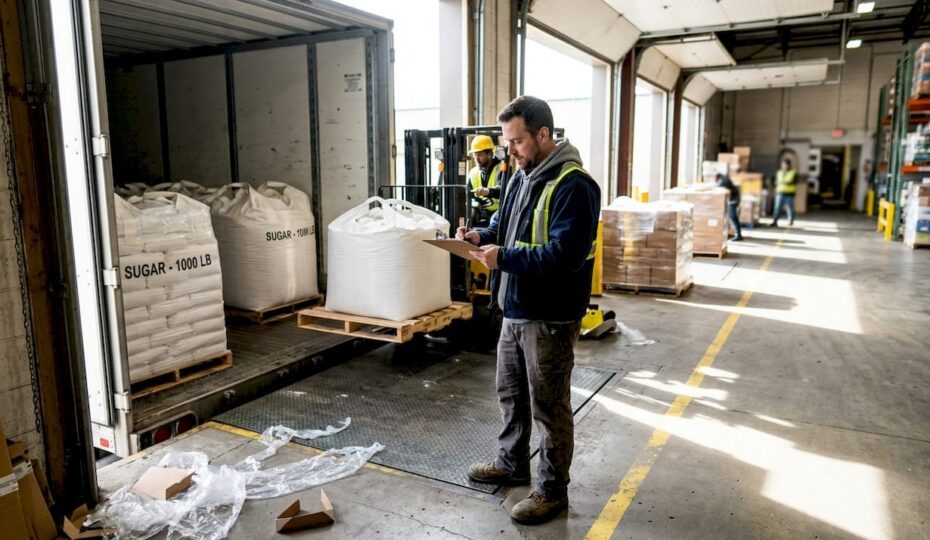
Choosing the right sugar procurement strategy is one of the most consequential decisions a large-scale food manufacturer makes. Get it wrong and you face unpredictable costs, inconsistent raw material specs, and supply gaps that halt production lines. Get it right and you unlock measurable advantages in cost efficiency, quality consistency, and supply security. This article breaks down the core benefits of bulk sugar sourcing backed by real data, sector-specific examples, and practical strategies for bakery, brewing, and dairy operations that depend on reliable, high-volume ingredient supply.
Table of Contents
- Cost savings and pricing advantages
- Quality assurance and production consistency
- Logistics, packaging flexibility, and supply security
- Market, inventory optimization, and regulatory edge
- Our take: The overlooked edge cases and expert strategies
- Connect with reliable bulk sugar supply
- Frequently asked questions
Key Takeaways
| Point | Details |
|---|---|
| Lower costs | Bulk sugar sourcing can reduce per-unit cost by up to 30% for manufacturers. |
| Consistent quality | Strict certifications and quality tests ensure every shipment meets production standards. |
| Reliable supply chain | Multi-warehouse networks and flexible packaging options minimize delivery disruptions. |
| Regulatory advantages | US sugar policies provide market stability and help control sourcing costs for large operations. |
| Expert edge cases | Success depends on expert storage, volatility management, and adaptability in sourcing methods. |
Cost savings and pricing advantages
For scale-focused manufacturers, cost control is not optional. It is the foundation of margin management. Bulk sugar sourcing directly attacks per-unit costs through volume pricing, long-term contract discounts, and reduced logistics overhead.
When you purchase sugar in truckload or multi-truckload quantities, suppliers can offer significantly lower per-unit prices compared to smaller, spot-market buys. Bulk sugar sourcing benefits include lower per-unit prices, volume discounts, and reduced landed costs through efficient logistics. These savings compound quickly at scale.
Real-world data backs this up. A bakery case study shows a 6.8% cost reduction through contract sourcing, translating to $21,000 in annual savings on sugar alone, while broader raw material contracts delivered a 10% reduction across categories. Those are not rounding errors. That is real operating budget freed up for capital investment or margin improvement.
Beyond the price per pound, bulk sourcing reduces several hidden costs:
- Freight consolidation: Fewer, larger shipments mean lower freight cost per unit
- Reduced admin overhead: Fewer purchase orders, invoices, and supplier contacts to manage
- Lower landed cost: Direct sourcing from established sugar suppliers cuts out intermediary markups
- Inventory predictability: Contracted volumes reduce emergency spot purchases at premium pricing
Bulk contracts also serve as a hedge against market volatility. Sugar prices fluctuate based on global crop yields, currency shifts, and trade policy. Locking in annual or multi-year contracts shields your production budget from sudden spikes.
| Purchasing method | Avg. cost per lb | Freight efficiency | Admin load |
|---|---|---|---|
| Spot market (small lots) | High | Low | High |
| Bulk contract (annual) | 10-30% lower | High | Low |
| Direct mill sourcing | Lowest | Highest | Medium |
Pro Tip: Combine a base annual contract for predictable volume with a smaller spot-buy allocation. This gives you price stability on your core needs while preserving flexibility to respond to demand spikes or new product launches without overpaying.
The financial case for bulk sourcing is clear. But savings only matter if the product you receive meets your production specs every single time.
Quality assurance and production consistency
Cost cuts that create quality problems are not savings. They are liabilities. For bakeries, breweries, and dairies, sugar is not just a sweetener. It is a functional ingredient with precise specifications that affect texture, fermentation, shelf life, and finished product consistency.
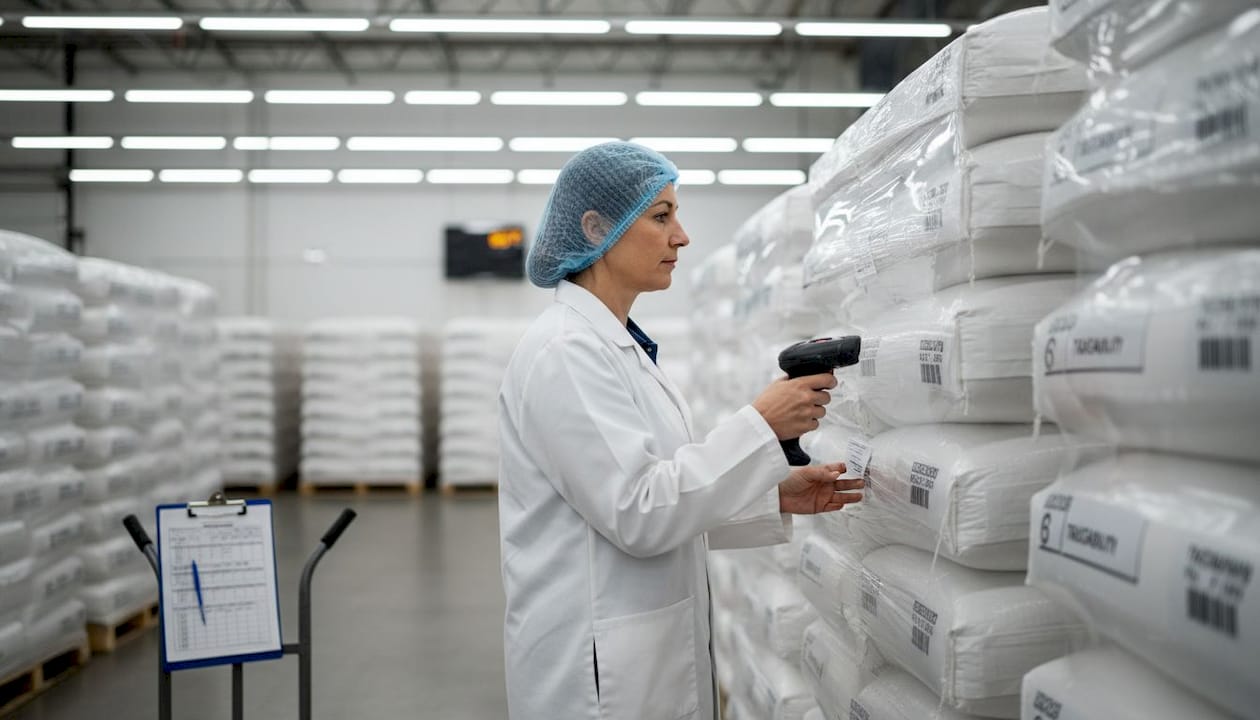
Bulk sugar suppliers that serve regulated food manufacturers provide quality control best practices through Certificates of Analysis (COA) for every lot. A COA confirms key parameters including moisture content, ICUMSA color rating, granulation size, and Brix level for liquid sugars. These specs are not interchangeable across applications.
- Bakery: Granulation consistency affects creaming, aeration, and crust color. Fine granulated sugar performs differently than coarse in high-speed mixers.
- Brewing and fermentation: Brix levels in liquid sugar or invert sugar must be precise to control fermentation rates and final alcohol content.
- Dairy: Color and purity ratings matter for yogurt, flavored milk, and ice cream where visual consistency is a brand standard.
Certifications matter beyond the COA. Look for suppliers carrying HACCP, SQF, and Non-GMO certifications. These are not marketing badges. They represent audited systems that ensure the sugar you receive meets food safety and traceability standards your own customers and regulators expect.
| Sugar type | Key spec | Primary sector use |
|---|---|---|
| Fine granulated | ICUMSA 45, uniform granulation | Bakery, confectionery |
| Liquid sucrose | Brix 67, low color | Beverage, brewing |
| Confectioners sugar | Ultra-fine, anti-caking agent | Icing, dairy toppings |
| Brown sugar | Moisture-controlled, molasses % | Bakery, sauces |
Storage also plays a role in quality. Sugar absorbs moisture and odors when improperly stored, which degrades performance in production. Long-term sugar storage protocols, including humidity control and sealed packaging, protect your investment from the moment it arrives at your facility.
Bulk suppliers with dedicated food-grade warehousing and strict lot traceability give you a quality chain that commodity brokers simply cannot match.
Logistics, packaging flexibility, and supply security
Quality ingredients delivered late are almost as damaging as poor-quality ingredients. Supply security is not a secondary concern. For high-volume manufacturers, a single stockout event can cost far more than a year of price savings.
Bulk sugar suppliers with multi-warehouse distribution networks reduce your exposure to regional disruptions, weather delays, and carrier shortages. Packaging logistics for sugar options matter too. Different production lines require different formats:
- 50 lb bags: Standard for mid-volume bakery and confectionery lines
- Supersacks (bulk bags, 2,000 lb): Ideal for high-throughput operations with pneumatic transfer systems
- Liquid tankers: Used by beverage and brewing operations running continuous liquid sugar systems
- Custom private-label packaging: Relevant for co-manufacturers supplying retail or foodservice clients
LTL (less-than-truckload) and FTL (full-truckload) options let you scale order size to your actual production schedule. You are not forced to over-order to hit a minimum or under-order and pay premium freight.
The numbers are compelling. On-time delivery performance reaching 98% in documented case studies shows what a logistics-focused supplier delivers. One food manufacturer avoided $1.2 million in production losses by maintaining a diversified bulk sugar supply network that absorbed a regional supplier disruption without a single line stoppage.
“Supply chain resilience is not built in a crisis. It is built through the supplier relationships and contract structures you establish before one happens.”
Pro Tip: Do not rely on a single supplier for your full sugar volume. Split your contracted volume across two suppliers with overlapping lead times. This simple diversification strategy protects your production schedule from single-point failures without adding significant procurement complexity.
Good sugar storage best practices at your facility also extend the value of each delivery, reducing waste and ensuring every pound you receive performs at spec.
Market, inventory optimization, and regulatory edge
With logistics streamlined, broader market conditions and US regulatory policies offer an additional layer of advantage and security for manufacturers who understand how to use them.
The bulk food ingredient market was valued at $366.7 billion in 2023 and is projected to reach $454.6 billion by 2028, with bakery and confectionery representing approximately 32% of total volume. That scale creates infrastructure. Suppliers serving this market invest in warehousing, logistics technology, and supplier networks that individual manufacturers cannot replicate on their own.
For US manufacturers, sugar and sweeteners policy tools including Tariff-Rate Quotas (TRQs) and the sugar re-export program play a direct role in cost and supply stability. TRQs allow a defined volume of sugar to enter the US at lower tariff rates. The re-export program lets manufacturers using imported sugar in exported finished goods access world-price sugar, reducing input costs for globally competitive products.
Key regulatory levers manufacturers should track:
- TRQ allocations: Monitor annual USDA announcements to time large purchases before quota fills
- Re-export program eligibility: Confirm your finished goods qualify for world-price sugar access
- Long-term supply agreements: Lock in pricing before policy shifts tighten domestic supply
- Sourcing under US sugar policy: Work with suppliers who actively navigate these mechanisms on your behalf
Inventory optimization follows naturally from contract-based bulk sourcing. Predictable delivery schedules reduce safety stock requirements, free up warehouse space, and lower carrying costs. Manufacturers who combine contracted base volume with strategic spot buys gain both cost certainty and the flexibility to respond to demand shifts.
Pro Tip: Time your contract renewals to align with USDA TRQ announcements. Suppliers with strong import relationships can pass quota-rate pricing advantages directly to you when contracts are structured around these windows.
Our take: The overlooked edge cases and expert strategies
Most conversations about bulk sugar sourcing focus on price. That is the right starting point, but it is not where the real competitive edge lives for sophisticated manufacturers.
The manufacturers we see consistently outperform their peers are the ones who treat storage and volatility management as seriously as price negotiation. Brown sugar is a perfect example. Its moisture sensitivity makes it one of the most operationally demanding ingredients in a bulk program. Improper humidity and FIFO storage protocols lead to clumping, weight loss, and batch inconsistency that no COA can fix after the fact.
Hedging through diversified contracts is another underused tool. Splitting volume between a fixed-price annual contract and a smaller index-linked agreement gives you downside protection without sacrificing upside when market prices drop. Most manufacturers either go fully fixed or fully spot. Neither extreme serves them well.
Frequent quality checks at receiving, not just at the supplier level, catch specification drift before it reaches your production floor. The manufacturers who build these habits into their procurement process spend less time firefighting and more time optimizing. That is where the real margin lives.
Connect with reliable bulk sugar supply
If you are ready to put the cost savings, quality controls, and logistics advantages described above to work for your operation, the next step is straightforward.
US Sweeteners provides direct-to-manufacturer supply with quality certifications, flexible packaging, and logistics built specifically for bakery, brewing, and dairy operations. As a dedicated bulk sugar supplier with nearly two decades of experience, we offer the full range of bulk sweeteners and enhancers including granulated, confectioners, brown, and bulk liquid sugar in formats that match your production line. Contact us for a personalized quote and find out exactly how much your operation can save.
Frequently asked questions
How much can manufacturers save by sourcing sugar in bulk?
Manufacturers typically save 10-30% on per-unit costs and can realize additional annual savings from long-term contracts and consolidated freight efficiencies.
What certifications should bulk sugar suppliers provide?
Prioritize suppliers who carry HACCP, SQF, and Non-GMO certifications and provide lot-specific COAs confirming moisture, color, and granulation specs for every shipment.
How does US sugar policy affect bulk sourcing?
TRQs and the re-export program allow manufacturers to access lower-tariff or world-price sugar, directly reducing input costs when contracts are structured to take advantage of these mechanisms.
What are the best storage practices for bulk sugar?
Store sugar in humidity-controlled environments and rotate inventory using FIFO to prevent clumping, moisture absorption, and quality degradation, especially for brown sugar.
Which sectors benefit most from bulk sugar sourcing?
Bakery, brewing, and dairy operations see the greatest combined advantages in cost consistency, spec reliability, and supply security from structured bulk sugar procurement programs.