
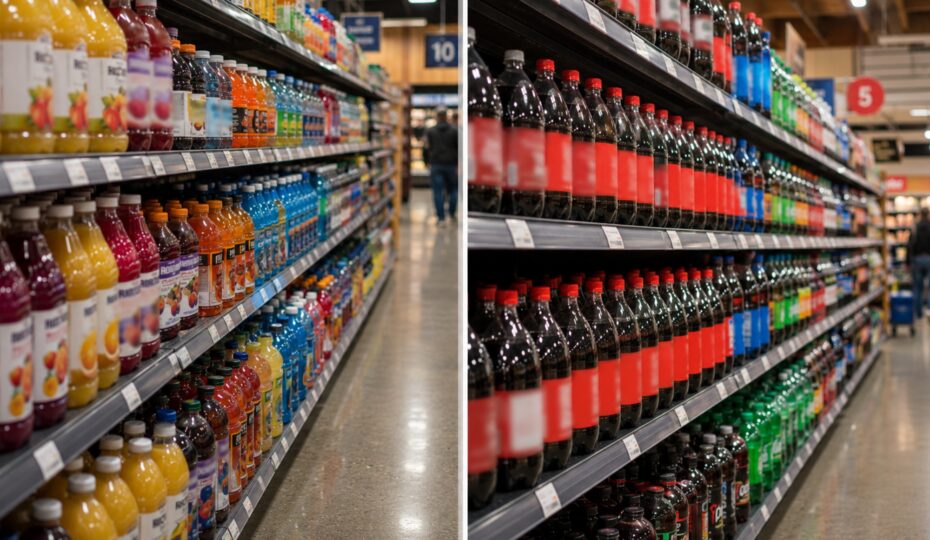
Choosing between HFCS 42 vs HFCS 55 is not simply a question of which liquid sweetener is available. Food and beverage manufacturers need to consider fructose content, target sweetness, product category, handling requirements, labeling, and supply continuity before approving a formula or placing a bulk order.
For bakeries, beverage producers, condiment manufacturers, and ingredient distributors, the right choice starts with understanding how each grade performs in the intended product. US Sweeteners helps manufacturers source bulk liquid sweeteners with dependable inventory planning and nationwide delivery support. Contact our team to discuss your product requirements and supply needs.
HFCS 42 vs HFCS 55
HFCS-42 contains approximately 42% fructose, while HFCS-55 contains approximately 55% fructose. Both are liquid nutritive sweeteners made from corn starch, glucose, and water. HFCS-42 is commonly used in processed foods and baked goods, while HFCS-55 is used primarily in soft drinks and other beverage applications.
The key difference is not that one grade is universally better than the other. Each grade fits different formulation goals.
| Feature | HFCS-42 | HFCS-55 |
| Fructose content | Approximately 42% | Approximately 55% |
| Common product uses | Baked goods, cereals, dairy products, condiments, and processed foods | Carbonated soft drinks, fountain syrups, and flavored beverages |
| Form | Liquid sweetener | Liquid sweetener |
| Main selection factor | Food formula, moisture, texture, and processing needs | Beverage sweetness, flavor balance, and processing needs |
| Typical buyer | Bakery, food manufacturing, dairy, sauce, and condiment teams | Beverage manufacturers and bottlers |
What Is the Difference Between HFCS 42 and HFCS 55?
The main difference between HFCS-42 and HFCS-55 is the amount of fructose in the finished syrup. HFCS-42 contains about 42% fructose, while HFCS-55 contains about 55%. The remaining portion consists primarily of glucose and water, which means both grades remain liquid and need to be handled as bulk syrup ingredients.
High fructose corn syrup starts with corn starch. Processing breaks the starch into individual glucose molecules, creating corn syrup that is primarily glucose. Enzymes then convert part of that glucose into fructose. Federal regulations describe HFCS as a clear aqueous mixture made through the partial enzymatic conversion of glucose to fructose.
The grade matters because a product developer is not only choosing a source of sweetness. They are also selecting an ingredient that must work with the product’s flavor profile, solids level, texture, shelf life, production equipment, and quality specifications.
Why Fructose Content Matters?
A higher fructose content can affect sweetness perception and formula balance. HFCS-55 has a fructose-to-glucose composition closer to sucrose, which contains glucose and fructose in an exact one-to-one ratio. However, HFCS and table sugar are not physically identical because HFCS contains water, and its glucose and fructose are not chemically bonded together.
For purchasing teams, this means a direct pound-for-pound replacement should never be assumed without formula review. Product developers should confirm the target sweetness, viscosity, flavor, solids, and processing performance through bench work or pilot production before changing grades or suppliers.
Common Uses for HFCS-42 in Food Manufacturing
HFCS-42 is mainly used in processed foods, cereals, baked goods, and some beverages. Its liquid format can make it useful in formulas that need a bulk sweetener incorporated through a controlled syrup-handling process. The right fit depends on the recipe, manufacturing method, desired sensory profile, and finished-product requirements.
Food manufacturers often evaluate HFCS-42 where sweetness needs to work alongside moisture, texture, or consistency goals. It may appear in products such as bakery fillings, cereal coatings, dairy applications, condiments, sauces, and prepared foods.
Before selecting HFCS-42, product teams should clarify how the sweetener will work with the rest of the formulation. A syrup that performs well in one baked product may not deliver the same result in a sauce, dairy blend, or cereal application.
Typical HFCS-42 Applications
HFCS-42 may be considered for:
- Baked goods and bakery fillings
- Breakfast cereals and cereal coatings
- Dairy-based products
- Sauces, dressings, and condiments
- Fruit preparations
- Processed foods
- Selected noncarbonated beverages
A bakery, for example, may assess HFCS-42 when developing a product that needs liquid sweetener handling and consistent batch-to-batch performance. The development team should still test the formula under real production conditions, including mixing, baking, cooling, packaging, and shelf-life review.
Practical Considerations Before Using HFCS-42
Ingredient selection should start with the product specification, not a general assumption about application fit. Confirm the required grade, solids, quality documents, delivery format, and receiving process before ordering.
Manufacturers should also review whether their facility has the right tank capacity, pumps, lines, unloading procedures, and sanitation controls for liquid sweeteners. These operational details can affect production efficiency just as much as the sweetener grade itself.
US Sweeteners can support food manufacturers that need a reliable bulk liquid sweetener supply aligned with production schedules, storage capacity, and multi-location delivery requirements.
Common Uses for HFCS-55 in Beverage Production
HFCS-55 is used primarily in soft drinks and is commonly evaluated for beverage applications that require a liquid sweetener with a higher fructose content than HFCS-42. Beverage manufacturers should confirm sweetness, flavor balance, acidity, processing conditions, and finished-product performance before finalizing the formula.
Carbonated soft drinks, fountain syrups, and flavored beverages often rely on tightly controlled specifications. Even a small formulation change can affect taste, sweetness perception, carbonation balance, or consumer acceptance. That is why beverage teams should test any ingredient change before moving it into full-scale production.
Typical HFCS-55 Applications
HFCS-55 is most often associated with:
- Carbonated soft drinks
- Fountain beverage syrups
- Flavored beverages
- Selected juice drinks
- Other beverage formulas that require a suitable liquid sweetener profile
The FDA identifies HFCS-55 as a sweetener used primarily in soft drinks. While that makes it a common choice for carbonated soft drinks, it does not mean every beverage formula should use it. Flavor systems, acids, fruit juice concentrates, stabilizers, and serving size targets can all influence the right formulation approach.
Beverage Handling and Planning
Beverage producers should review more than sweetness before placing an order. They should confirm their product specification, forecasted production volume, tank capacity, unloading setup, delivery frequency, and quality documentation requirements.
A supplier should understand whether the buyer needs one delivery for a single plant or recurring deliveries across several facilities. This matters for beverage brands with seasonal demand changes, promotional runs, or multiple co-packing locations.
How to Choose Between HFCS-42 and HFCS-55
Choose HFCS-42 or HFCS-55 based on the product category, required sweetness profile, formula performance, plant capabilities, and sourcing plan. HFCS-42 is more common in baked goods and processed foods, while HFCS-55 is primarily associated with soft drinks. The final choice should follow product testing and supplier specification review.
The most effective approach is to treat sweetener selection as a joint decision between product development, procurement, quality assurance, and operations. That helps prevent a technically suitable ingredient from creating storage, delivery, or production problems later.
Choose HFCS-42 When Your Product Needs
HFCS-42 may be the better starting point when your formula involves baked goods, cereals, dairy products, condiments, sauces, or other processed foods. It is also relevant when your team is working with a liquid sweetener system designed for food manufacturing rather than carbonated soft drinks.
Before approving HFCS-42, confirm how it performs in the complete formula. Review sweetness, texture, moisture, flavor release, process tolerance, and finished-product stability.
Choose HFCS-55 When Your Product Needs
HFCS-55 may be the better starting point for carbonated soft drinks, fountain syrups, and other beverage applications that require a higher-fructose liquid syrup. Its common use in soft drinks makes it a relevant grade for beverage formulation teams.
However, beverage developers should not rely on fructose percentage alone. They should validate the final beverage for flavor, sweetness, carbonation, acidity, clarity, and shelf stability before full-scale production.
Questions to Ask Before You Buy
Before purchasing bulk HFCS, confirm these details with your internal team and supplier:
- Which HFCS grade does the current formula specify?
- What product specifications and quality documents are required?
- What delivery format works with the facility’s receiving setup?
- How much liquid sweetener inventory can the site store safely?
- How often will production require replenishment?
- Does the supplier support multiple plants, co-packers, or distribution locations?
- Is there a contingency plan for demand increases or delivery disruptions?
Handling and Storage Considerations for Bulk HFCS
Bulk HFCS requires careful handling because it is a liquid ingredient that moves through tanks, pumps, hoses, and production lines. Manufacturers should follow the supplier’s product specifications, facility sanitation procedures, and food-safety controls when receiving and storing liquid sweeteners. Clear planning reduces the risk of delays, product loss, or contamination concerns.
Storage planning begins before the first delivery arrives. Procurement teams should confirm tank size, access for delivery equipment, unloading procedures, line compatibility, and who is responsible for checking documentation at receiving.
Build Handling Into Your Supply Plan
A practical bulk HFCS plan should cover:
- Approved product specifications
- Receiving and unloading procedures
- Tank capacity and inventory levels
- Cleaning and sanitation responsibilities
- Delivery schedules and reorder points
- Documentation review and quality checks
- Backup planning for high-demand periods
For multi-site manufacturers, supplier coverage can matter as much as product availability. A centralized ingredient strategy may help improve purchasing consistency, but each plant still needs a delivery plan that fits its local receiving hours, storage limits, and production schedule.
Sourcing HFCS From a Reliable Bulk Supplier
A reliable HFCS supplier should provide more than a price quote. Manufacturers and distributors need clear specifications, responsive communication, consistent inventory access, practical delivery coordination, and support for changing production demand. These factors help buyers reduce avoidable supply-chain interruptions.
When evaluating an HFCS bulk supplier, ask how the company handles product availability, delivery scheduling, documentation, packaging options, and multi-location orders. A dependable supplier should be able to discuss the operational details behind the quote, not only the cost per pound.
What to Look for in an HFCS Supplier?
A strong supplier relationship should include:
- Clear HFCS grade and specification information
- Food-grade documentation that supports your approval process
- Reliable inventory planning
- Delivery coordination based on your receiving schedule
- Nationwide or multi-region distribution capability
- Support for manufacturers, wholesalers, and distributors
- Options for custom packaging or private-label needs where appropriate
- A contact who understands your product and order cycle
US Sweeteners combines bulk ingredient sourcing with logistics support for food manufacturers, beverage producers, wholesalers, and distributors across the United States. When your production depends on a steady liquid sweetener supply, it helps to work with a team that understands both the product and the delivery plan.
HFCS, Labeling, and Public Perception
HFCS can raise labeling and public-perception questions because consumers often compare it with cane sugar, beet sugar, honey, and other sweeteners. Manufacturers should address those questions honestly by using accurate ingredient information, following applicable labeling rules, and avoiding claims their product cannot support.
The FDA explains that added sugars include sugars added during food processing, including syrups and other caloric sweeteners. On packaged foods and drinks, Nutrition Facts labels list added sugars in grams and as a percent of Daily Value.
HFCS is a nutritive sweetener, meaning it contributes calories. The FDA states that it is not aware of evidence showing a safety difference between foods containing HFCS-42 or HFCS-55 and foods containing similar amounts of other nutritive sweeteners with similar glucose-fructose compositions, such as sucrose or honey.
That does not remove the need for responsible product development. The Dietary Guidelines recommend limiting calories from added sugars to less than 10% of total daily calories, and the FDA uses a Daily Value of 50 grams of added sugars for a 2,000-calorie diet. Manufacturers should work with qualified regulatory and nutrition professionals when reviewing labeling, nutrient content claims, and consumer-facing marketing.
Is HFCS the Same as Corn Syrup or Table Sugar?
HFCS is not the same as regular corn syrup, and it is not physically identical to table sugar. Regular corn syrup is essentially glucose after corn starch is broken down, while HFCS undergoes further enzymatic processing that converts part of the glucose into fructose. Table sugar, also called sucrose, is made from cane sugar or beet sugar and contains bonded glucose and fructose molecules.
The distinction matters for formulation teams because ingredients can behave differently even when they contain similar simple sugars. HFCS is liquid and contains water, while granulated sucrose is dry. That difference can affect ingredient handling, solids calculations, blending, and how a product formula is balanced.
For this reason, replacing HFCS with cane sugar, beet sugar, honey, fruit juice concentrates, or another sweetener requires more than a simple ingredient swap. Product developers should evaluate the full recipe, not just the sweetness level.
Conclusion
The best HFCS choice is the one that supports your product formula and your operating plan. Whether you need HFCS-42 for food manufacturing or HFCS-55 for beverage production, review the specification, test the formula, and build a delivery plan that protects production continuity.
US Sweeteners supplies bulk sweeteners and essential food ingredients for manufacturers, distributors, wholesalers, bakeries, breweries, and beverage producers nationwide. Contact us to discuss HFCS-42, HFCS-55, liquid sugar wholesale, custom packaging, private-label options, and dependable ingredient delivery for your operation.
FAQs
What is the difference between HFCS-42 and HFCS-55?
HFCS-42 contains approximately 42% fructose, while HFCS-55 contains approximately 55% fructose. Both are liquid sweeteners made from corn starch through the partial conversion of glucose into fructose. HFCS-42 is mainly used in processed foods, cereals, baked goods, and some beverages, while HFCS-55 is used primarily in soft drinks.
Is HFCS-55 sweeter than HFCS-42?
HFCS-55 has a higher fructose content than HFCS-42, so product developers may evaluate it where a higher-fructose liquid sweetener profile is needed. However, sweetness perception depends on the full formula, including acids, flavors, carbonation, temperature, and other ingredients. Manufacturers should validate the final product through formulation and production testing.
What is HFCS-42 used for?
HFCS-42 is commonly used in processed foods, cereals, baked goods, and some beverages. It may also be evaluated for dairy products, sauces, condiments, and other food applications that use liquid sweetener systems. The final decision should depend on product specifications and formula performance.
What is HFCS-55 used for?
HFCS-55 is used primarily in soft drinks, according to the FDA. Beverage manufacturers may also assess it for other beverage formulas, depending on the desired sweetness, flavor balance, and processing requirements. Product testing remains important before approving a formula for commercial production.
Is HFCS the same as regular corn syrup?
No. Regular corn syrup is essentially glucose produced from corn starch. HFCS goes through an added enzymatic process that converts some glucose into fructose, creating a syrup with a different fructose content.
How do manufacturers source HFCS in bulk?
Manufacturers should begin by confirming the required grade, product specifications, documentation, delivery format, and storage capacity. They should also plan for production volume, receiving schedules, reorder points, and multi-site delivery requirements. A bulk supplier with strong logistics support can help reduce supply-chain friction when demand changes.

Thomas is a product expert at US Sweeteners, a trusted bulk sugar and sweetener distributor serving food and beverage manufacturers across the USA. He writes about sweetener sourcing, ingredient trends, and supply chain insights for the food industry.