Is All Sugar Kosher? What Manufacturers Need to Know
Is all sugar kosher is a question that commonly arises for food manufacturers, bakeries, beverage producers, and other businesses working with regulated or specialty markets. Sugar is used across many foods, yet its processing steps, filtration process, and added agents can create uncertainty for kosher food compliance. While sugar is widely viewed as kosher, there are specific conditions where manufacturers need clarity before they add sugar to formulations or purchase sugar at scale.
At US Sweeteners, we supply bulk sweeteners to distributors, wholesalers, and manufacturers across the United States. Our focus is on reliable sourcing, consistent specifications, and nationwide logistics for granulated sugar, powdered sugar, liquid sugar, and other essential ingredients. Understanding how sugar is produced and when kosher certification matters helps manufacturers protect labeling accuracy and meet customer requirements.
What Sugar Is And Where It Comes From
Sugar is the common name for sucrose, a carbohydrate used for sweetness, texture, and preservation in foods. Sucrose occurs naturally in plants and is edible and suitable for human consumption. In commercial production, sugar is extracted, purified, crystallized, and dried before reaching manufacturers as refined sugar.
There are two main sources of commercial sugar: sugar cane and sugar beets. Sugar cane grows in tropical climates and produces pure cane sugar through milling and refining. Sugar beets grow in cooler regions and produce beet sugar using a similar refining process. Both sources result in standard granulated sugar once fully refined.
Sugar Cane And Sugar Beet Processing
Sugar cane is harvested and transported to a sugar mill, where the cane is crushed to release juice. The juice is clarified, heated with hot water, and concentrated until sugar crystals begin to form. The early product is raw sugar, which still contains molasses and impurities.
Sugar beets are washed, sliced, and heated in water to extract sugar liquor. The juice is filtered and concentrated until crystallization occurs. While beet sugar and cane sugar follow similar steps, many cane sugar refineries occur in two locations, a mill and a refinery, while beet sugar processing usually takes place in one facility.
The Sugar Refining Process
The refining process removes impurities and converts raw sugar into white sugar. Raw sugar is washed to loosen molasses, melted into sugar liquor, filtered, and clarified. During this stage, impurities are removed from the sugar through mechanical and chemical methods.
After filtration, sugar liquor is boiled under controlled conditions so sugar crystals form. The crystals are separated, dried using hot air, and cooled. The final product is refined sugar that meets food manufacturing standards and is ready for use in other foods.
Carbon Decolorization And Filtration
Carbon decolorization is used to remove color from sugar liquor. Activated carbon or pure carbon acts as a filtering aid to bind unwanted color compounds. These materials are removed before crystallization, and nothing remains chemically evident in the final product.
Some sugar refineries use electrically charged pieces of carbon to improve filtration efficiency. These materials do not remain in the sugar and are subsequently removed. The filtration process is designed so that only sugar crystals remain when drying is complete.
Bone Char And Kashrus Concern
Bone char is a form of pure carbon made from animal bones, often burnt cattle bones. The bones are completely burned until they are chemically changed and completely unfit for human consumption. At this stage, they no longer resemble food and function only as a filtering aid.
From a kosher perspective, bone char does not create a kashrus concern because it undergoes a chemical change and does not remain in the final product. Bone char particles are removed from the sugar during filtration, and several Jewish sources describe the material as halachically insignificant once burned.
Why Bone Char Does Not Make Sugar Non-Kosher
Bone char is not edible and is not considered a non-kosher animal ingredient once bones are completely burned. The carbon is inert, tasteless, and removed from the sugar. Other authorities agree that the material does not transfer flavor or substance to the sugar.
This applies even in many cane sugar refineries that use bone char as part of carbon decolorization. The final product contains only refined sugar, with no animal bones or residues present. For kosher consumers and manufacturers, this distinction is central to understanding sugar’s kosher status.
Anti-Foaming Agents And Processing Aids
Anti-foaming agents are used during sugar production to control the foam created during boiling. These agents may come from plant or non-kosher animal origin sources. The quantities used are extremely small and are removed during processing.
In certified facilities, kosher certification programs require approved processing aids. While anti-foaming agents can raise questions, they do not remain in the final product and are treated as halachically insignificant when managed under supervision.
Enzymes And Passover Sensitivity
Enzymes may be used to improve filtration and yield during sugar processing. These enzymes help break down starches found in plant material. For everyday kosher use, these enzymes generally do not affect sugar’s kosher status.
For kosher for Passover, enzymes require additional review. Because enzymes act as functional agents, reliable Passover certification is required to confirm compliance. Manufacturers producing Passover-labeled foods must verify enzyme sourcing.
Types Of Sugar And Kosher Status
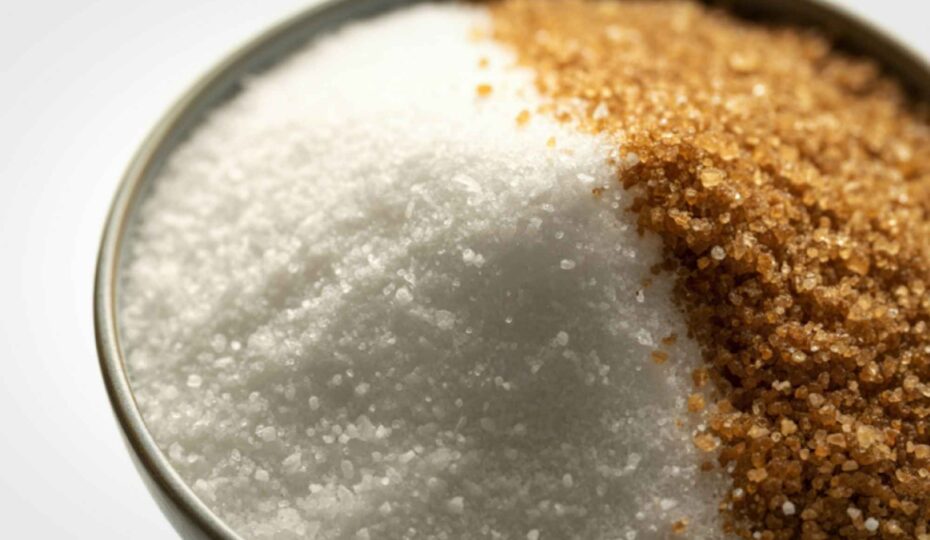
Granulated sugar, also called regular sugar or standard granulated sugar, is refined sugar with no additives. Both cane sugar and beet sugar are generally kosher when fully refined. White sugar falls into this category and is widely accepted for kosher food use.
Brown sugar is refined sugar with molasses added back. The molasses source must be verified for kosher status, but most brown sugar remains kosher. Powdered sugar and confectioners’ sugar require more review due to the added starch.
Powdered Sugar And Starch Issues
It is ground into fine particles. Starch is added to prevent clumping. Corn starch is commonly used and is kosher for regular use. Wheat starch creates concerns because it is derived from grain.
When wheat starch is present, powdered sugar may be non-kosher for Passover and unsuitable for certain markets. Manufacturers must review ingredient statements carefully when sourcing confectioners’ sugar.
Liquid Sugar And Industrial Formats
Liquid sugar is sugar liquor that has not been crystallized. It is used in beverage production, baking, and industrial food manufacturing. Liquid formats follow the same refining process and kosher considerations as crystallized sugar.
Verification of kosher certification for liquid sugar depends on processing aids and enzymes. Manufacturers should confirm documentation when liquid sugar is used in regulated formulations.
Does Sugar Require Kosher Certification
Sugar itself does not always require kosher certification because it is considered inherently kosher. However, certification is often requested by customers, retailers, and foodservice buyers to confirm oversight.
According to an overview of Kosher, foods such as sugar are generally considered acceptable as kosher because they are minimally processed and fall into the category of innocuous foods, alongside items like water and salt. However, cRc explains that kosher status is not determined by ingredients alone. A kosher certification agency reviews the full production process, including processing aids that contact the food, the kosher status of manufacturing equipment, and ongoing supervision systems to maintain product integrity. This oversight confirms that both ingredients and production methods comply with kosher law, particularly for commercial food manufacturing.
Kosher Versus Kosher For Passover Sugar
Kosher and kosher for Passover are not the same. Sugar that is kosher year-round may not meet Passover requirements due to enzymes or starch exposure. Reliable Passover certification confirms compliance with stricter standards.
Manufacturers serving Passover markets should not assume sugar is compliant. Verification must occur before they purchase sugar or label products for Passover use.
What Manufacturers Need To Know When Sourcing Sugar
Manufacturers must confirm sugar type, starch use, enzyme exposure, and certification needs before adding sugar to formulations. This applies to granulated sugar, powdered sugar, brown sugar, and liquid sugar.
Documentation, such as specification sheets and certificates, supports compliance. Consistency across sugar refineries helps reduce risk and protects labeling accuracy.
If you are looking for bulk kosher sugar that supports consistent production and clear documentation, we offer bulk kosher sugar options designed for food manufacturers and distributors. Our bulk kosher sugar is sourced to meet commercial specifications and is available in multiple formats to support baking, beverage production, and large-scale food manufacturing. With nationwide logistics and reliable inventory, we help manufacturers purchase sugar with confidence while maintaining kosher compliance across supply chains.
How To Verify Kosher Sugar For Commercial Use
Manufacturers should request ingredient statements and certification letters where required. Confirmation of starch sources and processing aids prevents errors in production.
Working with a supplier that understands food manufacturing needs simplifies verification and procurement across multiple facilities.
Conclusion
Sugar is widely accepted as kosher due to its refining process, removal of impurities, and the halachic treatment of processing aids such as bone char. Both cane sugar and beet sugar are suitable for kosher food production when properly refined, and concerns around animal bones, filtration, and anti-foaming agents do not affect the final product. Differences arise when starch or enzymes are introduced, particularly for powdered sugar and Passover use, which is why manufacturers must review specifications closely. Clear documentation and sourcing practices support compliance and protect labeling integrity.
At US Sweeteners, we support manufacturers with bulk sugar supply, custom packaging, and nationwide logistics backed by decades of distribution experience. Our inventory includes granulated sugar, powdered sugar, liquid sugar, and specialty formats sourced for consistency and reliability. Contact us to discuss your sugar sourcing needs and ensure your products meet market and compliance expectations.
FAQs
Is all sugar kosher?
Yes, most sugar is kosher because it is refined and free from non-kosher substances. Processing aids are removed and do not remain in the final product.
Is beet sugar kosher?
Beet sugar is kosher when fully refined. Its processing does not introduce meat or dairy components.
Does bone char make sugar non-kosher?
No, bone char is completely burned, chemically changed, and removed from the sugar. It does not remain in the final product.
Is powdered sugar kosher for Passover?
Powdered sugar may not be kosher for Passover if wheat starch is used. Passover certification confirms compliance.