
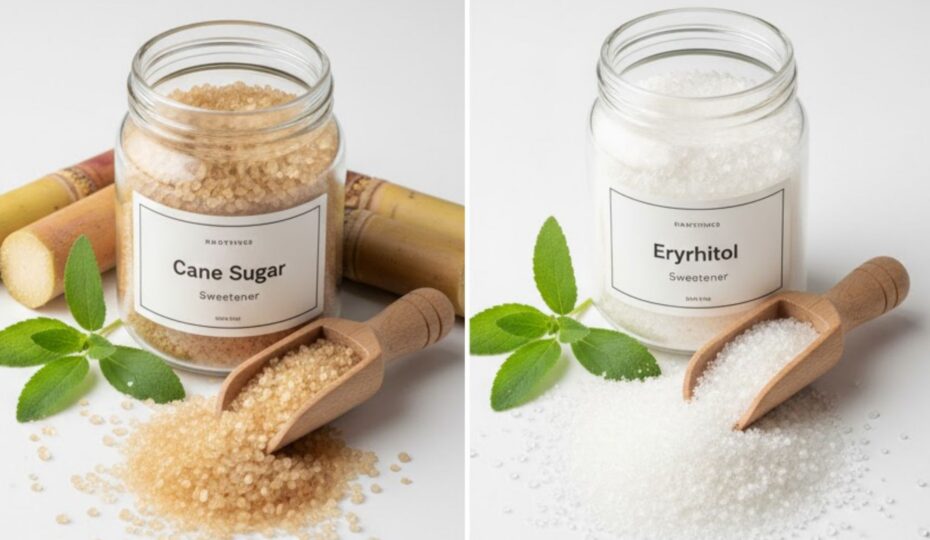
Erythritol vs Sugar: Which Sweetener Is Better
Many food companies and consumers compare erythritol vs sugar taste to find a sweetener that delivers flavor similar to regular sugar but with fewer calories and better health outcomes. Erythritol has gained popularity because it offers a sweet taste similar to sugar without raising blood sugar or insulin levels.
At US Sweeteners, we provide bulk natural sweeteners, sugar substitutes, and low-calorie sweeteners to distributors and manufacturers nationwide. Our goal is to help businesses create high-quality, great-tasting, low-sugar products while maintaining consistent inventory, fast logistics, and competitive pricing.
What Erythritol and Sugar Are
Erythritol is a naturally occurring member of the sugar alcohol group used in many low-calorie and low-sugar products. It’s created through the fermentation of glucose from plant sources and offers about 70 percent of the sweetness of table sugar. After consumption, erythritol is mostly absorbed in the small intestine and excreted unchanged, providing sweetness with almost no calories.
Sugar, also known as sucrose or refined sugar, is a traditional sugar made from sugarcane or sugar beets. It provides energy but increases blood sugar and insulin levels, contributing to higher caloric content and potential long-term health concerns such as obesity, tooth decay, and diabetes when sugar intake is excessive.
Comparing Taste and Sweetness
When comparing erythritol vs sugar taste, erythritol delivers a clean, mild sweet taste similar to regular sugar but with about 30 percent less intensity. It also produces a subtle cooling effect in the mouth, which some describe as refreshing. This makes erythritol a preferred healthier alternative for people who want sweetness without sacrificing taste.
Sugar, on the other hand, provides a fuller flavor profile and no cooling sensation. Its sweetness is immediate and familiar, which is why it remains the most common sweetener used in foods. Many food companies combine erythritol with other sweeteners such as monk fruit, stevia, or xylitol to match the sweetness of sugar more closely and reduce any noticeable difference in flavor.
Performance in Baking and Cooking
Erythritol behaves differently from table sugar in baking and food preparation. It helps provide structure and bulk in recipes, but does not caramelize the same way sucrose does. This means baked goods made with erythritol may brown less and have a lighter texture. However, when blended with other sugar alcohols or natural sweeteners, it can achieve similar results to sugar in both taste and appearance.
For most recipes, erythritol is used in slightly higher amounts to reach the desired sweetness. It dissolves well in liquids and withstands heat, making it ideal for beverages, sauces, and baked foods. Many brands choose erythritol for its versatility, low-calorie value, and ability to sweeten without increasing added sugars or changing the flavor significantly.
Calories and Blood Sugar Effects
One of the biggest differences between erythritol and traditional sugar is how they affect blood sugar and calories. Erythritol provides almost zero calories per serving and has a low glycemic index, meaning it does not spike blood sugar or insulin levels. This makes it an appealing choice for people managing diabetes or those watching their diet and weight loss goals.
Refined sugar contains about four calories per gram and quickly increases glucose levels after consumption. Regular intake can lead to high caloric content, energy crashes, and potential long-term health effects such as metabolic syndrome and obesity. Switching to low-calorie sweeteners like erythritol allows manufacturers and consumers to reduce calories while keeping the familiar sweet taste that sugar provides.
Dental Health and Tooth Protection
Refined sugar is known to contribute to tooth decay because harmful bacteria in the mouth feed on it, producing acids that damage enamel and cause cavities. Reducing sugar intake helps maintain better dental health and prevent plaque buildup.
Erythritol does not feed these bacteria and can support a cleaner oral environment. It’s often used in low-sugar products such as gum, mints, and sugar-free candies for this reason. Choosing erythritol over sugar can help protect teeth while maintaining a pleasant sweet taste, making it a valuable option for food companies that promote oral-friendly products.
Digestion and Absorption
Unlike other sugar alcohols such as xylitol or sorbitol, erythritol is absorbed in the small intestine and later excreted unchanged in the urine. Because of this process, it typically causes fewer digestive issues than many other sweeteners. It does not pull water into the intestines, reducing the chance of bloating or discomfort when consumed in moderate amounts.
Erythritol’s smooth digestion profile makes it suitable for both small and large-scale food manufacturing. For those following a low sugar or low calorie lifestyle, it offers a healthier option that minimizes adverse effects commonly linked to other sugar substitutes.
Health and Safety Perspective
Erythritol has been widely accepted as safe for general consumption and is used in many low-sugar products across the market. It’s valued for being erythritol, safer for people managing diabetes because it doesn’t affect insulin levels or blood sugar. It also supports weight loss programs by reducing calories without losing sweetness.
According to a study, erythritol and xylitol are classified as low-calorie sweeteners and, unlike many other sugar alcohols, they do not spike blood sugar or insulin levels and do not contribute to tooth decay in the same way refined sugar does. The study also cautions that while erythritol is generally well tolerated, its association in some studies with an increased risk of heart attack and blood clotting means more research is still needed.
Even though erythritol is generally well tolerated, consuming very high amounts may lead to mild digestive discomfort in some individuals. As with any ingredient, moderation is recommended. US Sweeteners guides manufacturers on how to use erythritol effectively in their formulations to achieve the right balance between taste and functionality.
Why Food Companies Prefer Erythritol
Many food companies choose erythritol because it meets the growing demand for healthier options and natural sweeteners that reduce added sugars and calories. It provides the familiar sweetness consumers expect while supporting low sugar products that appeal to people managing blood sugar or weight loss goals. Erythritol also works well for brands seeking a healthier alternative to refined sugar without affecting flavor, texture, or overall product satisfaction.
Its performance in different manufacturing processes is another reason for its popularity. Erythritol remains stable under high heat and acidic conditions, making it ideal for baking, beverages, sauces, and dairy applications. It delivers consistency, helps preserve taste, and maintains the desired sweetness level across product batches, giving food companies a reliable ingredient for large-scale production and distribution.
If you’re looking to source Bulk Erythritol for your food or beverage manufacturing, US Sweeteners offers premium-grade ingredients tailored to your production needs. We provide consistent quality, reliable logistics, and flexible packaging solutions to help you meet demand while maintaining the clean sweetness your products require.
Is Erythritol Better Than Sugar
Erythritol offers the sweetness of regular sugar with almost none of the calories or metabolic impact. It doesn’t raise blood sugar, supports dental health, and provides a pleasant taste close to traditional sugar. For people managing diabetes or those looking to reduce sugar intake, it’s a practical and effective healthier alternative.
Sugar remains the most familiar sweetener, but excessive sugar intake has been linked to unwanted weight gain and other health issues. For this reason, food companies and consumers are moving toward low-calorie sweeteners like erythritol that fit into a modern diet focused on balance, performance, and taste.
Conclusion
The comparison of erythritol vs sugar taste shows that erythritol can replicate the sweet taste of sugar while supporting better health outcomes. It’s well-suited for low sugar and low calorie formulations, provides good stability in recipes, and helps reduce dependence on refined sugar. With careful formulation, it can match flavor, texture, and sweetness while lowering overall calories and added sugars.
US Sweeteners supplies bulk erythritol and other natural sweeteners to manufacturers nationwide. We help businesses create high-quality, consistent, and affordable ingredient solutions that keep production efficient and customers satisfied. To learn more about our supply options and how erythritol can support your next product line, contact us today.
FAQs
Does erythritol taste like sugar?
Yes. Erythritol has a sweet taste similar to table sugar, with about 70 percent of its sweetness and no strong aftertaste.
Is it better to consume sugar or erythritol?
Erythritol is often the better choice for those reducing sugar intake. It has fewer calories and does not spike blood sugar or affect insulin levels.
What is the downside of erythritol?
Some people may experience mild digestive discomfort if they consume large amounts, but it’s generally well-tolerated when used in moderate quantities.
Which sweetener tastes most like sugar?
Erythritol tastes most like sugar among common sugar substitutes, especially when blended with monk fruit or stevia for a balanced flavor.